

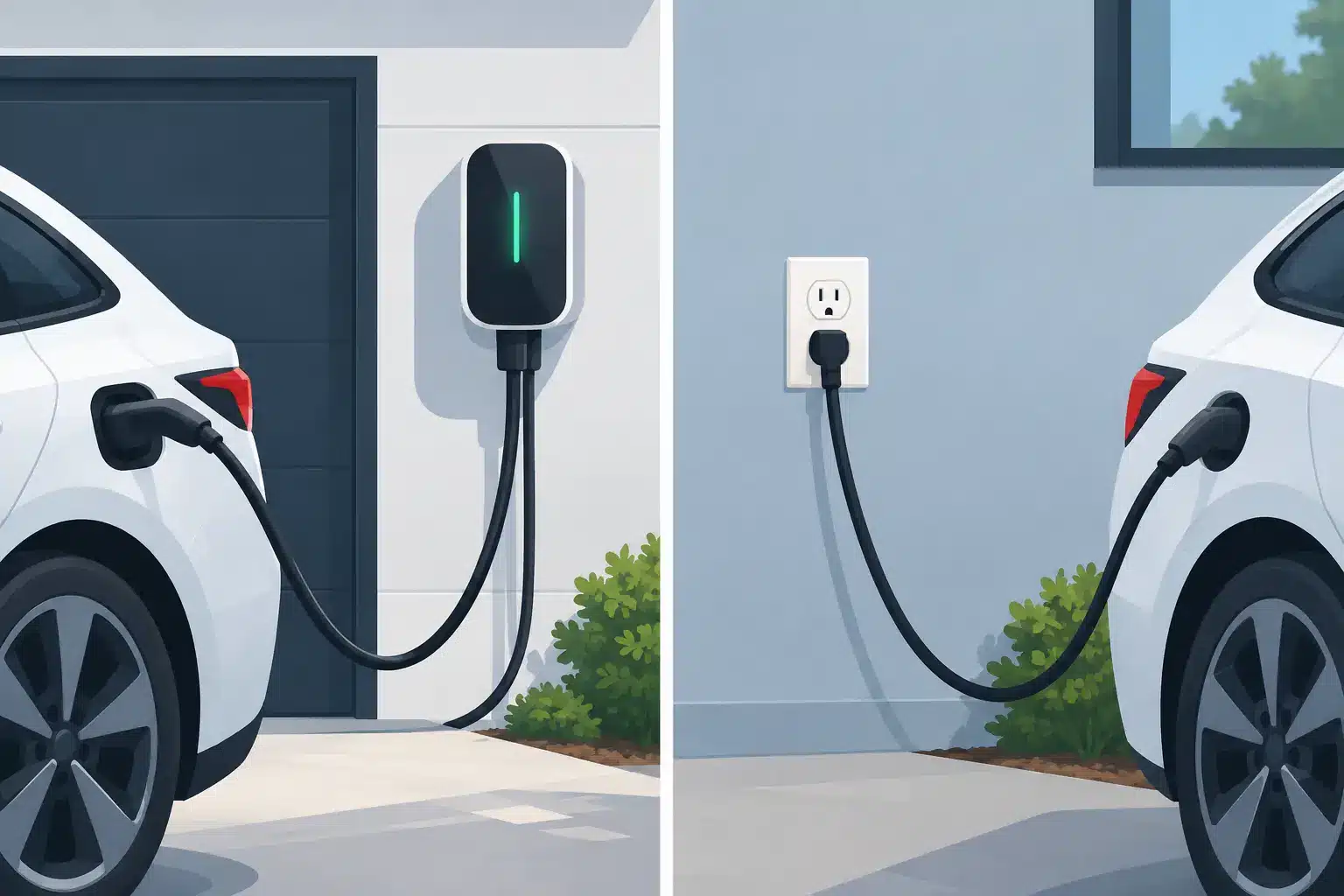
A new EV can make a regular wall outlet look more useful than it really is. In the ev charger versus standard outlet decision, both can charge your vehicle, but the difference affects how reliably your car is ready each morning, how hard your home electrical system works, and whether the setup is appropriate for long-term use.
For many Antelope Valley homeowners, a standard outlet is a reasonable temporary starting point. A dedicated EV charger is usually the better long-term choice when the vehicle is driven regularly. The right answer depends on your daily mileage, parking arrangement, electrical panel capacity, and the condition of your existing wiring.
EV Charger Versus Standard Outlet: The Main Difference
A standard household outlet provides Level 1 charging. This is the familiar 120-volt outlet used for lamps, small appliances, and many household devices. Most EVs include a portable charging cord that can plug into one of these outlets, allowing you to add power without buying charging equipment right away.
A professionally installed home EV charger typically provides Level 2 charging. It uses a 240-volt circuit, similar to the electrical supply used for a dryer, oven, or air conditioner. Because it delivers more power, it charges an EV much faster than a standard 120-volt outlet.
Level 1 charging commonly adds about 3 to 5 miles of driving range per hour. That can work well for someone who drives short distances and has many hours to charge at home. Level 2 charging often adds 20 to 40 or more miles per hour, depending on the vehicle and charger. For a family that drives daily, that difference can be the line between waking up with a full battery and planning around charging time.
When a Standard Outlet Can Make Sense
A standard outlet is not automatically unsafe or inadequate. It can be a practical option when charging needs are light and the outlet, wiring, and circuit are in good condition. For example, a homeowner who drives 20 to 30 miles most days may be able to replace that range overnight with Level 1 charging.
It can also be useful while waiting for a dedicated charger installation. New EV owners sometimes want time to understand their driving habits before choosing charger features, placement, or electrical upgrades.
The limitation is time. If you return home with a low battery after a long commute, errands, or a weekend trip, a standard outlet may need more than a full day to restore the charge. It can also be difficult to catch up if the vehicle is used again before it has enough time plugged in.
A standard outlet should not be treated as a permanent solution without checking the condition of the circuit. EV charging draws power continuously for hours, which is different from briefly plugging in a vacuum or phone charger. An older, loose, damaged, or heavily used outlet can overheat under that sustained load.
Why a Dedicated EV Charger Is Better for Most Drivers
A Level 2 EV charger is designed for regular vehicle charging. Its faster charging speed gives homeowners more flexibility. You can come home with a lower battery, charge overnight, and start the next day with the range you need.
That convenience matters more than many drivers expect. Charging becomes part of the routine instead of a task that requires attention. You plug in when you park, and the vehicle is typically ready by morning.
A dedicated installation also provides a clearer safety path. The charger is supplied by a properly sized circuit and wiring selected for the electrical load. The circuit is not shared with garage tools, refrigerators, freezers, or other equipment that could overload it.
Many Level 2 chargers offer useful controls, such as scheduled charging, energy monitoring, and adjustable charging rates. These features can help homeowners charge during preferred utility hours or manage household energy use. They are helpful additions, but the most important benefit remains a properly installed, dedicated electrical circuit.
Safety Is More Than the Charger Itself
The charger is only one part of the system. The outlet or charging unit, circuit breaker, wiring, electrical panel, grounding, and installation location all matter. A high-quality charger connected to an undersized or aging circuit is not a safe solution.
Before installing an EV charger, a licensed electrician should evaluate the available electrical capacity in the home. Some homes have room in the panel for a new 240-volt circuit. Others may need a panel upgrade, a subpanel, load-management equipment, or repairs before additional capacity can be added safely.
This is especially important in older homes or homes that already have major electrical loads. Central air conditioning, electric water heaters, pools, spas, electric ranges, workshops, and solar equipment can all affect the available capacity. An electrical assessment identifies what your system can support without guessing.
Extension cords should not be used for routine EV charging. They can create overheating and connection risks, particularly when used outdoors or for long periods. If the vehicle will be parked far from the intended outlet or charger location, it is better to have the proper circuit installed where it is needed.
Understanding Installation Cost and Value
Using an existing standard outlet costs less at the beginning because there may be no installation expense. However, the lower upfront cost can come with slower charging and may not suit the way your household uses the EV.
A Level 2 charger requires equipment and professional installation. Costs vary based on the charger location, distance from the electrical panel, wall access, trenching needs, panel capacity, permit requirements, and whether upgrades are necessary. A garage installation near a modern electrical panel is usually simpler than a charger mounted outside at a detached parking area.
It is worth considering the installation as a home electrical improvement, not simply an accessory for one vehicle. A dedicated charging circuit can make daily EV ownership easier and may be valuable to future buyers as more households choose electric vehicles.
The least expensive option is not always the one that provides the best long-term value. If a standard outlet leaves you regularly short on range or places sustained demand on an aging garage circuit, a dedicated charger can offer greater comfort and confidence.
Choosing the Right Charger Location
The best location is usually where you park most often. That may be inside the garage, along the driveway, or near a carport. The charging cable should reach the vehicle without stretching across walkways, garage doors, or areas where it can be damaged.
Outdoor installations can be an excellent choice when the equipment is rated for outdoor use and installed correctly. In Palmdale, Lancaster, and nearby Antelope Valley communities, outdoor equipment should be selected and mounted with heat, sun exposure, dust, and weather in mind. Proper placement helps protect both the charger and the cable over time.
Homeowners should also think ahead. If a second EV may be added later, planning the electrical work now can reduce future disruption. In some cases, installing conduit or allowing space for future capacity is a sensible step, even if only one charger is installed today.
Questions to Ask Before You Decide
Start with your actual driving pattern. How many miles do you drive on a typical weekday, and how often do you return home with a low battery? If your vehicle sits overnight and your mileage is modest, Level 1 charging may cover your basic needs. If you have a longer commute, multiple drivers, or frequent trips, Level 2 charging is likely the more dependable fit.
Next, consider the age and condition of your electrical system. A newer panel may have available capacity, while an older panel may need inspection or upgrades. Do not assume an open breaker space means the home can safely support a new high-demand circuit.
Finally, think about how long you plan to own the EV and the home. A temporary Level 1 setup may be fine for a short transition. For homeowners who expect EV charging to be part of daily life, a professionally installed charger provides a safer, more convenient foundation.
A Practical Choice for Daily Charging
There is no single answer for every household. A standard outlet can be useful for light driving, temporary charging, or a plug-in hybrid with a smaller battery. A dedicated Level 2 charger is generally the better choice for drivers who want faster charging, a dedicated circuit, and fewer concerns about whether the vehicle will be ready when needed.
A1 Home Electric helps homeowners evaluate the electrical side of that decision, from checking panel capacity to installing code-conscious EV charging circuits. The goal is not to sell more equipment than your home needs. It is to make sure your charging setup supports your driving routine while protecting the electrical system that serves the rest of your home.
Before relying on any outlet for overnight vehicle charging, have the circuit evaluated by a qualified electrician. A careful assessment now can help your EV charging routine remain safe, dependable, and easy for years to come.