

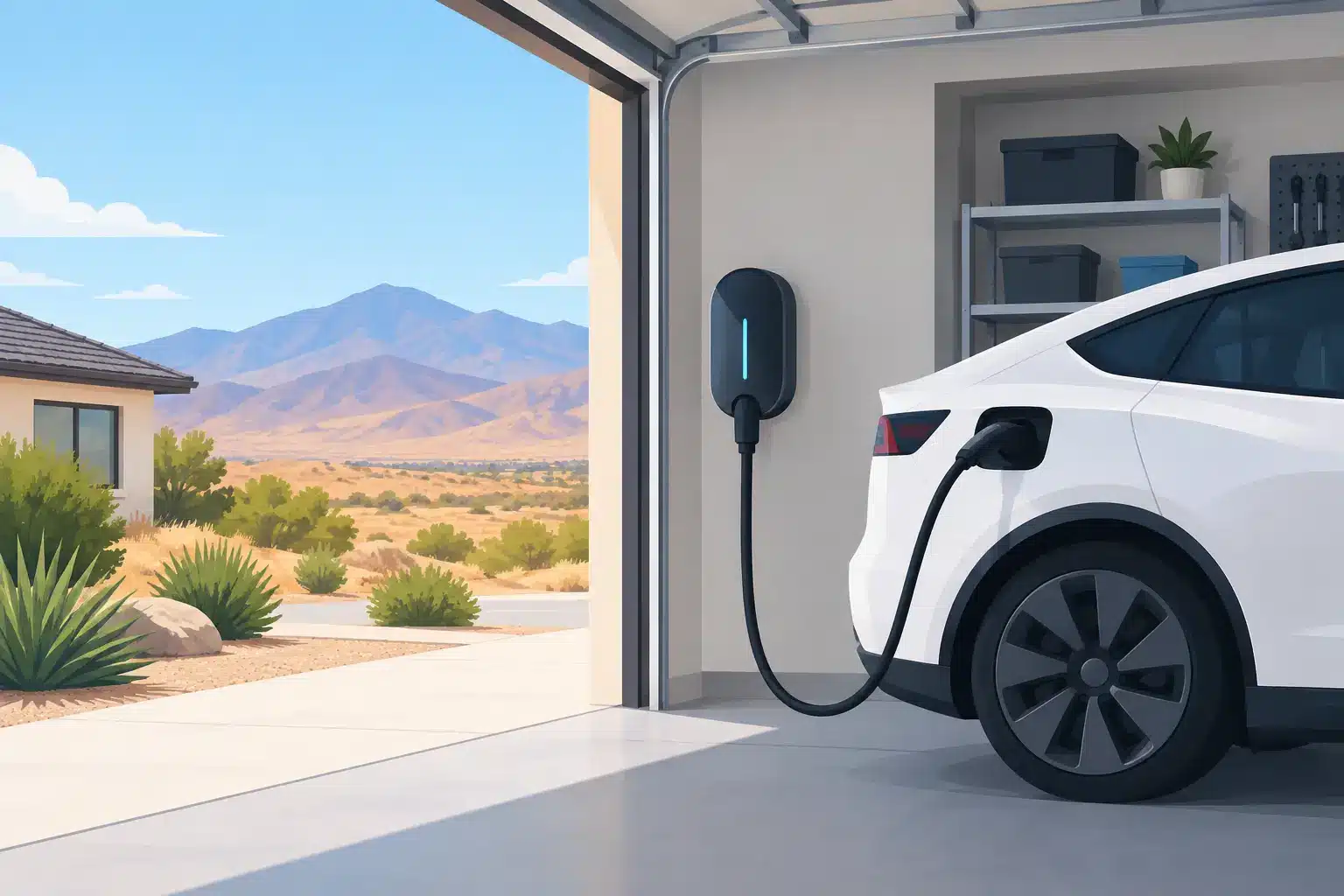
A home charger can make electric vehicle ownership far more convenient, but it is not a simple appliance purchase. This garage EV charger guide helps homeowners plan for a safe installation that fits the vehicle, the garage, and the home’s existing electrical system. The right setup provides dependable daily charging without overloading an older panel or creating avoidable safety concerns.
For homeowners in Palmdale, Lancaster, and nearby Antelope Valley communities, a professional evaluation is especially useful. Many homes have electrical systems that were installed long before electric vehicles became common. A qualified electrician can determine what the home can safely support before equipment is selected or wiring begins.
Start With How You Actually Drive
The best charger is not always the one with the highest charging output. Start with your normal driving routine, the vehicle’s charging capability, and how long the vehicle is usually parked at home. A driver who travels 30 to 50 miles most days and parks overnight may be well served by a moderate Level 2 charging setup. A household with two EVs, long commutes, or limited charging time may need more capacity.
Level 1 charging uses a standard 120-volt outlet. It can work for low-mileage drivers, but it adds range slowly and is rarely the most practical long-term choice for a primary EV. Level 2 charging uses 240 volts, similar to an electric dryer or range circuit, and is the preferred solution for most homeowners because it can restore a meaningful amount of range overnight.
It also helps to look ahead. If you expect to replace a second vehicle with an EV, add solar, install a pool, or expand the home, those future electrical needs should be part of the conversation. Planning for capacity now can prevent paying twice for panel work later.
Garage EV Charger Guide: Check the Electrical Panel First
The electrical panel is the starting point for every safe EV charger installation. It distributes power throughout the home and must have enough available capacity for a new continuous load. EV charging can run for several hours at a time, so the circuit and panel need to be sized with more care than a typical plug-in device.
An electrician will review the panel’s service rating, breaker availability, condition, and current demand. A panel may have open breaker spaces but still lack sufficient capacity for the charger. On the other hand, a properly sized panel may only need a dedicated circuit and correctly rated wiring.
Older panels deserve particular attention. Signs such as frequently tripped breakers, warm panel components, corrosion, crowded wiring, or a panel that has already been stretched by major appliances can point to a need for repairs or an upgrade. Installing a charger without addressing those concerns can put the home at risk and lead to frustrating charging interruptions.
In some cases, a load calculation shows that the existing service can support the charger. In others, the safer option may be a panel upgrade, a subpanel, or a charger with load-management features. There is no one-size-fits-all answer, which is why an inspection comes before a recommendation.
Choose the Right Charging Output
Level 2 chargers are commonly available in different amp ratings. Higher output can charge a compatible vehicle faster, but it also requires a larger circuit and may increase installation costs. The vehicle itself may limit how much power it accepts, so buying the largest charger available does not always produce faster real-world charging.
A properly matched charger should meet everyday needs with room for occasional longer drives. For many homes, charging overnight is the goal, not filling the battery as quickly as possible. That approach can allow for a more practical electrical design while still giving the driver a full or nearly full battery each morning.
The charger must be installed on a dedicated circuit. The breaker, wire size, receptacle if used, and charging equipment all need to match the electrical design. This is not an area for extension cords, overloaded outlets, or improvised adapters. EV charging equipment handles substantial power over long periods, and quality installation protects both the vehicle and the home.
Decide Where the Charger Should Go
Garage placement affects safety and everyday convenience. Ideally, the charger should be near the vehicle’s charge port without requiring the cord to stretch across walkways, garage doors, or storage areas. The cable should reach comfortably while still being protected from being pinched, driven over, or damaged by tools and equipment.
Consider where each vehicle parks, whether the garage layout may change, and how the charging cable will be stored. A wall-mounted charger with a cable holder often keeps the area cleaner and reduces trip hazards. If the charger will be installed outdoors or near an open garage, the equipment must be rated for that environment and installed with suitable weather protection.
Hardwired chargers are a popular option because they eliminate reliance on a receptacle and can support certain higher-output installations. Plug-in chargers can offer flexibility if the unit needs to be replaced or moved later, but the outlet must be correctly rated, securely installed, and used only as intended. A licensed electrician can explain which option makes the most sense for the location and charging plan.
Permits, Code Requirements, and Safety
A permitted installation helps ensure the work is reviewed against applicable electrical and local building requirements. Requirements can vary by jurisdiction, so homeowners should not assume that a project is too small to need a permit. Proper permitting also creates a record of the work, which can be helpful during a home sale or insurance review.
Code-conscious installation involves more than adding a breaker. It may include correctly sizing conductors, providing required protection, confirming grounding and bonding, securing wiring, and installing equipment at an appropriate location and height. These details are what turn a charging setup into a dependable part of the home electrical system.
Homeowners should also be cautious about using a standard garage outlet for regular EV charging unless it has been evaluated for that purpose. Older outlets can wear out, loose connections can generate heat, and a circuit shared with refrigerators, freezers, power tools, or other loads may not be suitable. A dedicated Level 2 circuit is usually the safer, more convenient path for daily charging.
Plan for Cost Without Cutting Corners
Installation cost depends on the distance between the panel and garage, the charger output, wall access, trenching needs, equipment choice, permit requirements, and whether a panel upgrade is needed. A straightforward installation close to a modern panel is usually less involved than a project requiring a service upgrade or a long wire run to a detached garage.
The lowest quote is not always the best value. An EV charger is a long-term addition to the home, and poor workmanship can create costly repairs, failed inspections, or damage to charging equipment. Ask what the installation includes, whether permits are handled, how the circuit will be sized, and whether the electrician has evaluated the panel capacity.
It is also worth asking about utility rates and local programs before settling on a charging routine. Some households can save money by charging during off-peak hours, depending on their utility plan. Smart chargers may help schedule charging, track energy use, or coordinate with certain vehicles, but those features should support your needs rather than complicate a system that should be simple to use.
A Reliable Charger Starts With a Reliable Electrical System
A garage charger should feel routine: park the vehicle, plug in, and trust that the home is charging safely overnight. That confidence comes from selecting appropriate equipment and making sure the panel, circuit, wiring, and installation are all designed to work together.
A1 Home Electric helps homeowners make practical decisions about EV charger installation, panel capacity, and electrical upgrades. Before choosing a charger based on price or charging speed alone, have the home’s electrical system evaluated. A careful plan today can provide safer charging, dependable daily transportation, and lasting value for the home.