
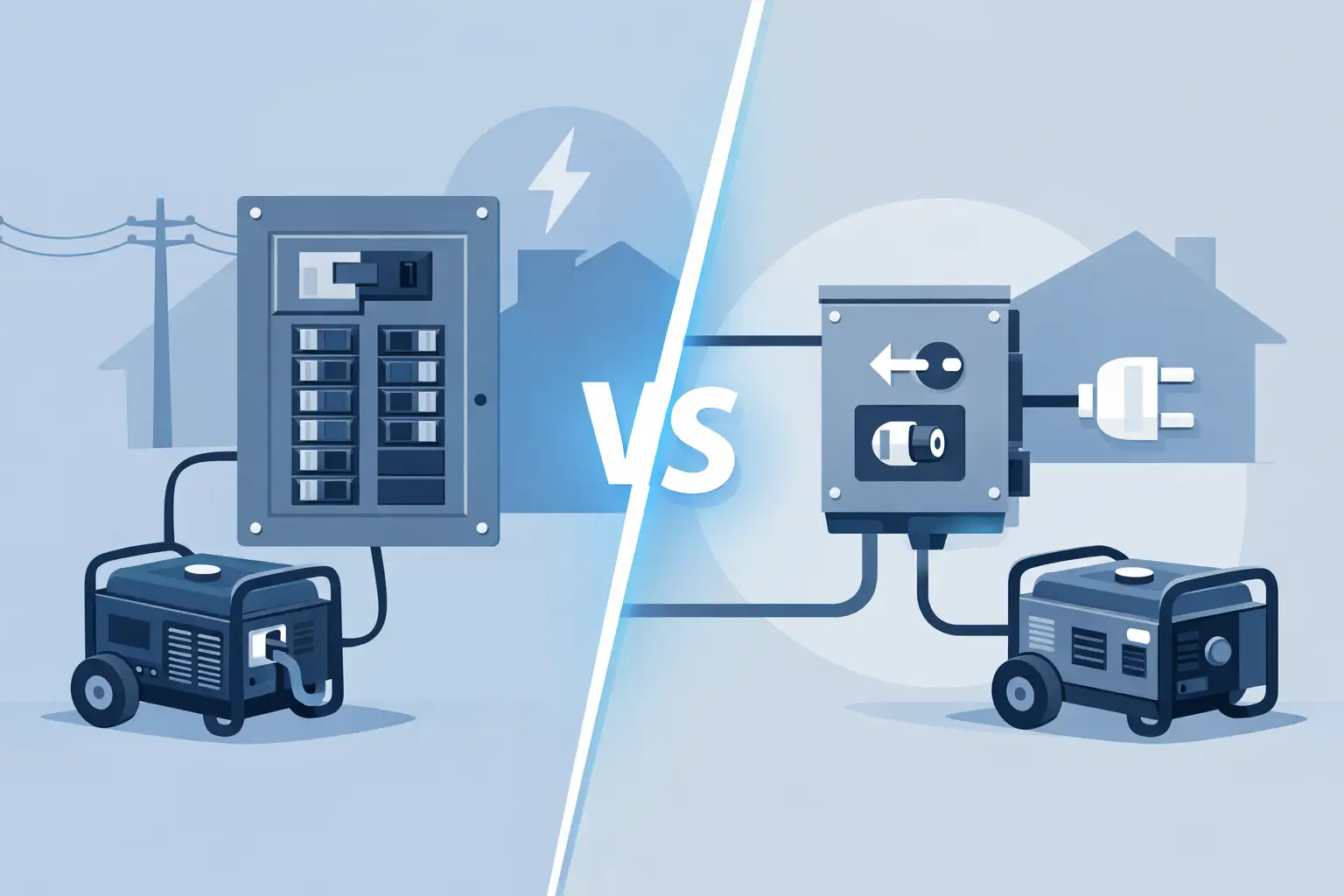
When the power goes out, the question is rarely whether you want backup power. It is whether your home can use a generator safely and conveniently. Choosing a generator interlock versus transfer switch affects which circuits you can run, how easily you can manage an outage, and how your electrical panel is protected from dangerous backfeeding.
For many homeowners, either option can be a dependable solution when it is properly designed and installed. The right choice depends on your generator, your electrical panel, the appliances your family considers essential, and how hands-on you want to be during an outage.
What a Generator Interlock Does
A generator interlock is a mechanical device installed on an electrical panel. It prevents the main utility breaker and the generator breaker from being turned on at the same time. During an outage, you turn off the main breaker, move the interlock, turn on the generator breaker, and then energize selected household circuits with power from a portable generator.
The interlock works with a dedicated generator inlet, usually mounted outside near the panel or in another practical location. You connect the generator to that inlet with an approved generator cord. The generator then supplies power through the panel rather than through extension cords running across the home.
This is a practical option for a homeowner who wants to power different circuits as needs change. You might run the refrigerator and lights first, then turn off those loads to use a well pump, microwave, or other higher-demand appliance. The panel gives you flexibility, but it also requires you to pay attention to the generator’s available capacity.
An interlock does not make every circuit suitable for generator use. Central air conditioning, electric ranges, electric dryers, large EV chargers, and other high-demand equipment can quickly overload a portable generator. A licensed electrician can help identify which loads make sense and can label the panel so operation is clear when the lights are out.
Benefits of an Interlock Kit
The biggest advantage is flexibility. Because the generator connects through the main panel, you can choose from many existing circuits instead of being limited to a small group in a separate backup panel. It is often a cost-conscious approach when the existing panel is compatible with a listed interlock kit.
An interlock can also be a good fit for homeowners who already own a portable generator and are comfortable managing it. You decide which breakers stay on, which helps you make the best use of limited generator wattage during a longer outage.
There are limits. The generator must be started and connected manually, and someone in the home must operate the panel correctly. It is not an automatic solution, and it is not appropriate to install a generic or improvised device. The interlock must be specifically listed for the exact panel model.
What a Transfer Switch Does
A transfer switch moves a home’s power source from utility power to generator power without allowing both sources to connect at once. That separation is essential. It protects utility workers, neighbors, your generator, and your home’s electrical system from backfeed hazards.
Manual transfer switches are common with portable generators. They are often paired with a small panel that contains only the selected circuits you want to power during an outage, such as refrigeration, lighting, garage doors, internet equipment, medical devices, and a few receptacles. When the utility power fails, you start the generator, connect it, and manually transfer those circuits to generator power.
Automatic transfer switches are usually part of a standby generator system. When utility power drops, the system can start the generator and transfer power with little or no homeowner involvement. Once utility power is stable again, the switch transfers the home back and allows the generator to shut down.
A transfer switch is not automatically better simply because it is a transfer switch. A manual transfer switch still requires your participation, while an automatic transfer switch offers a higher level of convenience and typically involves a larger investment. The best option is the one that matches how you expect to use backup power.
Benefits of a Transfer Switch
A transfer switch provides a clearly defined backup-power plan. The electrician chooses and installs the circuits that matter most, making it easier to stay within the generator’s capacity. This can be reassuring for homeowners who do not want to make circuit decisions during an outage.
It can also make operation more straightforward for family members. Instead of managing breakers throughout the main panel, you use a dedicated transfer setup with labeled essential circuits. For a standby generator, an automatic transfer switch provides the strongest option for homes that need dependable backup power during travel, work hours, or emergencies.
The trade-off is that a transfer switch may power fewer circuits unless you invest in a larger system. Adding or changing backed-up circuits later may also require electrical work. Depending on the equipment and panel layout, installation can be more involved than an interlock arrangement.
Generator Interlock Versus Transfer Switch: Key Differences
The decision usually comes down to flexibility, convenience, and budget. An interlock allows you to select circuits from the existing main panel, but you must actively manage electrical loads. A manual transfer switch limits backup power to preselected circuits, which simplifies operation and helps prevent overloads.
For homeowners considering a whole-home standby generator, an automatic transfer switch is generally part of the plan. It is designed for dependable operation without needing someone to be home to start a portable generator or move breakers. This is especially valuable when the home has critical loads, such as refrigerated medications, a security system, a sump pump, or essential medical equipment.
Portable generators can work well with either an interlock or a manual transfer switch. The deciding factor is often whether you prefer broad circuit access or a simple, dedicated list of essentials. A smaller portable generator usually pairs well with carefully selected circuits. A larger portable generator may support an interlock setup, provided the panel, inlet, breaker, cord, and generator are properly matched.
Safety Is the Non-Negotiable Part
Never connect a generator to a home through a dryer outlet, range outlet, or any improvised cord arrangement. This dangerous practice can energize utility lines outside the home, create fire and shock risks, and damage electrical equipment when utility power returns.
A safe installation includes an approved generator inlet, correctly sized wiring and breaker protection, and equipment compatible with your home’s panel and generator. Generator grounding and neutral configuration also matter. Some generators have bonded neutrals, while others have floating neutrals, and the correct setup depends on the transfer equipment being used.
Generators must operate outdoors, well away from doors, windows, vents, and attached garages. Carbon monoxide is colorless and odorless, and it can enter a home quickly. Use working carbon monoxide alarms inside the home and never run a generator in a garage, even with the door open.
For homes in Palmdale, Lancaster, and nearby Antelope Valley communities, a professional assessment is useful before the next wind event or extended outage. Older panels, limited service capacity, outdoor panel locations, and added loads such as EV chargers can all affect the right backup-power design.
How to Choose for Your Home
Start by identifying what truly needs to stay on. Most households prioritize refrigeration, a few lights, phone charging, internet equipment, garage access, and selected kitchen receptacles. If your home relies on a well pump, medical device, or other essential equipment, those loads should be part of the planning from the beginning.
Next, consider your outage routine. If you are comfortable rolling out a portable generator, starting it, connecting a cord, and managing loads, an interlock or manual transfer switch may be a good fit. If you travel frequently, cannot safely operate a portable generator, or need power restored with minimal delay, a standby generator with an automatic transfer switch may provide greater peace of mind.
Finally, have the electrical panel evaluated rather than choosing equipment based on online descriptions alone. A1 Home Electric can assess panel compatibility, generator capacity, essential circuits, and the installation requirements needed for a safe, code-conscious backup power system.
The best backup-power setup is the one your household can operate confidently, protects the people working on utility lines, and keeps the essentials running when your home needs them most.