
A breaker panel may look like a row of ordinary switches, but the protective devices inside it can make a major difference when something goes wrong. Understanding GFCI versus AFCI breakers helps homeowners make better decisions about repairs, panel upgrades, remodeling work, and electrical safety in older homes.
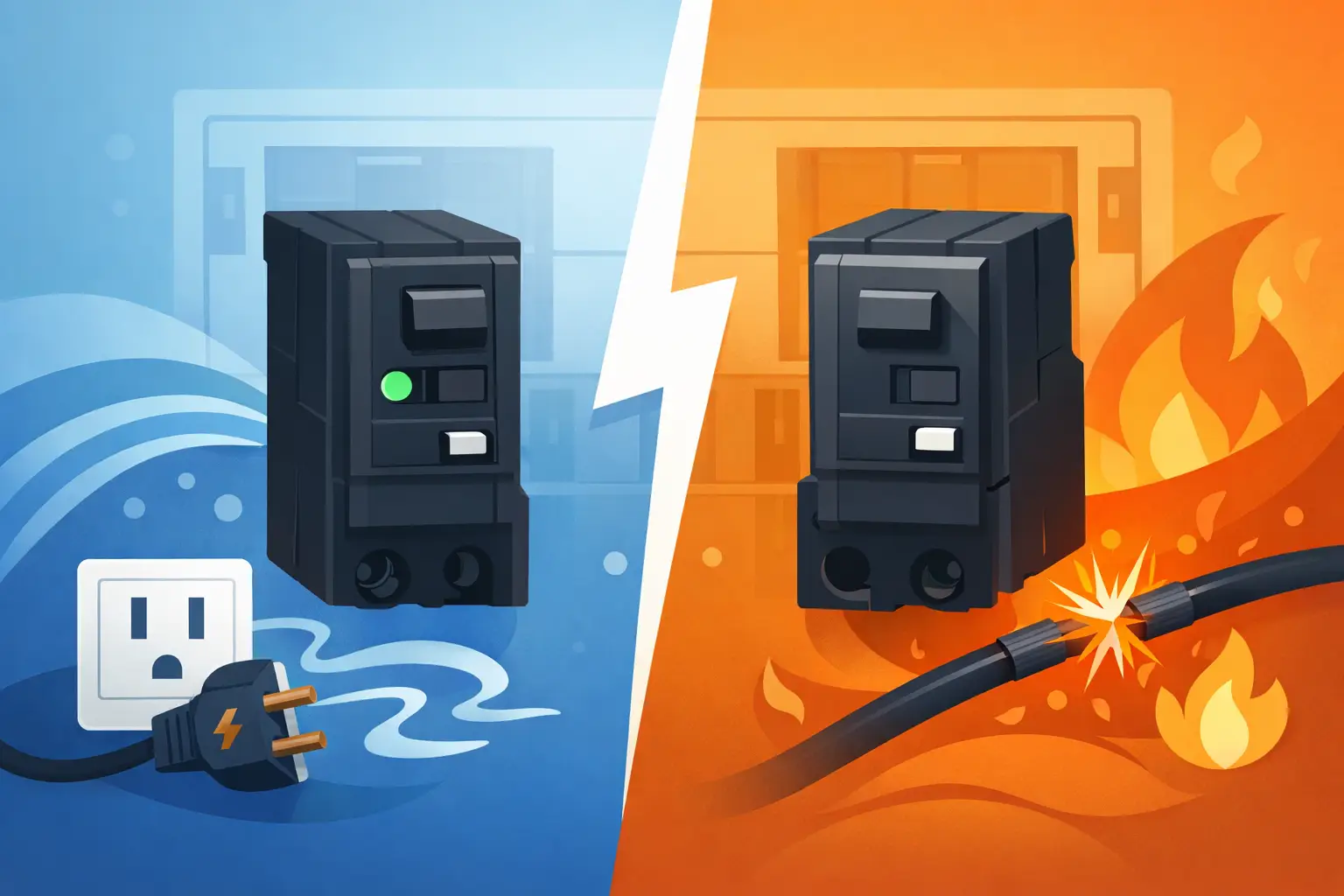
Both devices are designed to shut off power before an electrical problem becomes more dangerous. The difference is what they are watching for. A GFCI is primarily concerned with electrical shock hazards. An AFCI is designed to identify dangerous arcing that can lead to an electrical fire. They can look similar in a panel, but they serve different jobs.
GFCI Versus AFCI Breakers at a Glance
A ground-fault circuit interrupter, commonly called a GFCI, monitors the flow of electricity on a circuit. Under normal conditions, the current leaving on the hot wire should match the current returning on the neutral wire. If some electricity takes an unintended path, such as through water, a damaged appliance, or a person, the GFCI senses that imbalance and trips quickly.
An arc-fault circuit interrupter, or AFCI, looks for the electrical signature of arcing. An arc can occur when a wire is loose, damaged, pinched, or worn. Electricity may jump across a gap instead of traveling safely through a solid connection. That jump creates heat and sparks, sometimes inside a wall or ceiling where the problem is not visible.
Put simply, GFCI protection is focused on reducing shock risk. AFCI protection is focused on reducing fire risk from damaged or failing wiring connections. Neither replaces the other.
What a GFCI Breaker Protects Against
GFCI protection is especially valuable where electricity and moisture are likely to meet. Bathrooms, kitchens, garages, laundry areas, exterior outlets, crawl spaces, and other damp or grounded locations often require this type of protection under modern electrical codes.
A GFCI breaker protects the entire circuit from the electrical panel. That can be useful when multiple outlets, lights, or hardwired equipment on the circuit need ground-fault protection. GFCI receptacles can also provide protection, but they typically protect only that outlet and, when wired correctly, downstream outlets connected to its load terminals.
A GFCI trip does not always mean the breaker is defective. It may be responding to a real issue, such as moisture in an outdoor outlet, a worn appliance cord, a failing garbage disposal, or a damaged wire. Repeated tripping deserves attention rather than a quick reset. Resetting a protective device without finding the cause can leave the underlying problem in place.
What an AFCI Breaker Protects Against
AFCI breakers are common on many newer home circuits, particularly in living spaces where cords, furniture, nails, screws, and aging wiring can create hidden hazards. Bedrooms, family rooms, hallways, and similar areas may have AFCI requirements depending on the age of the home, the circuit, the scope of work, and the code requirements that apply locally.
An AFCI can respond to a loose outlet connection, a damaged extension cord, a wire nicked behind drywall, or deteriorating wiring in an older home. These problems do not always draw enough current to trip a standard breaker. A conventional breaker is designed mainly to protect against overloads and short circuits. It may not detect the lower-level arcing that can generate heat over time.
AFCI protection is not a substitute for proper electrical repairs. If an AFCI trips repeatedly, the circuit needs professional troubleshooting. The source may be a loose connection, a faulty appliance, an incompatible device, damaged wiring, or an issue in the panel itself. Removing AFCI protection simply because it trips is not a safe solution.
Why Standard Breakers Are Not Enough
Standard circuit breakers remain essential. They protect wiring from excessive current caused by overloads and direct short circuits. For example, if too many high-demand appliances run on one circuit, a standard breaker can trip before the conductors overheat.
However, standard breakers do not provide the same specialized protection as GFCI or AFCI devices. A small ground fault may be dangerous to a person while remaining below the current level needed to trip a standard breaker. Likewise, an intermittent arc at a loose connection can create heat without looking like a major overload.
That is why modern electrical safety often uses layers of protection. The correct breaker type depends on the circuit, the location, the equipment served, and current code requirements.
Can One Breaker Provide Both Protections?
Yes. Dual-function breakers combine GFCI and AFCI protection in one device. They are often a practical option when a circuit needs both shock and arc-fault protection, especially during a panel upgrade, kitchen renovation, laundry circuit installation, or other electrical improvement.
A dual-function breaker can reduce crowding in a panel compared with trying to add separate protective devices. Still, it must be correctly matched to the panel manufacturer, breaker style, voltage, amperage, and wiring configuration. Breakers are not interchangeable just because they appear to fit. Installing the wrong type can create a safety issue and may violate the equipment listing.
For homeowners, the practical takeaway is simple: if a circuit requires both protections, use equipment designed to provide both. A licensed electrician can confirm what is appropriate for the circuit and the specific panel.
Where Homeowners Commonly See Each Type
The exact requirements for GFCI and AFCI protection can change with electrical code updates and the details of a project. A local inspection authority may also apply requirements differently depending on whether the work involves a new circuit, a remodel, a replacement panel, or a repair. Still, homeowners often encounter GFCI protection around water and outdoors, while AFCI protection is frequently found on circuits serving interior living areas.
In Antelope Valley homes, the age of the property matters. A home built decades ago may have a panel and branch wiring that predate current protection standards. That does not automatically mean the entire electrical system needs to be replaced. It does mean that a thoughtful inspection can identify where upgrades would meaningfully improve safety, particularly during remodeling, service-panel work, or when a circuit has ongoing problems.
What Repeated Breaker Trips Can Tell You
A breaker that trips once after an obvious overload may have done its job. A breaker that trips repeatedly, especially without a clear reason, should be investigated. The pattern matters.
A GFCI breaker that trips when it rains may point to an exterior outlet, landscape connection, or moisture issue. A GFCI that trips when a particular appliance runs may indicate a problem with that appliance or its cord. An AFCI that trips after furniture is moved, a picture is hung, or an outlet feels loose can suggest a wiring or connection concern.
Do not keep resetting a breaker that will not stay on. Avoid replacing a protective breaker with a standard breaker just to stop nuisance trips. The interruption may be inconvenient, but the breaker may be alerting you to a condition that needs expert electrical repairs.
When to Call a Licensed Electrician
Call for professional help if you notice repeated trips, buzzing from the panel, warm outlets, burning odors, flickering lights, discolored receptacles, or breakers that will not reset. These signs do not always mean an emergency, but they should not be ignored.
A licensed electrician can test the circuit, inspect connections, evaluate the panel, and determine whether the issue is in the breaker, outlet, appliance, or concealed wiring. This is particularly valuable in older homes with ungrounded outlets, aluminum wiring, aging panels, or past do-it-yourself modifications.
A1 Home Electric helps homeowners in Palmdale, Lancaster, and nearby Antelope Valley communities address breaker concerns with a focus on quality and safety. The right repair is not always the largest repair. Sometimes it is a targeted correction that restores dependable protection where the home needs it most.
Your electrical panel should not be a mystery you only think about after a problem occurs. When a breaker trips, treat it as useful information, and let a qualified professional help turn that warning into a safer, more reliable home.