

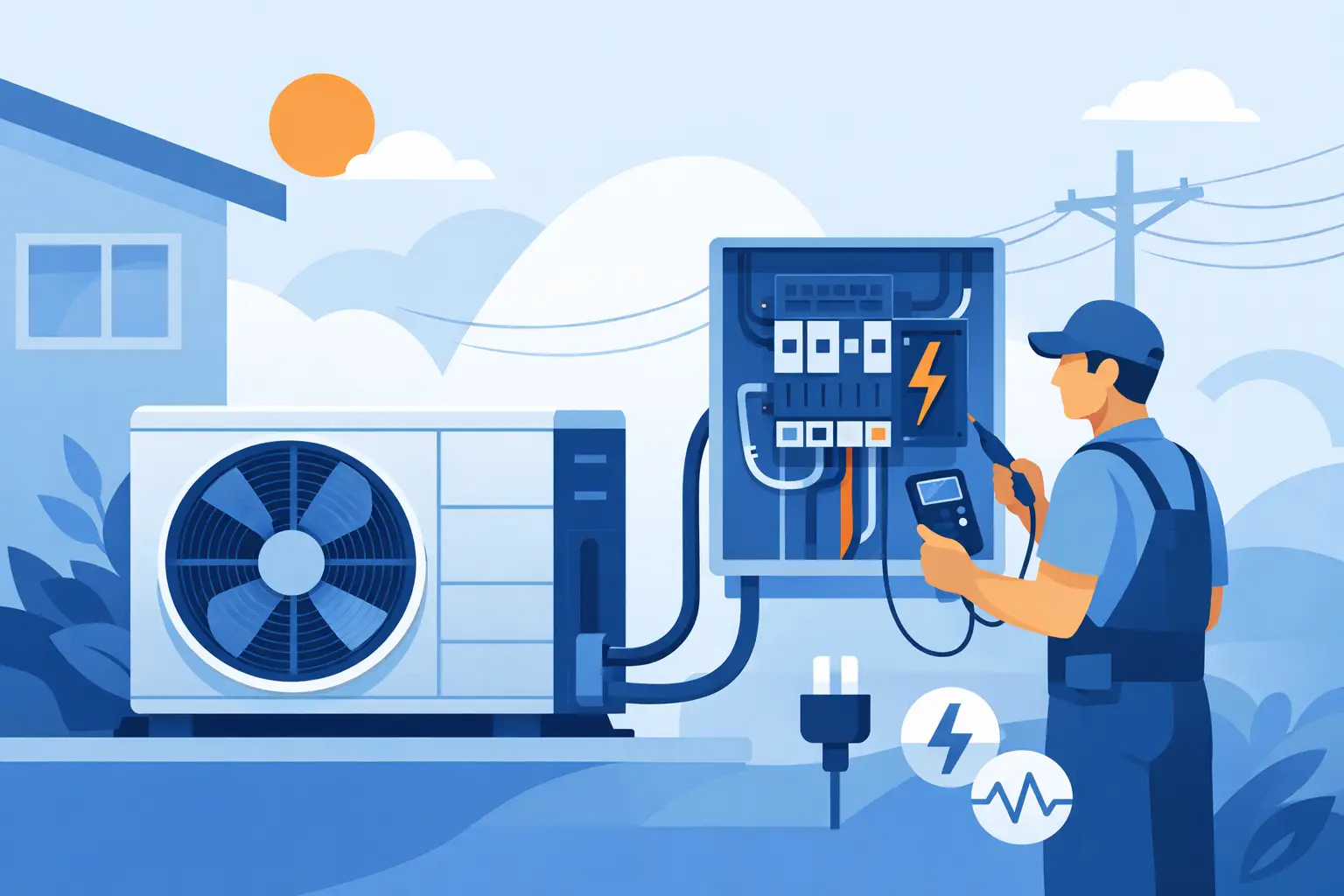
A heat pump can lower energy use and improve comfort, but only if your home’s electrical system is ready for it. Heat pump electrical requirements are one of the first things to check before installation, especially in homes with older panels, limited circuit space, or existing high-demand equipment.
For many homeowners, the surprise is not the outdoor unit or the thermostat. It is the electrical side of the project. A new heat pump may need a dedicated circuit, the right breaker size, proper wire sizing, a disconnect near the unit, and enough panel capacity to handle startup and heating loads safely. If any part of that is off, performance and safety can suffer.
What heat pump electrical requirements usually include
Most residential heat pumps need a dedicated 240-volt circuit. That circuit is sized based on the equipment manufacturer’s specifications, not guesswork. The breaker size, wire gauge, and disconnect must all match the unit’s listed electrical data.
This is where homeowners often run into confusion. Two systems with similar heating and cooling output can have different electrical needs. A smaller high-efficiency unit may draw less power than an older or less efficient model. A heat pump with electric auxiliary heat strips can require much more electrical capacity than a basic setup. The exact equipment matters.
In practical terms, the electrical requirements usually involve the branch circuit for the outdoor condenser or package unit, low-voltage wiring for controls, and sometimes additional power for an air handler, backup heat, or indoor accessories. If the system includes electric resistance heat, that can place a much larger demand on the panel than the heat pump itself.
Dedicated circuits, breaker size, and wire sizing
A heat pump should not share a circuit with other major appliances. It needs its own dedicated circuit because HVAC equipment has specific load characteristics and startup demands. The circuit must be protected by the correct breaker and wired with conductors sized for the unit.
The two labels electricians and HVAC installers pay close attention to are the minimum circuit ampacity and the maximum overcurrent protection. Minimum circuit ampacity helps determine the wire size needed. Maximum overcurrent protection sets the upper limit for the breaker or fuse protecting the equipment. Those numbers are listed by the manufacturer and are there for a reason.
This is also why online rules of thumb can be misleading. A homeowner might hear that most heat pumps use a 30-amp or 40-amp breaker, and sometimes that is true. But not always. Some systems need less, and others, especially those with auxiliary heat, can need significantly more. The safe answer comes from the equipment data and a load calculation, not from a one-size-fits-all estimate.
Panel capacity matters more than many homeowners expect
The biggest issue is not always the new circuit itself. Sometimes the real problem is whether the home’s main electrical panel can support the added load. If the panel is already close to capacity, adding a heat pump may require a load calculation, a subpanel, or a full panel upgrade.
That tends to happen in older homes where the electrical system was designed around a smaller number of major appliances. Once you add central air, an electric water heater, a dryer, kitchen upgrades, or an EV charger, available capacity can disappear quickly. A heat pump installation may be the project that finally reveals the panel is undersized or outdated.
There is also a space issue. Even if the panel has enough total capacity, it still needs physical room for the required breaker spaces. If the panel is full, that has to be addressed safely and according to code. Trying to force more into an overloaded or crowded panel is not a long-term solution.
Why backup heat changes the electrical picture
If your system includes electric heat strips for backup or emergency heat, the electrical requirements can increase quite a bit. The heat pump itself is generally efficient, but electric resistance heat draws much more current. That means a larger circuit, heavier wiring, and more panel capacity may be needed.
This matters in colder weather, during defrost cycles, or any time the system switches to auxiliary heat. In some homes, the backup heat can be the largest electrical load tied to the HVAC system. Homeowners planning a heat pump specifically to reduce operating costs should understand this trade-off. The system can still be efficient overall, but the auxiliary heat side needs to be planned carefully.
In areas like the Antelope Valley, where temperatures can swing and HVAC systems work hard through both hot summers and cold nights, sizing the equipment and the electrical service correctly becomes even more important for reliability.
Disconnects, shutoffs, and code-conscious installation
A proper heat pump installation includes more than breaker and wire sizing. Outdoor equipment typically requires a disconnect within sight of the unit so it can be serviced safely. The wiring method, conduit, grounding, and overcurrent protection all need to meet current code requirements.
This is one reason a clean-looking installation still might not be a safe one. If the disconnect is wrong, the conductors are undersized, or the breaker does not match the manufacturer’s listing, the system may not be properly protected. That can lead to nuisance tripping, equipment damage, shortened lifespan, or more serious hazards.
For homeowners, the takeaway is simple. Heat pump electrical work should be handled with the same care as the equipment installation itself. This is not a place for shortcuts.
Common problems found before a heat pump install
When evaluating a home for a heat pump, electricians often find a few recurring issues. Older panels may have limited capacity or signs of wear. Existing HVAC circuits may be improperly sized. Previous additions or garage conversions may have changed the home’s load without a full service review.
Sometimes the issue is less obvious. Voltage drop from a long run, improper breaker matching, aluminum branch wiring concerns, or a panel with a poor service history can all affect whether the installation should move forward as planned. In those cases, addressing the electrical system first protects the investment in the new equipment.
This is also why estimates can vary. One home may be ready for a straightforward connection. Another may need panel work, circuit additions, or correction of older wiring issues before the heat pump can be installed safely.
Do all heat pumps need a panel upgrade?
No, but some do. It depends on the size of the system, whether auxiliary heat is included, what other major electrical loads the home already has, and the condition and capacity of the existing service.
A newer home with a 200-amp panel and available breaker space may be able to accommodate the system without major changes. An older home with a 100-amp service, a full panel, and several electric appliances may need upgrades before installation makes sense.
The right approach is a real electrical evaluation. That includes reviewing the equipment specifications and comparing them to the home’s existing load and panel condition. Homeowners are usually best served when this happens early in the planning stage, not after the HVAC equipment has already been selected.
What homeowners should ask before installation
Before moving ahead, ask whether the heat pump will have a dedicated 240-volt circuit, whether backup heat is included, and whether the installer has confirmed panel capacity. It is also reasonable to ask if a disconnect will be installed at the unit, whether any panel upgrades may be needed, and who is responsible for the electrical permit if one applies.
These are not technical questions for the sake of it. They help you understand whether the system is being planned for long-term performance or just pushed through to finish the install. Good planning now can prevent tripped breakers, comfort issues, and expensive corrections later.
If your home already has an aging panel, flickering lights when major appliances start, or a history of electrical repairs, those are good reasons to get the electrical side looked at carefully before adding HVAC load. A1 Home Electric sees this often in homes where comfort upgrades are being added to systems that were not built for today’s demand.
Heat pump electrical requirements are about safety and performance
When homeowners hear about heat pump electrical requirements, they sometimes think it is just a permit or inspection issue. In reality, it directly affects how safely and reliably the system will run. Proper circuit sizing protects the equipment. Adequate panel capacity reduces stress on the home’s electrical system. Correct installation helps the heat pump deliver the comfort and efficiency you are paying for.
If you are planning a heat pump, think of the electrical system as part of the installation, not a side note. A careful review now can save time, avoid surprises, and help your home stay comfortable in every season.