
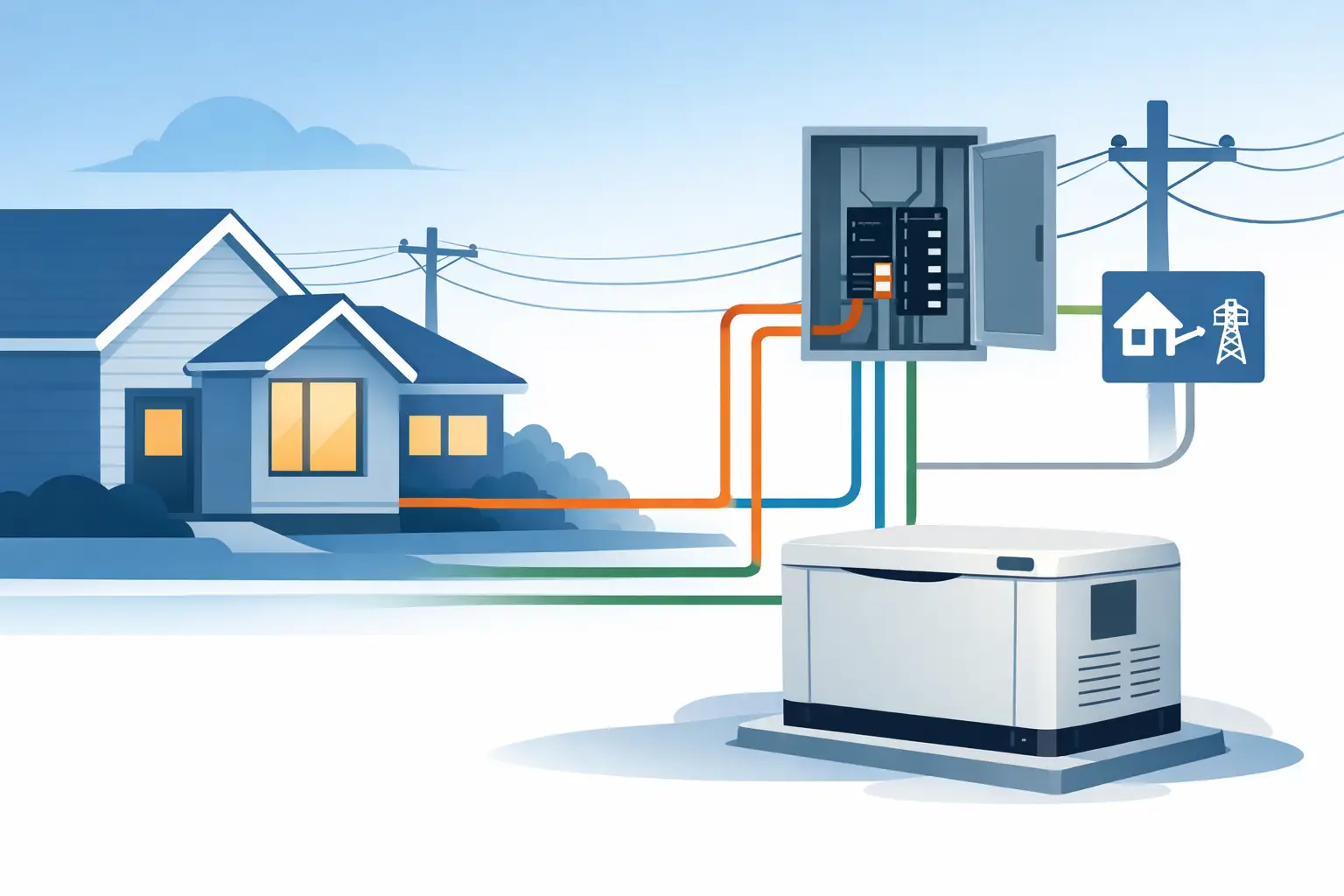
A standby generator can keep the lights on when high winds, utility equipment issues, or extreme heat interrupt power. But the generator itself is only part of the system. Safe home standby generator wiring determines whether backup power reaches the right circuits, protects utility workers, and operates reliably when your family needs it most.
For homeowners, the goal is not simply to connect a generator to the house. The goal is a properly designed backup power system that works automatically, follows local requirements, and fits the electrical capacity of the home.
What Home Standby Generator Wiring Includes
A permanent standby generator is connected to the home through dedicated electrical equipment. Unlike a portable generator, it is designed to sense a utility outage, start automatically, and supply selected household loads or, in some cases, much of the home.
The central component is the transfer switch. This device separates the home from the utility supply before generator power is introduced. That separation is critical. Without it, electricity can feed back into utility lines, creating a serious danger for line workers and risking damage to electrical equipment.
Home standby generator wiring typically includes the generator feeder wiring, a transfer switch or service-rated transfer equipment, control wiring, properly sized breakers, and grounding and bonding connections. It may also include load-management controls that prevent too many large appliances from starting at once.
Each part must work with the others. A generator with adequate output can still perform poorly if the transfer equipment, panel capacity, wire sizing, or circuit selection is not properly planned.
Start With the Loads You Want to Protect
The most useful generator installation starts with an honest conversation about what needs power during an outage. Many homeowners do not need every circuit in the house energized. They need the equipment that protects comfort, safety, and daily routines.
Common priority loads include refrigeration, lighting, internet equipment, garage doors, medical devices, security systems, well pumps, and selected kitchen outlets. In the Antelope Valley, air conditioning can also be a major consideration during a summer outage. However, central air conditioning, electric water heaters, electric ranges, pool equipment, and EV chargers can significantly increase the generator size required.
There are two common approaches. A partial-home setup powers essential circuits through a dedicated transfer switch or backup load panel. This is often a practical option for households that want dependable coverage without purchasing an oversized generator. A whole-home setup uses service-rated transfer equipment and may power most or all circuits, though it can still use load shedding to manage large appliances.
Neither approach is automatically better. The right choice depends on the home’s electrical demand, the generator’s capacity, the household’s expectations, and the budget for the project. A qualified electrician can help identify which circuits provide the most value during an outage.
Why the Transfer Switch Matters So Much
The transfer switch is the safety gate between utility power and generator power. During normal operation, the home receives electricity from the utility. When an outage occurs, the switch disconnects the utility source and transfers the selected loads to the generator. When utility service returns and stabilizes, the system transfers back.
This sequence prevents generator power from entering the utility system. It also prevents utility power and generator power from being connected at the same time. Both situations can create severe electrical hazards.
Automatic transfer switches are common with home standby systems because they respond without homeowner intervention. The generator starts, warms up briefly, and the transfer switch moves the home or selected circuits to backup power. Manual transfer equipment may be suitable for certain installations, but it requires someone to operate it during an outage.
The transfer switch must be rated and installed for the home’s electrical service and the generator’s intended load. It is not a one-size-fits-all component. Its location, access, wiring method, and compatibility with the existing panel all affect the final installation.
Electrical Panel Condition Can Shape the Project
A generator installation often reveals issues that have been easy to overlook in an older electrical system. Crowded panels, outdated breakers, corrosion, missing labels, improperly sized circuits, or limited space can complicate home standby generator wiring.
In some homes, the main panel has room and capacity for the required equipment. In others, a panel upgrade, subpanel, breaker replacement, or service equipment change may be needed before the generator can be connected safely. This is especially common when a home has added air conditioning, a pool, an EV charger, or other major electrical loads over the years.
An electrical evaluation should look beyond whether the lights currently work. It should confirm the condition of the service equipment, available panel space, grounding and bonding, circuit layout, and the actual loads the generator will serve. Correcting issues before installation helps avoid surprises during permitting or inspection.
Generator Size and Wiring Must Match
Generator sizing is not based on square footage alone. Two similarly sized homes may have very different electrical needs depending on their HVAC equipment, appliances, fuel types, pump systems, and selected backup circuits.
A properly sized system accounts for both running wattage and the higher demand created when motors start. Air conditioners, refrigerators, freezers, pumps, and garage door openers can draw more power at startup than they do while running. If too many loads start together, an undersized generator can overload or shut down.
Load-management equipment can make a whole-home backup system more practical. It prioritizes essential circuits and temporarily delays lower-priority loads when demand is high. For example, the system may allow lighting, refrigeration, and outlets to remain active while cycling a high-demand air conditioner or pool pump.
Wire size, breaker size, and transfer equipment must be selected for the generator and the connected loads. Oversimplifying this work can lead to overheating, nuisance tripping, equipment damage, or a system that fails when it is needed.
Permits, Inspections, and Local Requirements
Permanent standby generators usually require permits and inspections. Electrical requirements are intended to verify safe wiring, proper disconnecting means, correct overcurrent protection, grounding, equipment ratings, and code-compliant installation methods.
There may also be requirements related to the generator’s location, clearances, fuel supply, gas piping, and noise. Electrical work often needs to be coordinated with other licensed professionals when the generator uses natural gas or propane.
For homeowners in Palmdale, Lancaster, and nearby communities, local permitting requirements can vary by jurisdiction and property conditions. A professional installer can help plan the electrical portion of the project so it is ready for inspection and does not create avoidable delays.
Skipping permits may seem tempting when a project appears straightforward, but standby generators are not simple plug-in appliances. The system changes how a home receives power during an outage. Proper permits and inspections provide a valuable layer of protection for the household and the property.
Why This Is Not a DIY Wiring Project
Homeowners can make informed decisions about generator capacity and protected circuits, but the wiring and connection work should be completed by a licensed electrical professional. The installation involves live service equipment, utility isolation, electrical load calculations, grounding, and code requirements that are not forgiving of mistakes.
A dangerous shortcut is using improvised connections to feed generator power into household outlets or a panel. This can energize circuits unexpectedly, damage appliances, overload wiring, and create backfeed hazards. A standby generator should only serve a home through approved transfer equipment installed for that purpose.
Professional installation also supports long-term reliability. A knowledgeable electrician can label circuits clearly, verify operation under normal and generator power, test transfer behavior, and explain what the homeowner should expect during an outage.
Plan for Testing and Ongoing Electrical Care
A standby generator is most valuable when it starts without hesitation. After installation, periodic exercise and maintenance help keep the engine, battery, fuel system, and controls ready. The electrical side also deserves attention, especially after panel work, renovations, or significant additions such as HVAC upgrades or an EV charger.
Homeowners should know which loads are backed up, where the generator and transfer equipment are located, and what normal operation sounds like. If the system does not transfer correctly, breakers trip repeatedly, lights flicker under generator power, or the unit displays an alert, schedule service rather than waiting for the next outage.
Quality home standby generator wiring gives your household more than temporary power. It provides a safer, more dependable way to protect the routines, equipment, and comfort that matter when utility service is unavailable. A careful electrical assessment before installation is the best first step toward backup power that performs as promised.