

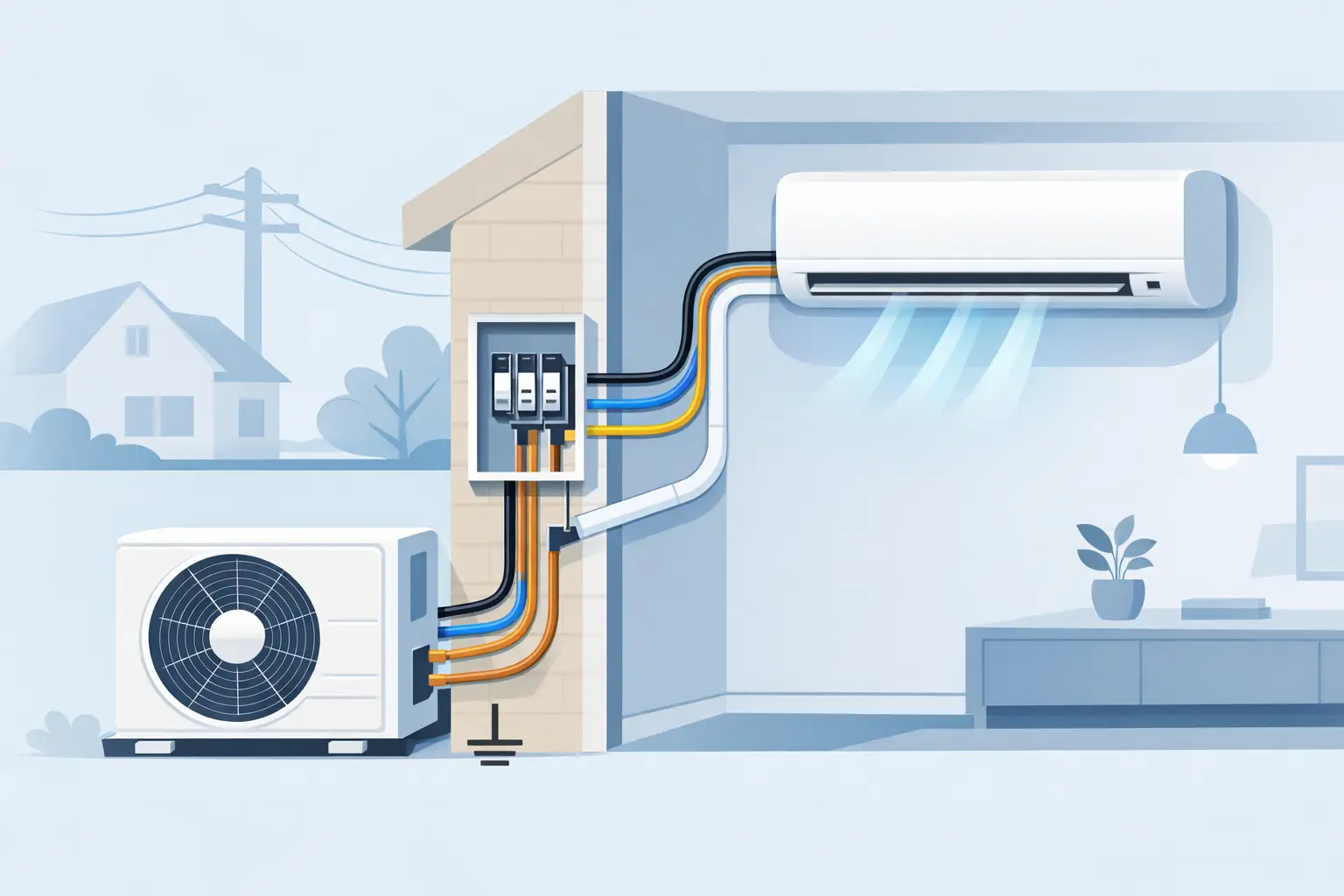
A mini split can solve a comfort problem fast – one hot bedroom, a garage that never cools down, or an older home without ductwork. But before the indoor unit goes on the wall, the electrical side needs just as much attention. Home wiring for mini splits is not a minor detail. It affects safety, performance, and whether the system runs the way it should during the hottest and coldest parts of the year.
Many homeowners assume the HVAC installer handles everything. Sometimes they do, and sometimes they coordinate with a licensed electrician. That difference matters. A mini split may look compact, but it still places a real demand on your home’s electrical system.
Why home wiring for mini splits matters
Mini splits are efficient, but efficient does not mean electrically simple. Most systems need a dedicated circuit sized to the equipment’s voltage and amperage requirements. If the wiring is undersized, the breaker is wrong, or the panel is already overloaded, the system may trip, underperform, or create a safety concern.
This is especially relevant in homes with older panels, past DIY electrical work, or a history of nuisance breaker trips. A new cooling and heating system should improve comfort, not expose hidden electrical problems. Good planning at the start usually prevents expensive corrections later.
There is also a code and inspection side to consider. Electrical work for HVAC equipment is not just about making the unit turn on. It needs proper overcurrent protection, the right disconnect, correct conductor sizing, and a clean installation that supports long-term reliability.
What a mini split usually needs electrically
The exact setup depends on the brand, size, and whether the system is a single-zone or multi-zone unit. Some smaller mini splits run on 120 volts, but many require 208/230 volts. That usually means a dedicated two-pole breaker in the panel and wiring sized specifically for that unit.
In practical terms, a homeowner may need space in the electrical panel, enough service capacity, and a wiring path from the panel to the outdoor condenser location. The indoor head and outdoor unit work together, but the main power requirements are typically tied to the condenser and its manufacturer specifications.
That is where one of the biggest mistakes happens. People hear that a mini split is energy efficient and assume it can be added to an existing circuit. In most cases, that is not the right approach. These systems are usually designed to be on their own circuit, and that requirement is there for a reason.
The panel is part of the conversation
Home wiring for mini splits often leads back to the panel. If your panel is modern, in good condition, and has open breaker space, the electrical side may be fairly straightforward. If not, the project can become more involved.
A crowded panel does not automatically mean you cannot install a mini split, but it may mean you need load calculations, panel reconfiguration, or a panel upgrade. It depends on what else the home is already supporting. Electric ranges, dryers, EV chargers, hot tubs, and older air conditioning equipment all add up.
For many homeowners, this is the hidden value of having an electrician involved early. You find out whether the issue is simply adding a dedicated circuit or whether the home needs broader electrical improvements to support the new equipment safely.
Dedicated circuits, disconnects, and wire sizing
A dedicated circuit means the mini split is not sharing power with lights, outlets, or other appliances. That gives the equipment stable power and reduces the chance of overloaded wiring. It also makes troubleshooting easier if there is ever a problem.
Wire sizing is based on the unit’s electrical data, not guesswork. If a system calls for a certain breaker size and minimum circuit ampacity, the wiring needs to match. Oversimplifying this part can lead to overheating conductors, nuisance tripping, or a setup that does not meet code.
Most installations also require a disconnect near the outdoor unit. That allows service personnel to safely shut off power while working on the equipment. It is one of those details homeowners may not think about, but it is a normal and important part of a complete installation.
Single-zone and multi-zone systems are not the same
A single-zone mini split that cools one room may have a lighter electrical demand than a multi-zone system serving several indoor heads. The larger the system, the more important it is to verify panel capacity and circuit design.
This is one reason online advice can be misleading. A wiring approach that works for a small detached office may not apply to a whole-home multi-zone installation. The equipment specifications, run length, panel condition, and existing household load all matter.
For homeowners comparing options, it helps to think beyond the unit price. A less expensive system can still become a more complex project if the home needs electrical upgrades to support it properly.
Common issues found during mini split electrical work
When electricians evaluate a home for a mini split, a few problems come up again and again. Sometimes the panel has no available space. In other homes, the service is technically full, even if there appears to be room for another breaker. Older breaker panels may also raise reliability or replacement concerns.
Another common issue is poor past workmanship. Double-tapped breakers, mislabeled circuits, undersized conductors, and improvised connections are not unusual in older homes. A mini split project can bring those conditions to light because the new circuit has to be installed correctly from the start.
Routing can also be a factor. If the condenser is going on the far side of the house, or if finished walls and attic access are limited, the installation may take more labor than expected. That does not make the project unreasonable. It just means the electrical plan should be based on the actual home, not a standard estimate.
When to involve a licensed electrician
Some HVAC companies handle the electrical portion with their own crew. Others prefer to have a licensed electrician complete the circuit, disconnect, and panel work. For the homeowner, what matters most is that the electrical installation is done safely and according to the equipment requirements.
A licensed electrician is especially important when the home has an older panel, signs of previous electrical issues, planned future upgrades, or any uncertainty about service capacity. If you are already thinking about an EV charger, workshop equipment, or other major electrical additions, it makes sense to evaluate the whole picture instead of treating the mini split as an isolated project.
That broader view is often what protects long-term home performance. In communities like Palmdale and Lancaster, where cooling demand is not a seasonal afterthought, homeowners benefit from electrical work that is built to hold up under real use.
How homeowners can prepare for the project
You do not need to know the electrical code to ask the right questions. It helps to know the model or tonnage of the mini split being installed, where the outdoor unit will go, and whether your panel has had any recent issues. If breakers have been tripping, lights dim when appliances start, or the panel is older, mention that early.
It is also smart to ask whether the quote includes all electrical work or whether a separate electrical contractor will be needed. That avoids confusion later and helps you compare bids more accurately. A low HVAC quote can look different once proper electrical work is added.
For homeowners who want fewer surprises, the best approach is simple: treat the electrical side as part of the system, not an add-on. Comfort equipment works best when the power behind it is planned with the same care as the equipment itself.
The long-term value of doing it right
Good home wiring for mini splits is not about overbuilding. It is about matching the circuit, panel, and installation method to the actual demands of the equipment and the home. That protects the system, supports efficiency, and reduces the chance of future service calls tied to preventable electrical problems.
It also gives homeowners something that matters just as much as cold air or warm air – confidence. When the wiring, breaker, disconnect, and panel capacity are all handled correctly, the mini split is far more likely to deliver the dependable comfort you expected. If you are planning a new system, a careful electrical evaluation is one of the best steps you can take before installation day.