

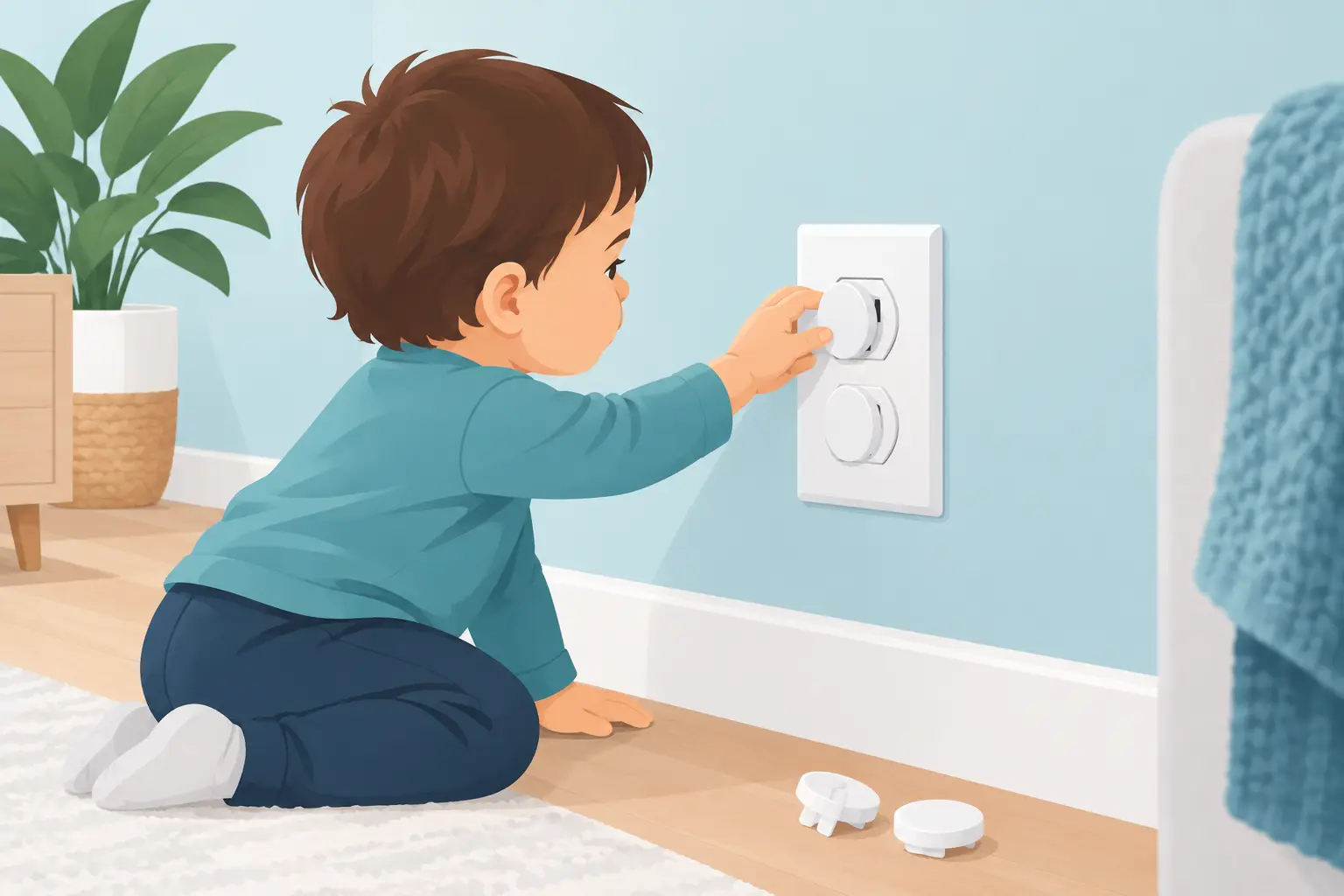
A crawling baby can spot an unused outlet across the room faster than most adults expect. Learning how to childproof electrical outlets is a simple way to reduce a real household hazard, but the right solution depends on the outlet’s location, condition, and how your family uses the room. The goal is not to make outlets difficult for adults to use. It is to keep small fingers and everyday objects out while making sure the electrical system itself is safe.
Start with a Whole-Home Outlet Check
Before buying outlet covers, walk through the home at a child’s level. Check outlets behind furniture, beside beds, near the floor in living areas, and in rooms that may not seem like a child’s space yet. A curious child can reach an outlet in a hallway, guest room, garage, or laundry area just as easily as one in a nursery.
Look for more than open receptacles. A loose cover plate, cracked outlet face, missing screw, scorch mark, buzzing sound, or plug that falls out can point to a repair issue. Childproofing accessories are not a fix for damaged wiring or a worn-out receptacle. If an outlet feels warm, has discoloration, trips a breaker repeatedly, or gives off an odor, stop using it and have it inspected by a licensed electrician.
In older Antelope Valley homes, it is common to find outlets that have loosened with years of use or rooms that were added or remodeled without enough receptacles. Extension cords and overloaded power strips may then become part of daily life. That creates a separate safety concern that outlet covers cannot solve.
Choose the Right Way to Childproof Electrical Outlets
The best option depends on whether the outlet is usually unused, used every day, or located near moisture. There is no single product that fits every room.
Use Tamper-Resistant Receptacles for a Long-Term Solution
Tamper-resistant receptacles have built-in shutters behind the slots. Both shutters must be pressed at the same time by a properly inserted plug before the outlet provides access. A child pushing a key, toy, or other single object into one slot cannot open the shutters.
For homes with young children, tamper-resistant outlets are generally the most dependable permanent option. They do not need to be removed and replaced every time someone uses an appliance, and there are no small pieces to lose. They also provide a cleaner solution in frequently used areas such as living rooms, bedrooms, home offices, and kitchens.
Replacing an outlet can look straightforward, but safe installation depends on more than turning off a switch. The correct circuit must be identified and tested, connections need to be secure, and the receptacle must be properly grounded where required. An electrician can also identify whether the outlet box, wiring, or circuit protection needs attention before installing a new device.
Consider Sliding Outlet Covers in Active Rooms
Sliding outlet covers replace the standard wall plate. When a plug is removed, the openings close automatically. They can work well for outlets used occasionally, especially in a living room or bedroom where plugging in lamps, chargers, or seasonal items is common.
These covers avoid the loose-piece issue of traditional plug caps. However, they add a moving part and may be less convenient for large power adapters. Choose a well-fitting cover designed for the outlet type in your home, and make sure it sits flat against the wall without gaps or loose hardware.
Use Plug Caps Carefully for Unused Outlets
Plastic plug caps are inexpensive and easy to install. They can be practical for outlets that will remain unused for a short period, such as behind a piece of furniture. Still, they require adult attention. A removed cap can become a choking hazard, and older children may learn how to pull them out.
If you use plug caps, check them regularly and keep extras secured away from children. Do not rely on them as the only safety measure in a busy playroom or a home where an outlet is loose or damaged.
Protect Outlets Where Water Is Present
Water and electricity require extra care. Kitchens, bathrooms, laundry areas, garages, outdoor spaces, and other damp locations should have ground-fault circuit interrupter protection, often called GFCI protection. A GFCI is designed to quickly shut off power when it senses an imbalance that could indicate electricity is traveling through an unsafe path.
A childproof cover does not replace GFCI protection. A GFCI outlet may have test and reset buttons on its face, though protection can also be provided elsewhere on the circuit. If an outlet near water does not work correctly, will not reset, or lacks appropriate protection, it should be evaluated rather than ignored.
For outdoor outlets, use weather-resistant equipment and a cover rated for outdoor use. If something must stay plugged in outside, such as landscape lighting or holiday decorations, a while-in-use cover helps protect the connection from weather while the cord is installed. Never run a household extension cord through standing water, under a rug, or across a walkway where it can be damaged.
Keep Cords and Furniture From Creating New Risks
Outlet safety is also about what is plugged in. A covered outlet can still be part of an unsafe setup if cords are frayed, adapters are overloaded, or furniture presses hard against plugs.
Avoid daisy-chaining power strips or plugging major appliances into extension cords. Space heaters, microwaves, refrigerators, air conditioners, and other high-demand equipment need properly sized, reliable power sources. In a child’s room, keep cords as short and protected as possible. Route them away from cribs, beds, and play areas, and do not hide cords under rugs where heat and damage can go unnoticed.
Be cautious with oversized phone chargers and multi-outlet adapters. They can make a standard outlet top-heavy and easier to pull loose. If your household is constantly competing for outlets, adding properly placed receptacles is safer and more convenient than relying on adapters throughout the room.
Teach Safe Habits as Children Grow
Physical protection matters most when children are babies and toddlers, but safety conversations should start early. Teach children that outlets are not toys and that plugs are for adults to handle. Keep keys, coins, metal hair accessories, and other small conductive objects off the floor and out of reach.
As children get older, show them how to remove a plug by holding the plug itself rather than yanking the cord. Explain that damaged cords should be brought to an adult, not taped up and reused. Clear, calm rules are more effective than making electricity seem mysterious or frightening.
When an Electrical Inspection Makes Sense
Call for trusted electrical repair when outlet protection reveals a larger concern. An inspection is a smart step if outlets are loose, two-prong outlets are still common in living areas, breakers trip without an obvious cause, lights flicker, or you depend heavily on extension cords. The same applies after a renovation, before bringing home a new baby, or when moving into an older property.
A1 Home Electric has served Palmdale and the surrounding Antelope Valley since 2006, providing code-conscious repairs and upgrades with quality and safety in mind. A licensed electrician can replace worn receptacles, add tamper-resistant outlets, improve GFCI protection, and determine whether a panel or wiring concern needs further work.
A childproof outlet should give you one less thing to worry about during a busy day. Start with the rooms your child uses most, correct any signs of electrical wear promptly, and choose permanent protection where it will make the biggest difference.