

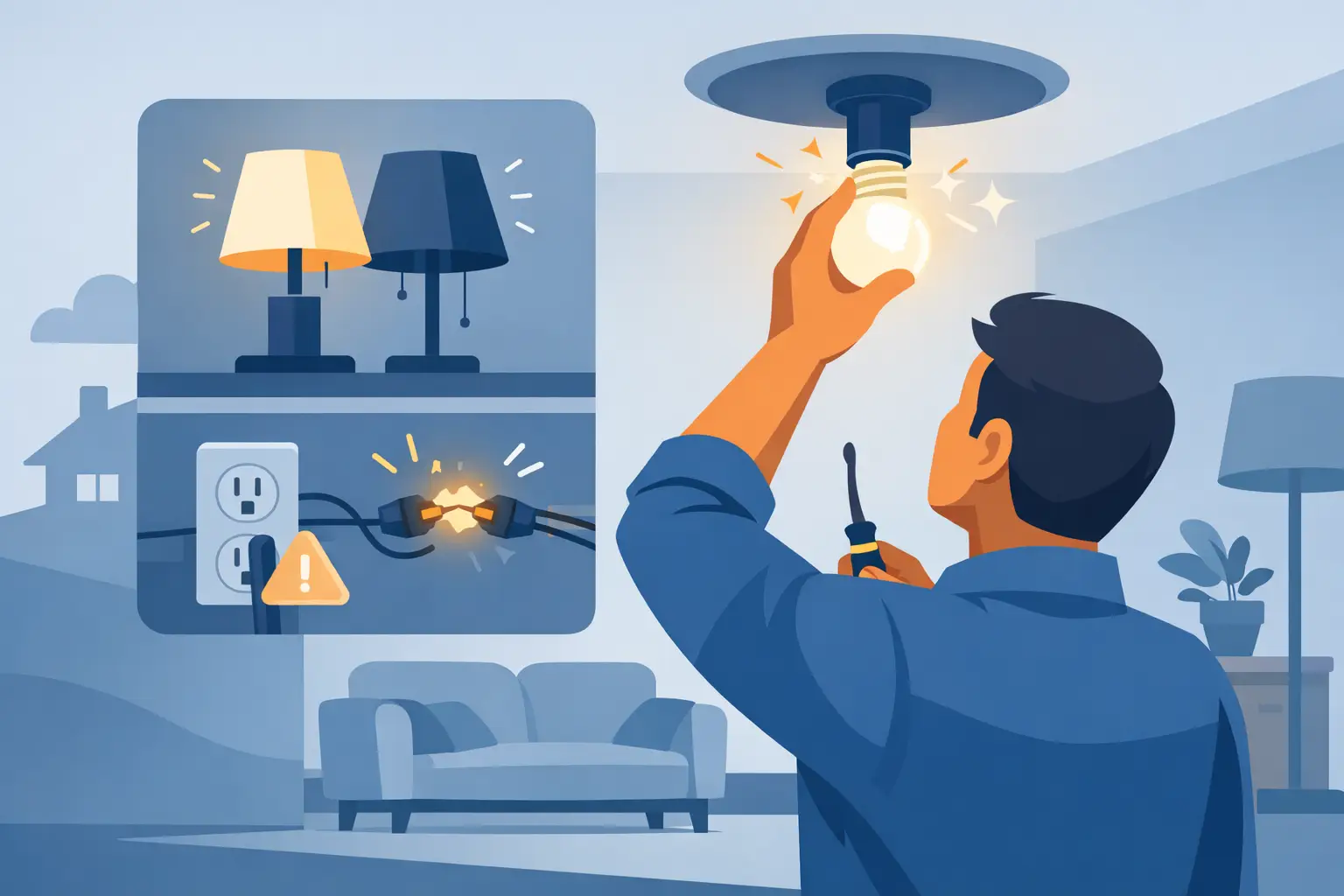
A light flickers once and you might ignore it. When it keeps happening in the kitchen, hallway, or bedroom, it starts to feel like something in the house is not quite right. If you are wondering how to fix flickering lights, the first step is figuring out whether the problem is a simple bulb issue or a sign of a larger electrical problem that needs expert attention.
Some flickering is minor. Some is an early warning. The difference matters, especially in homes with older wiring, overloaded circuits, or panels that have not been inspected in years.
How to fix flickering lights starts with the pattern
The most useful clue is not the flicker itself. It is when, where, and how often it happens.
If one lamp flickers but nothing else does, the issue is often local to that fixture, bulb, or switch. If several lights flicker when the air conditioner turns on, that points to a circuit load issue or a problem with the main electrical system. If lights across the house dim and brighten for no clear reason, that deserves a closer look right away.
Homeowners often look for a quick answer, but electrical issues are not always one-size-fits-all. A loose bulb can cause flickering. So can a failing breaker, a worn connection, voltage fluctuation, or trouble at the panel. That is why the pattern matters more than the symptom alone.
Start with the safest simple checks
Before assuming the worst, there are a few basic things you can check safely.
First, make sure the bulb is tight. A bulb that is not fully seated in the socket can lose contact and flicker on and off. Turn the light off and let the bulb cool before touching it.
Next, consider the bulb type. LED bulbs are efficient, but they can flicker if they are used with an incompatible dimmer switch or a lower-quality driver. Incandescent and fluorescent bulbs can also flicker as they age. If the bulb is old, replacing it with a new, properly rated bulb is a reasonable first step.
It also helps to test the fixture with a different bulb that you know works. If the flicker stops, the bulb was likely the issue. If the flicker continues, the fixture, switch, or wiring may be involved.
Finally, pay attention to whether the switch feels loose or behaves inconsistently. A worn light switch can interrupt power to the fixture and cause visible flickering.
When the problem is probably not just the bulb
A single bad bulb is common. A recurring electrical issue is different.
If multiple lights flicker in one room, there may be a loose connection on that branch circuit. If lights flicker throughout the house, the issue may be at the panel, service connection, or utility side. In some cases, flickering happens when a large appliance starts up. That can mean the circuit is overloaded or the home is experiencing voltage drop under demand.
These situations are not good candidates for guesswork. Electrical connections can deteriorate slowly, then fail suddenly. What starts as an annoying flicker can become a safety issue if heat builds up at a loose terminal or damaged component.
Warning signs that deserve prompt professional attention include a burning smell, buzzing from outlets or switches, warm wall plates, repeated breaker trips, or flickering paired with partial power loss. If you notice any of these, stop using the affected area and have it inspected.
Common causes of flickering lights in homes
Loose bulb or damaged socket
This is the simplest possibility. If the bulb base is not making solid contact, the light can flicker. Sometimes the socket itself is worn or damaged, especially in older fixtures or frequently used lamps.
Failing light switch or dimmer
A switch can wear out over time. Dimmer switches are especially sensitive to compatibility issues with LED bulbs. If flickering appears only when dimmed, the fix may be as straightforward as replacing the dimmer with one designed for the bulb type in use.
Loose wiring connection
Loose wiring is one of the more serious causes. Connections inside a switch box, fixture box, outlet, or panel can loosen with age, vibration, or previous poor workmanship. This is a safety concern, not a DIY trial-and-error project.
Overloaded circuit
If lights flicker when a microwave, HVAC system, vacuum, or space heater turns on, that circuit may be carrying too much demand. Overloaded circuits do not always trip immediately. Sometimes they first show up as dimming or flickering.
Panel or breaker problems
A weak breaker, poor bus connection, or aging electrical panel can cause inconsistent power delivery. In older homes, panel issues may show up in ways that seem random at first. If your lights flicker in several areas of the home, the panel should be part of the inspection.
Utility or service connection issues
Sometimes the source is outside the home. A damaged service line, loose meter connection, or utility-side voltage issue can affect lighting performance. If neighboring homes are seeing similar symptoms, the utility company may need to be involved, but a licensed electrician can help determine whether the problem starts inside or outside the house.
What you should not do
Trying to fix flickering lights can become risky when the problem moves beyond a bulb or lamp.
Do not open the panel if you are not trained to work on electrical equipment. Do not replace breakers or handle house wiring based on a video or guess. And do not ignore intermittent flickering just because the light comes back on. Electrical problems often appear off and on before they become more obvious.
There is also a difference between resetting a breaker once and relying on resets as a routine fix. If a breaker keeps tripping or lights keep flickering, the system is telling you something. The right next step is diagnosis, not repetition.
How a licensed electrician approaches flickering lights
A proper electrical diagnosis is less about swapping parts and more about isolating the source.
An electrician will usually start by identifying whether the issue affects a single fixture, one circuit, or the whole home. From there, they may inspect the switch, fixture wiring, outlet connections, breaker performance, panel condition, and incoming service behavior. The goal is to find the actual fault and correct it safely.
That matters because the same symptom can have very different causes. Replacing a bulb will not solve a loose neutral connection. Swapping a switch will not fix panel deterioration. A careful inspection saves time and helps prevent bigger repairs later.
For homeowners in older neighborhoods across Palmdale, Lancaster, and nearby Antelope Valley communities, flickering lights can sometimes be one of the first signs that a home would benefit from broader electrical maintenance or a panel evaluation.
When to call for expert electrical repairs
You should call a licensed electrician if the flickering affects multiple lights, keeps returning after a bulb replacement, happens when appliances start, or comes with any sign of heat, odor, buzzing, or breaker problems.
You should also call if the home has older wiring, recent remodeling work, or a history of electrical issues. Even if the lights still work most of the time, inconsistency is not something to brush aside.
Trusted electrical repair is not just about getting the lights steady again. It is about protecting the wiring, panel, fixtures, and overall safety of the home.
Preventing flickering lights in the future
Some electrical problems are hard to predict, but many are easier to prevent than homeowners realize.
Quality bulbs and compatible dimmers help. So does avoiding overloaded circuits with high-demand appliances. If your home has an older panel, limited circuit capacity, or signs of wear, periodic electrical inspections can catch problems before they show up as flickering, outages, or damaged devices.
This is especially worthwhile if you are adding new electrical demand to the home, such as garage equipment, major appliances, or an EV charger. As household power needs grow, older systems can start showing stress in small ways first.
If you are not sure whether your flickering lights are a minor fix or a warning sign, that uncertainty alone is a good reason to have the issue checked. A calm, accurate diagnosis gives you a clear answer and helps keep your home safe, comfortable, and reliable long after the flicker is gone.