
A home charging station changes the daily EV routine. Instead of planning errands around public chargers, you can plug in after work and start the morning with the range you need. But learning how to install EV charger equipment starts with one important fact: the charger must fit your home’s electrical system, not just your vehicle.
For most homeowners, a professionally installed Level 2 charger is the practical choice. It charges much faster than a standard wall outlet and provides a dedicated, dependable connection for a vehicle that may draw power for hours at a time. The right installation protects your home, supports your driving needs, and helps avoid overloaded circuits or costly corrections later.
How to Install EV Charger Equipment at Home
An EV charger installation is not simply a matter of mounting a unit on the wall. It involves evaluating your electrical panel, selecting the right circuit size, choosing a safe location, securing permits when required, and completing the work to current code requirements.
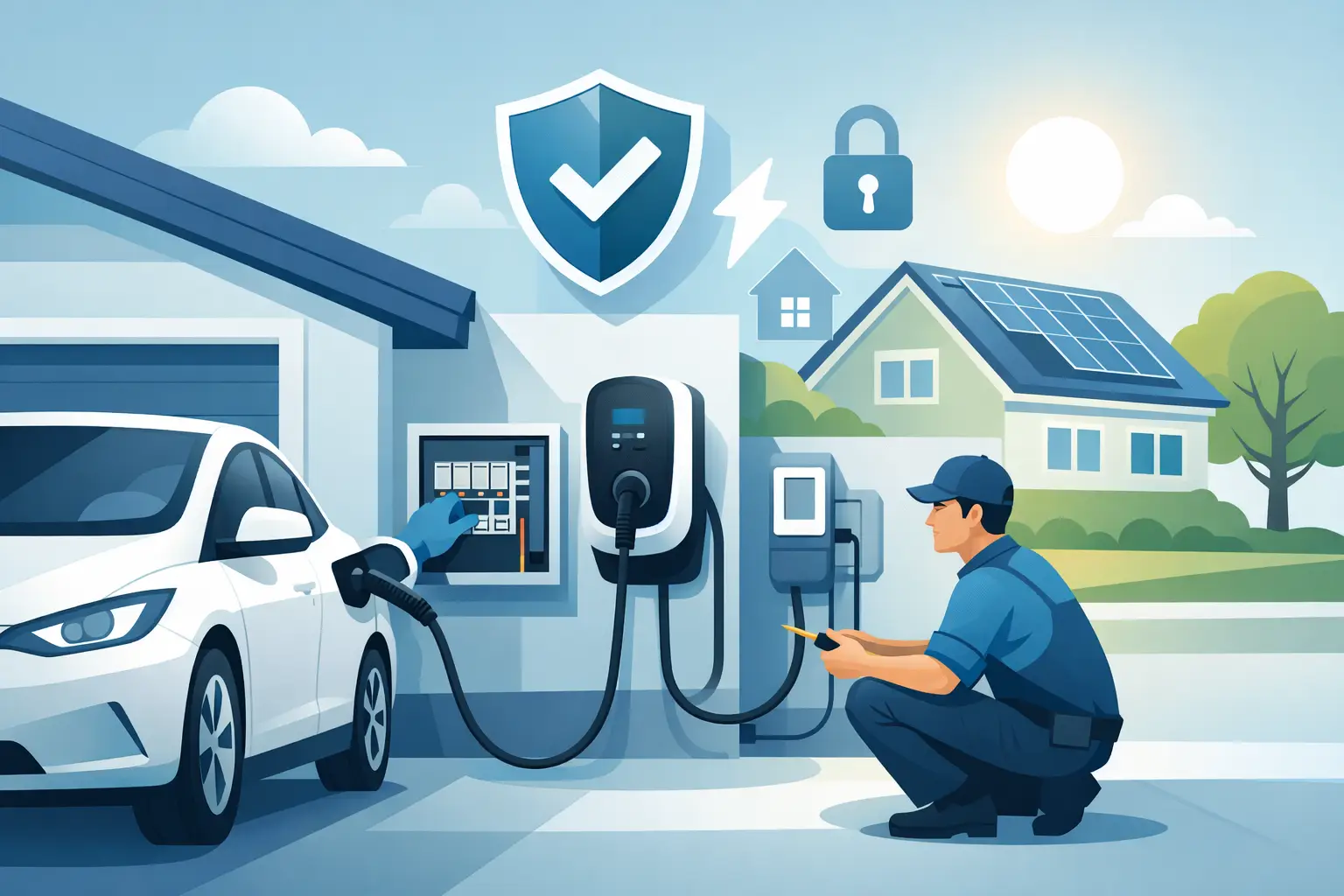
A licensed electrician typically begins with an on-site assessment. They will look at the panel’s overall capacity, existing large electrical loads, available breaker space, and the path from the panel to the charging location. In homes with an attached garage, the route may be straightforward. A detached garage, driveway, or exterior parking space can require more planning and a longer wiring run.
The electrician should also confirm the charging equipment is compatible with your vehicle. Many EVs use common connector standards, but charger output, cord length, smart features, and hardwired versus plug-in installation all affect the final setup.
Start With Your Charging Needs
Not every household needs the highest-output charger available. The best choice depends on how far you drive, when the vehicle is parked, and whether more than one EV may eventually charge at home.
A Level 1 charger typically uses a standard 120-volt outlet. It can work for drivers with short daily commutes and plenty of overnight charging time, but it adds range slowly. It may also be unsuitable if the outlet is old, shared with other loads, or not designed for ongoing EV charging.
A Level 2 charger uses 240 volts, similar to many major appliances. This option can add substantially more range per hour and is often the better fit for households that rely on their EV every day. The specific charging speed still depends on the charger, the vehicle’s onboard charging capability, and the circuit installed.
Choosing more power than you need can raise installation costs without adding much value. Choosing too little may leave you waiting for a charge when schedules are tight. An electrician can help match the equipment and circuit to your actual routine rather than a one-size-fits-all recommendation.
Check Your Electrical Panel Capacity
Panel capacity is the most important part of the project. An EV charger is a continuous electrical load, meaning it can draw power for an extended period. The electrical system must have enough capacity to support that demand along with air conditioning, heating, kitchen appliances, laundry equipment, pool equipment, and other household loads.
Older homes in Palmdale, Lancaster, and nearby Antelope Valley communities may have panels that were installed long before EV ownership became common. A panel may look adequate because it has an open breaker space, yet still lack the available electrical capacity for a new high-demand circuit. This is why a proper load calculation matters.
If the existing service has enough capacity, the electrician can install a dedicated breaker and wiring for the charger. If it does not, there may be several options. A panel upgrade can provide added capacity and room for future circuits. In some cases, load-management equipment can control charging during periods of heavy household demand. The best approach depends on the age of the home, present loads, future plans, and budget.
Choose a Safe, Convenient Location
The charger location should make everyday use easy without creating a trip hazard or exposing equipment to unnecessary damage. Most homeowners place the unit on a garage wall near the vehicle’s charge port. Before selecting a spot, consider where the car will normally park and whether the charging cord can reach comfortably without stretching across a walkway.
For outdoor installations, the equipment must be rated for the environment and mounted where it is protected from vehicle impact. The wiring method, conduit, weather protection, and mounting details are especially important outdoors. A driveway installation may also require trenching, which can affect cost and scheduling.
Think ahead before finalizing the location. If you may buy a second EV, remodel the garage, or change where you park, a slightly different placement now can prevent a more expensive change later. A good installation feels convenient every day, not just on the first charge.
Permits, Code Requirements, and Inspection
EV charger work often requires a permit and inspection through the local authority having jurisdiction. These requirements are there to verify that the circuit, wiring, breaker, grounding, equipment, and installation method are suitable for safe operation.
Skipping permits may seem like a way to speed up the project, but it can create real problems. Unpermitted electrical work can complicate a home sale, lead to insurance concerns after an electrical incident, or require correction when discovered. It can also leave you without confidence that the circuit is properly sized for continuous charging.
A qualified electrician handles the code-conscious details that are easy to miss, including wire sizing, breaker selection, required safety protection, connection methods, and equipment clearances. California requirements and local rules can vary, so the installation should be planned for the property rather than copied from an online video or a neighbor’s setup.
What Professional Installation Usually Includes
Once the charger and location are selected, the work generally follows a clear sequence. The electrician verifies the electrical plan, obtains permits as needed, installs the dedicated circuit, runs properly rated wiring, mounts and connects the charger, and tests the system before the final inspection.
Hardwired chargers are permanently connected to the circuit. They can provide a clean, durable setup and may support higher charging outputs, depending on the equipment and electrical design. Plug-in chargers connect to a properly installed 240-volt receptacle. This can offer flexibility if you want to take the charger with you, but the receptacle must be rated and installed for the sustained load. A standard household outlet is not a substitute for a correctly designed EV charging circuit.
After installation, test the charger with the vehicle and confirm that charging starts, stops, and reconnects properly. If the charger includes an app, set up scheduling features carefully. Charging during off-peak utility periods may reduce operating costs, depending on your rate plan.
Avoid Common EV Charger Installation Mistakes
The most common mistake is assuming an open panel space means the home is ready. Available space and available capacity are different things. Another concern is using extension cords, adapters, or aging outlets for regular EV charging. Those shortcuts can overheat connections and increase fire risk.
Homeowners should also avoid selecting a charger solely because it has the highest advertised amperage. The home’s panel, circuit, wiring, vehicle, and charging habits must all work together. A properly sized Level 2 charger is usually more useful than an oversized unit that requires major upgrades you do not need.
Finally, do not overlook the condition of the electrical panel itself. Signs such as breakers that trip often, warm panel covers, flickering lights, corrosion, or outdated equipment should be evaluated before adding a major new load. An EV charger can be an excellent reason to address electrical issues that have been waiting for attention.
Plan for Reliable Charging Every Day
A home EV charger should give you confidence, not another household concern. The right system begins with an honest assessment of your electrical capacity and ends with a tested installation that is safe, convenient, and ready for daily use.
If you are considering an EV charger in the Antelope Valley, A1 Home Electric can assess your home’s panel, recommend a practical installation approach, and complete the work with quality and safety in mind. A well-planned charger lets you focus on the road ahead while your home handles the charging reliably overnight.