

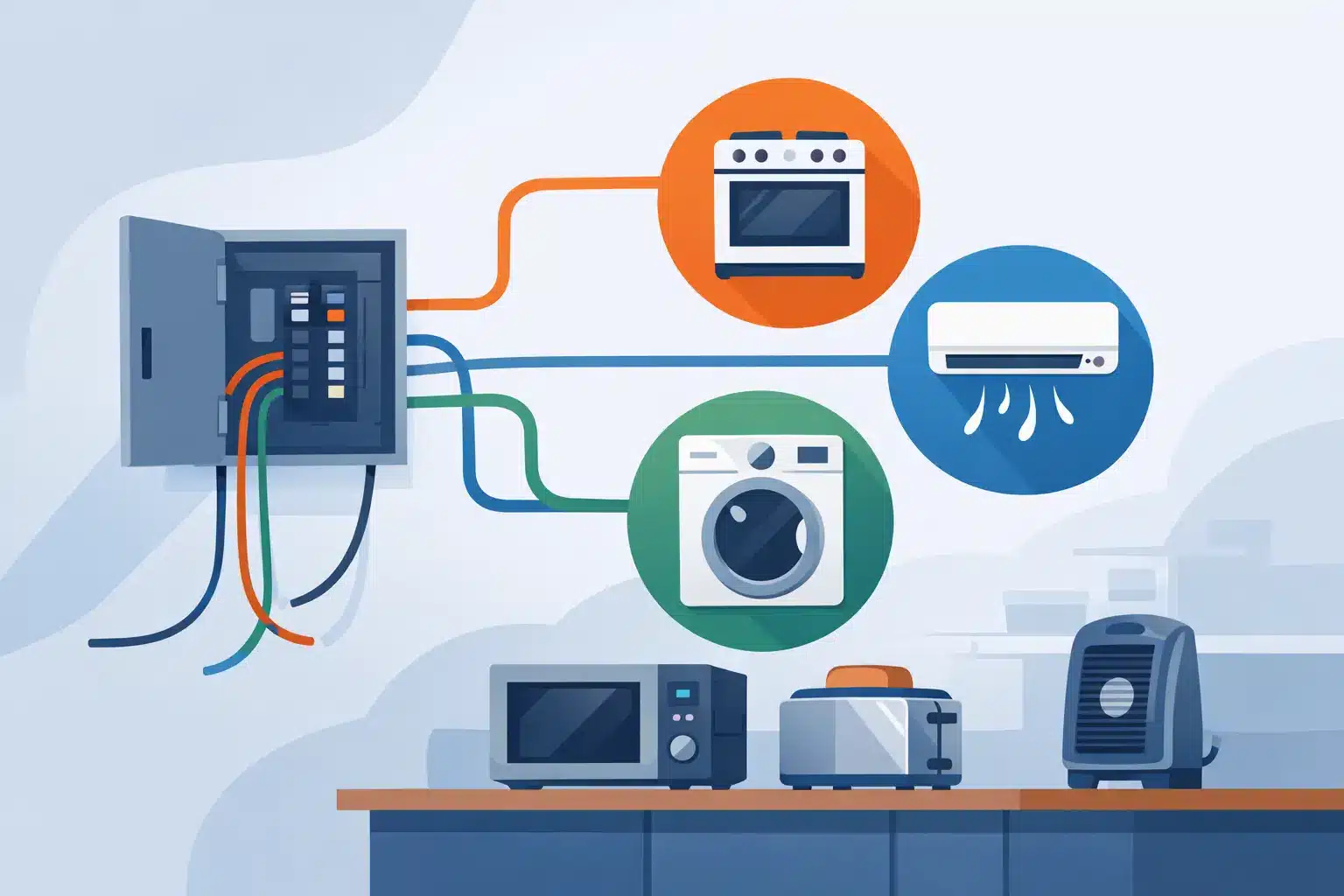
A refrigerator that trips a breaker during a summer heat wave, a microwave that dims the kitchen lights, or a garage outlet that feels warm after charging equipment are not small inconveniences. They can be signs that the electrical system is carrying more than it was designed to handle. When you install dedicated appliance circuits, you give high-demand equipment its own protected path back to the electrical panel – helping your home operate more safely and reliably.
For homeowners, this upgrade is less about adding technical complexity and more about protecting the appliances and routines you depend on every day. A properly planned circuit can prevent nuisance tripping, reduce strain on older wiring, and support modern equipment without overloading the rest of the home.
What Is a Dedicated Appliance Circuit?
A dedicated circuit supplies power to one specific appliance or piece of equipment. It has its own breaker in the electrical panel and is not shared with general-use outlets, lighting, or other appliances.
That separation matters because many household appliances draw substantial power, particularly when a motor starts, a heating element cycles on, or a charging system is active. If that load shares a circuit with other equipment, the breaker may trip repeatedly. In worse cases, overloaded wiring can overheat before a problem becomes obvious.
A dedicated circuit is sized for the appliance it serves. The proper wire type, breaker rating, outlet or hardwired connection, and required safety protection all depend on the equipment specifications and the conditions in the home. This is why a licensed electrician should evaluate the full installation rather than simply replace a breaker with a larger one. A larger breaker on undersized wiring can create a serious fire risk.
Appliances That Commonly Need Their Own Circuits
Some appliances are commonly required to have dedicated circuits under current electrical standards. Others may not always require one, but benefit from one because of their electrical demand, age, or how they are used.
Major kitchen appliances are frequent candidates. Electric ranges, ovens, cooktops, dishwashers, garbage disposals, built-in microwaves, refrigerators, and wine coolers can each have specific circuit needs. A refrigerator may run on a standard-size circuit, but sharing it with countertop appliances can be a poor choice. A blender, toaster oven, or coffee maker can push a shared circuit beyond its practical limit at the wrong moment.
Laundry equipment also deserves close attention. Electric dryers require high-capacity 240-volt circuits, while washing machines often need a dedicated circuit to avoid interruptions and protect the equipment. In a utility room, sump pumps, freezers, and water treatment equipment may need separate power as well, depending on the setup.
Comfort systems create another common need. Central air conditioning equipment, heat pumps, electric furnaces, mini-split systems, whole-house fans, and some space-heating equipment require correctly sized circuits. In the Antelope Valley, where hot weather can place heavy demand on cooling systems, reliable electrical support for HVAC equipment is a practical part of keeping the home comfortable.
Garage and outdoor upgrades deserve the same attention. EV chargers need a dedicated circuit designed around the charger and the available panel capacity. Garage refrigerators, workshop tools, air compressors, pool pumps, spas, and electric gates can also require dedicated wiring. These are not projects to add casually to an already crowded circuit.
Signs Your Home May Need a New Circuit
A breaker that trips once after an unusual combination of appliances is not always cause for alarm. Breakers are designed to interrupt power when the circuit is overloaded. Repeated tripping, however, should be treated as a message from the electrical system, not a problem to work around.
Watch for breakers that trip when the same appliance runs, lights that flicker or dim when a motor starts, outlets that feel warm, discoloration around an outlet cover, buzzing sounds, or a burning odor. Appliances that lose power during normal use, extension cords used as permanent solutions, and power strips supporting several high-demand items are also reasons to schedule an electrical evaluation.
Older homes in Palmdale, Lancaster, and nearby communities may have panels and branch wiring that were adequate when the house was built but were never intended to support modern kitchens, home offices, large televisions, garage equipment, or EV charging. The issue is not necessarily the age of the home alone. It is whether the electrical system has kept pace with how your household uses power now.
How Electricians Install Dedicated Appliance Circuits
The first step is an on-site assessment. An electrician reviews the appliance nameplate or manufacturer requirements, identifies its voltage and amperage needs, inspects the existing outlet or connection, and checks the electrical panel. The panel review is essential because a dedicated circuit is only as dependable as the system feeding it.
If the panel has available capacity and space for the correct breaker, the electrician can plan a circuit route from the panel to the appliance location. That route may run through an attic, crawl space, garage, wall cavity, or surface-mounted raceway, depending on the home’s construction and accessibility. The goal is a clean installation that protects the wiring while minimizing unnecessary disruption to finished areas.
The circuit is then installed with conductors sized for the load and distance, the appropriate breaker, and the correct receptacle or hardwired connection. Some locations and appliances require ground-fault or arc-fault protection. Others require a disconnect within sight of the equipment. These details are not optional extras. They are part of quality and safety, and they vary by appliance and location.
After installation, the electrician tests the circuit, verifies grounding and polarity where applicable, confirms the breaker operates correctly, and checks that the appliance can run without placing improper demand on other circuits. If the panel is full, has limited capacity, or shows signs of age or damage, a panel upgrade or subpanel may be the safer long-term answer.
Why a Panel Assessment Should Come First
It is tempting to think of a new appliance circuit as a simple add-on. Sometimes it is. But a home electrical panel has a calculated capacity, and that capacity must account for the home’s existing loads as well as the proposed appliance.
Adding a circuit without evaluating the panel can lead to a crowded panel, insufficient capacity, or equipment that cannot safely support the new demand. This is especially relevant before installing an EV charger, electric dryer, range, hot tub, or upgraded HVAC system. A professional load calculation helps determine whether the current panel is suitable or whether an upgrade will provide better reliability.
There is also a practical trade-off. Installing a single circuit may cost less upfront than upgrading the panel, but if the panel is already near its limit, postponing the larger electrical improvement can result in repeat work later. A clear evaluation lets homeowners make an informed decision based on safety, future plans, and budget.
Avoid DIY Shortcuts and Temporary Workarounds
Electrical work can look straightforward from the outside, especially when the visible part is only an outlet or a breaker. The critical work is often hidden: wire sizing, routing, terminations, grounding, panel capacity, and protection requirements. An incorrect connection may appear to work normally until it overheats or fails under load.
Avoid repeatedly resetting a tripped breaker, replacing a breaker with a higher-rated model, or relying on extension cords for a fixed appliance. Do not plug a high-demand appliance into a multi-outlet adapter or power strip unless the manufacturer specifically allows it. These workarounds can mask the underlying issue while increasing the risk of damaged wiring or equipment.
Professional installation also helps protect the investment you have made in the appliance itself. Many modern appliances contain sensitive controls and electronics that perform better with stable, properly supplied power. A dedicated circuit cannot prevent every appliance failure, but it removes a common source of electrical stress.
Plan for the Home You Will Have Next Year
The best time to discuss dedicated circuits is before a new appliance arrives, during a kitchen or laundry update, or when planning an EV charger or HVAC replacement. Early planning gives the electrician more routing options and gives you a clearer picture of any panel work that may be needed.
If your home has frequent breaker trips, aging wiring, or growing electrical demands, a focused inspection can turn uncertainty into a practical plan. A1 Home Electric helps homeowners make code-conscious electrical upgrades that support dependable daily living. A properly installed dedicated circuit is a small part of the home that rarely gets noticed – until it keeps an essential appliance running exactly when you need it.