

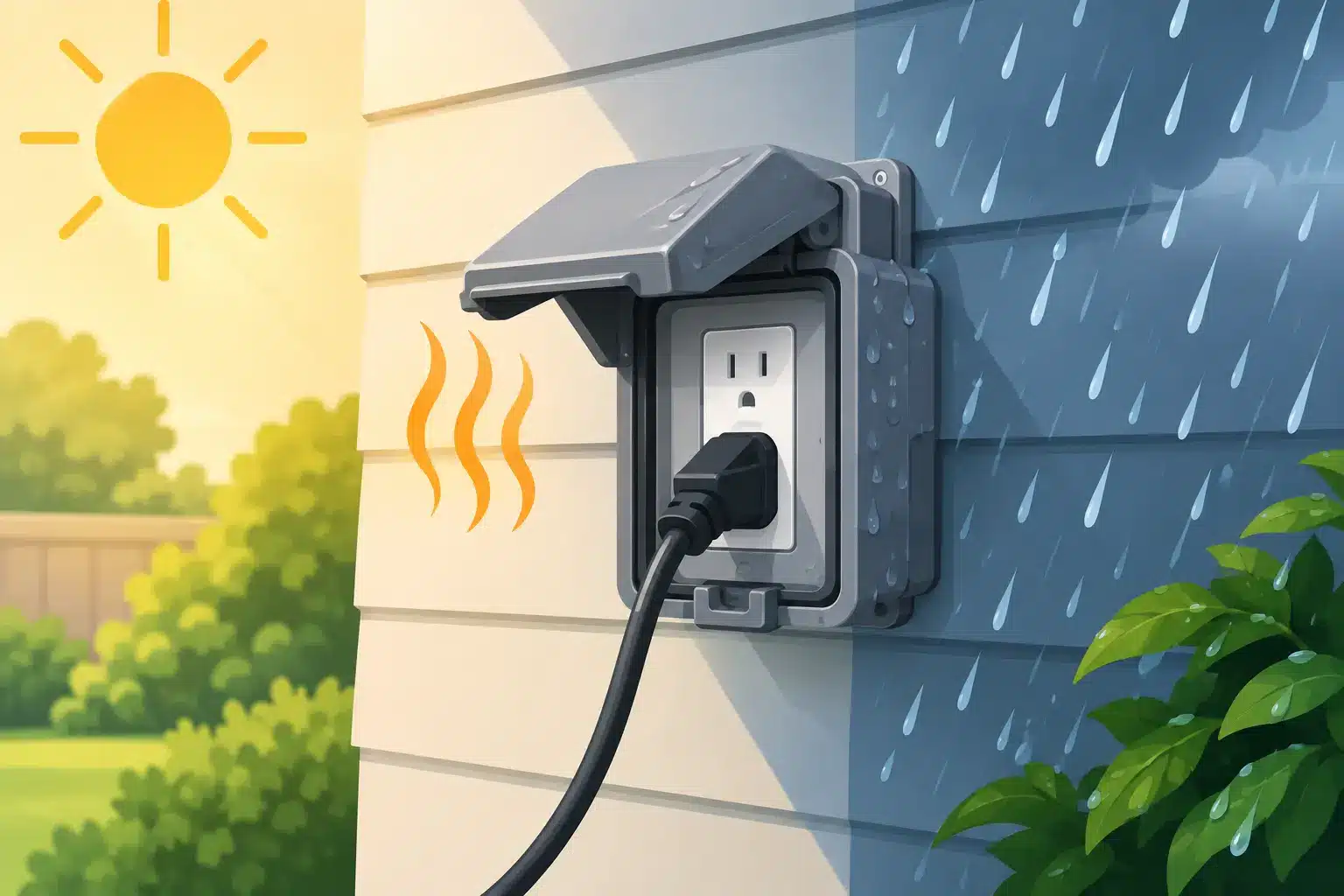
A patio outlet that works perfectly in mild weather can become a safety concern after a windblown rain, a sprinkler overspray, or months of desert dust. To protect outdoor outlets, homeowners need more than a plastic cover that closes when nothing is plugged in. The outlet, cover, box, wiring, and circuit protection all need to be suited for outdoor use.
For homes in Palmdale, Lancaster, and throughout the Antelope Valley, the combination of intense sun, dry dust, temperature swings, and occasional heavy rain can wear down exterior electrical components faster than expected. A few well-chosen upgrades and regular checks can help keep power available outside without putting your home at unnecessary risk.
Start With GFCI Protection
An outdoor receptacle should have ground-fault circuit interrupter protection, commonly called GFCI protection. A GFCI is designed to shut off power quickly when it detects an electrical imbalance, reducing the risk of shock when moisture is present.
Most modern outdoor outlets have TEST and RESET buttons on the face of the receptacle. Pressing TEST should shut off power to that outlet. Pressing RESET should restore it. If the outlet will not reset, trips repeatedly, feels warm, or shows visible damage, stop using it until a licensed electrician can inspect the circuit.
Not every protected outdoor outlet will have buttons visible at the outlet itself. It may be protected by another GFCI receptacle located inside the garage, bathroom, kitchen, or laundry area, or by a GFCI breaker in the electrical panel. That is one reason homeowners should avoid assuming an outlet is safe simply because it has power.
Older homes may have outdoor outlets that are not GFCI-protected at all. Updating that protection is one of the most practical electrical safety improvements a homeowner can make, especially near pools, spas, irrigation controls, patios, and outdoor work areas.
Protect Outdoor Outlets With the Right Cover
A standard exterior cover is only intended to shield an outlet when nothing is plugged in. Once an extension cord, landscape light transformer, holiday decoration, or power tool is connected, the cover often cannot close. That leaves the plug and receptacle exposed to rain, moisture, debris, and sun.
For outlets that may be used while equipment is plugged in, an extra-duty weatherproof cover is the better choice. Often called an in-use cover or bubble cover, it allows the cord to exit through a protected opening while the cover remains closed over the connection. It may not be the most decorative fixture on the wall, but it offers much better protection where outdoor power is used regularly.
The cover should fit securely against the exterior surface with an intact gasket. A cracked lid, missing screw, warped plastic, or loose box can allow water behind the cover and into the electrical box. Replace worn covers promptly rather than waiting for a problem after the next storm.
Choose weather-resistant receptacles
Outdoor receptacles should be labeled weather resistant. These receptacles are built with materials intended to hold up better against moisture, temperature changes, and corrosion than indoor-only devices. They are commonly marked “WR” on the face.
A weather-resistant receptacle is not a substitute for a weatherproof cover or GFCI protection. Each part addresses a different risk. The receptacle resists harsh conditions, the cover shields the connection, and the GFCI helps reduce shock hazards if a fault occurs.
Keep Water Away From the Connection
Outdoor electricity and water do not mix, even when the outlet is protected. Do not aim sprinklers toward outlets, and check irrigation patterns after adjusting sprinkler heads or planting new landscaping. Water can travel farther than expected in wind, particularly around patio walls and side yards.
Avoid placing extension-cord connections on the ground, under wet planters, or where rainwater collects. If temporary outdoor power is needed, keep plugs elevated and use cords rated for outdoor use. An indoor extension cord can become brittle, damaged, or unsafe when exposed to sun and weather.
Be cautious with pressure washing near exterior receptacles, disconnect boxes, and lighting connections. Direct high-pressure water can force moisture past seals that would normally handle rain. Cover nearby outlets before washing and allow the area to dry completely before using them again.
If you see condensation inside a cover, rust around the receptacle screws, greenish corrosion on metal parts, or water staining below an outlet box, have it inspected. Those signs can point to a failed gasket, improperly mounted box, or water entering from behind the siding or stucco.
Do Not Overload an Outdoor Circuit
Outdoor outlets often serve more than one location. The patio outlet may share a circuit with garage outlets, bathroom outlets, exterior lighting, or another side of the home. Plugging in a space heater, power tools, decorative lighting, a fountain pump, and a refrigerator on the same circuit can create frequent tripping or overheating concerns.
Use outdoor outlets for their intended purpose and pay attention to what else is operating on the circuit. A breaker that trips once may have responded to a temporary overload. A breaker or GFCI that repeatedly trips needs attention. Resetting it over and over does not solve the underlying issue.
Permanent outdoor equipment deserves a more deliberate electrical plan. Pool equipment, hot tubs, EV chargers, large water features, and outdoor kitchens may require dedicated circuits, specialized disconnects, or equipment-specific protection. This is not a place for extension cords or improvised wiring.
Check for Damage After Heat, Wind, and Storms
The desert climate can be tough on outdoor electrical equipment. Strong sun can fade and weaken plastic covers. Wind carries dust into gaps around old boxes. Seasonal rain can reveal a seal that has failed after years of dry conditions.
A simple visual inspection a few times each year can catch many concerns early. Look for loose covers, cracked plastic, missing gaskets, exposed wiring, discoloration, rust, damaged cord ends, and outlets that sit crookedly in the wall. Keep vegetation trimmed away from outlets so moisture and debris do not stay trapped around the box.
Do not remove outlet covers or reach into a damaged box to investigate. If an outlet is loose, wet, buzzing, hot, sparking, or discolored, turn off the circuit at the panel if you can do so safely and arrange for trusted electrical repair. These conditions can indicate damaged wiring or a failing connection behind the wall.
When an Outlet Upgrade Makes Sense
Sometimes replacing a cover is enough. In other cases, the complete outlet assembly needs attention. An upgrade is worth considering when the receptacle is old, lacks GFCI protection, has no weather-resistant marking, is recessed or loose, or cannot accommodate a proper in-use cover.
It is also wise to evaluate exterior power before adding regular-use equipment. Homeowners planning a backyard entertainment area, security cameras, landscape lighting, a workshop setup, or holiday lighting may benefit from new outlets placed where they are actually needed. This reduces dependence on long extension cords crossing walkways, driveways, and patios.
A licensed electrician can determine whether the existing circuit has adequate capacity, whether the wiring and box are in good condition, and which protection is appropriate for the location. Quality and safety matter more outside because the equipment is constantly exposed to conditions indoor outlets never face.
Give Outdoor Power the Same Attention as Indoor Safety
Outdoor outlets are easy to overlook until they stop working or become visibly damaged. A working GFCI, weather-resistant receptacle, secure in-use cover, and dry connection provide practical protection for everyday tasks, from charging tools to enjoying the patio after sunset.
If an exterior outlet has seen better days, addressing it before the next project or weather change is a small step that can protect your home, your family, and the equipment you rely on.