

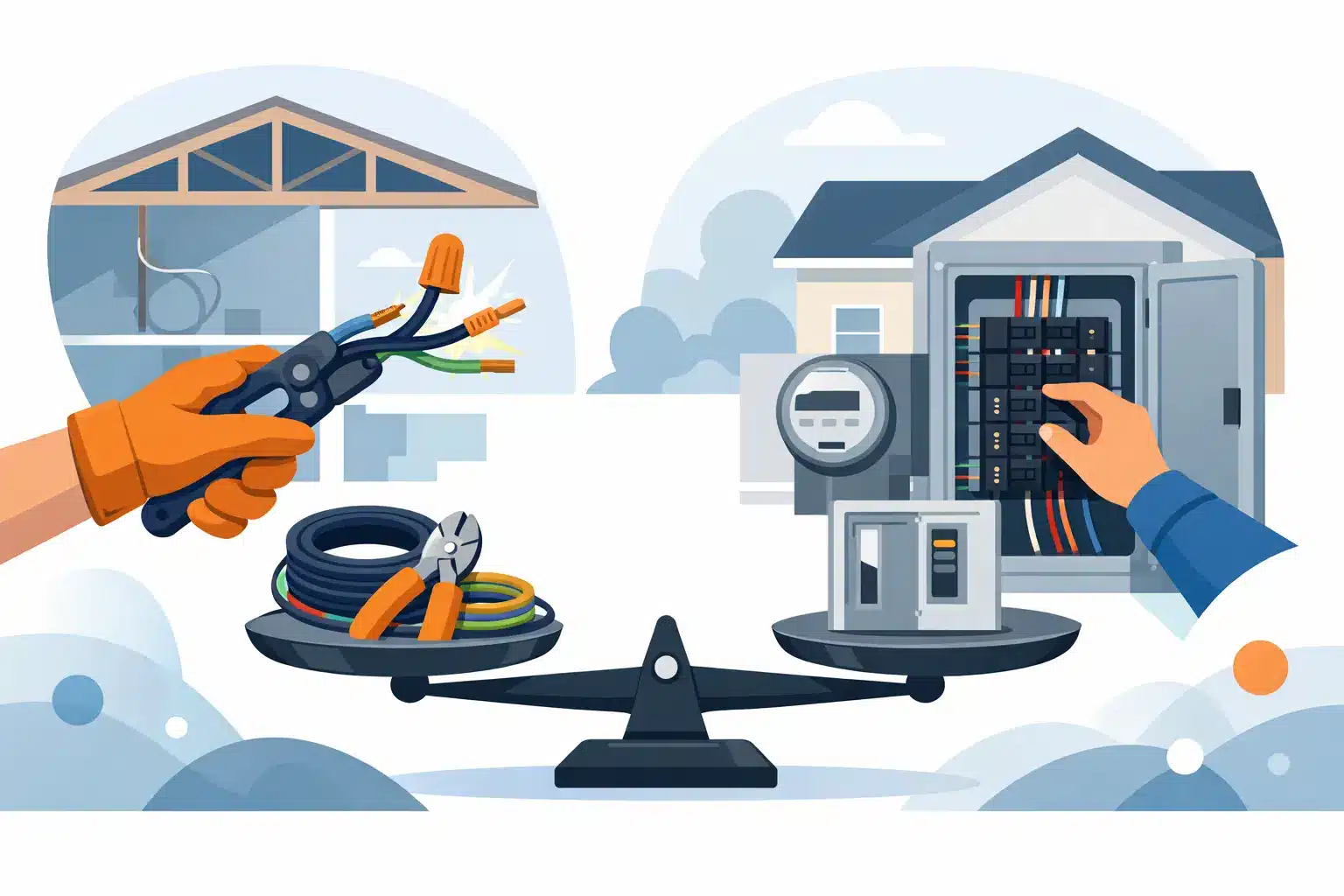
A flickering light, a breaker that trips when the microwave runs, or an older fuse box can make homeowners wonder whether they need a major electrical project. When comparing rewiring versus panel upgrade costs, the lower estimate is not always the better value. The right choice depends on where the problem begins: in the panel that distributes power or in the wiring that carries it through the home.
For Antelope Valley homeowners, a professional evaluation can prevent money from being spent on an upgrade that does not solve the underlying safety concern. A panel upgrade may be the practical answer for a home adding modern electrical demand. Rewiring may be necessary when aging or damaged conductors are the real issue.
What a Panel Upgrade Typically Costs
A panel upgrade replaces or improves the electrical panel, breakers, and related components that manage electricity entering and moving through the home. It may include a larger panel, new breakers, grounding improvements, meter equipment, or a service upgrade that increases the home’s available amperage.
For many homes, a straightforward panel replacement or upgrade commonly falls in the range of $2,000 to $6,000. A more involved project, such as upgrading from 100 amps to 200 amps, relocating equipment, replacing the meter main, or completing required utility work, can run higher. Permit requirements, panel access, and the condition of the existing service all affect the final price.
A panel upgrade is often a smart investment when the home’s wiring is in good condition but the electrical system cannot safely support current needs. Common reasons include adding central air conditioning, a spa, an electric range, solar equipment, or an EV charger. A crowded panel, obsolete panel design, repeated breaker issues, or insufficient capacity also deserve prompt professional attention.
The key point is that a new panel does not replace the wiring inside the walls. It improves how power is controlled and distributed, but it cannot correct deteriorated insulation, unsafe splices, undersized branch circuits, or damaged conductors elsewhere in the home.
Rewiring Versus Panel Upgrade Costs: Why Rewiring Is Higher
Whole-home rewiring is usually the larger investment because it involves replacing the branch circuits that run from the panel to outlets, switches, lights, appliances, and other electrical equipment. Electricians may need to access wiring through attics, crawl spaces, walls, ceilings, or exterior areas. The project can also involve new outlets, updated grounding, modern GFCI and AFCI protection, and repairs after access work is complete.
A full rewiring project often ranges from $8,000 to $25,000 or more, depending on the home’s size, layout, age, accessibility, and scope. Larger homes, two-story layouts, plaster walls, limited attic access, and extensive finish restoration can raise the cost. California labor, permitting, and local code requirements can also influence pricing.
Not every home needs a complete rewire. In some cases, a targeted rewire of a kitchen, garage, addition, or a group of unsafe circuits provides the needed safety improvement at a lower cost. This is why an inspection matters. The goal is not to replace more than necessary. It is to correct the conditions that put the home, its occupants, and its electrical system at risk.
The Main Factors That Change Your Estimate
Two homes with the same square footage can receive very different electrical estimates. The scope of work is shaped by the actual conditions found during an inspection, not only by the age of the house.
Panel work becomes more expensive when the existing equipment is damaged, improperly installed, difficult to access, or too small for the service upgrade. A panel located in a finished interior space may require more planning than one on an accessible exterior wall. If the service conductors, meter socket, grounding system, or utility connection also need updates, those items add to the project.
Rewiring costs are driven heavily by access. An accessible attic or crawl space can reduce the amount of wall opening needed. A home with finished ceilings, slab construction, or dense insulation may require more labor to route new circuits carefully. The number of circuits matters as well. A modern kitchen, laundry area, workshop, home office, or EV charging setup may need dedicated circuits that older homes were never designed to support.
Permits and inspections should be part of the conversation, not an afterthought. Quality electrical work is designed around current safety requirements and verified through the proper process. While permitted work can cost more upfront, it helps protect the home and provides confidence that improvements were completed responsibly.
When a Panel Upgrade Is Usually the Better Choice
A panel upgrade often makes sense when the home has a sound electrical infrastructure but lacks capacity or reliable breaker protection. For example, a homeowner may have properly functioning wiring but no room in the panel for an EV charger or a new HVAC system. In that case, improving the panel and service can support the upgrade without opening walls throughout the house.
It can also be the right solution if breakers trip because the panel is overloaded or because too many circuits are sharing limited capacity. A licensed electrician can calculate the home’s electrical load and determine whether a larger service is needed. Simply installing a larger breaker without confirming the wire size and circuit design is unsafe and is never a solution.
A panel upgrade can improve convenience, but its bigger benefit is dependable power management. It creates room for properly designed circuits, supports future improvements, and helps reduce the strain that comes from asking an older electrical system to power a modern household.
When Rewiring Should Take Priority
Rewiring should take priority when there are signs that the conductors themselves are unsafe or unreliable. Persistent hot outlets, discoloration around receptacles, a burning odor, shocks or tingling from appliances, frequent unexplained breaker trips, and lights that dim severely when equipment starts are all reasons to arrange an electrical inspection promptly.
Homes with aging wiring methods may also need closer attention, especially if past renovations added circuits without a clear, code-conscious plan. Aluminum branch wiring, cloth-insulated wiring, ungrounded outlets, damaged insulation, and improvised connections can require repair or replacement. The right recommendation may be a focused correction or a broader rewire, depending on the condition throughout the property.
Adding a new panel to a home with unsafe branch wiring can create a false sense of security. The panel may look new, but the original hazard remains inside the walls. When safety issues are confirmed, wiring repairs should come before cosmetic improvements or optional electrical additions.
Can You Upgrade the Panel and Rewire at the Same Time?
Sometimes the best answer is both. A whole-home rewire often makes a panel upgrade logical because the new circuits need appropriate breaker space, grounding, and modern protection. Completing the work together can reduce duplicated labor and provide a cleaner long-term result.
That does not mean every project should be done all at once. Homeowners may choose a phased plan when budget, remodeling schedules, or occupancy make a full project impractical. For example, an electrician may first correct urgent hazards, upgrade the panel for safety and capacity, then rewire specific areas during a kitchen remodel or room-by-room renovation.
A phased approach works only when it is planned carefully. The electrical system should remain safe at every stage, and the future work should be considered before the first upgrade is installed. This helps avoid paying twice for equipment changes or finding that a new panel has no room for planned circuits.
How to Get a Useful Electrical Estimate
An estimate should explain what is being replaced, why it is needed, and what conditions could affect the final scope. Ask whether the recommendation addresses a capacity issue, a wiring safety issue, or both. It is also reasonable to ask whether a targeted repair could meet the home’s needs instead of a full rewire.
Before scheduling electrical work, share your future plans. Mention an EV charger, solar project, home addition, workshop equipment, electric appliances, or HVAC replacement. These details help the electrician recommend a panel size and circuit plan that will serve the home for years rather than only solve today’s immediate problem.
A1 Home Electric helps homeowners in Palmdale, Lancaster, and nearby communities assess electrical concerns with a practical focus on quality and safety. A clear on-site evaluation can separate urgent repairs from worthwhile upgrades and give you a realistic path forward.
The most helpful next step is not choosing between the cheapest panel quote and the biggest rewiring proposal. It is finding out what your home’s electrical system is telling you, then making the repair or upgrade that keeps your family safely powered for the long term.