

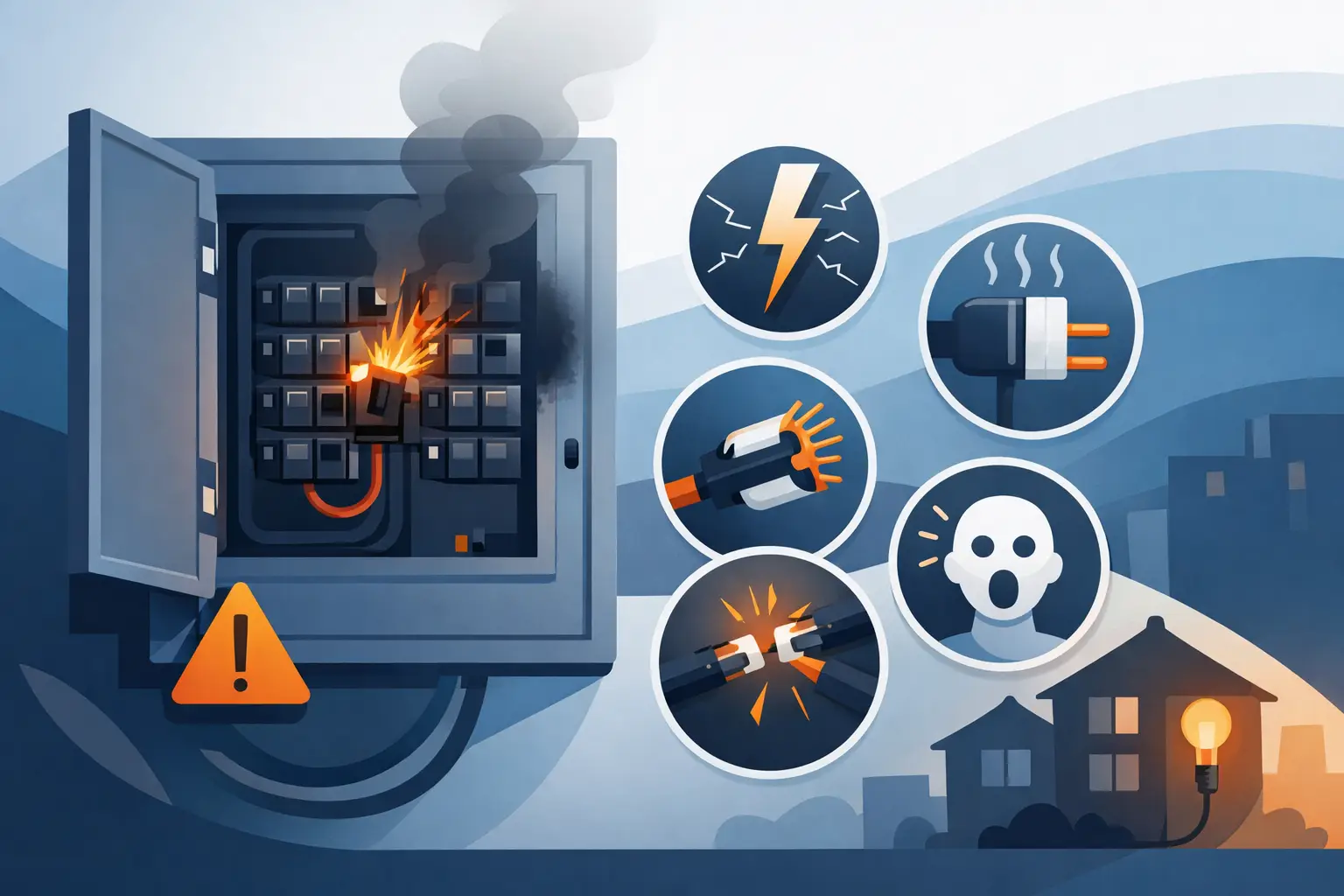
If your lights flicker when the AC starts, or a breaker trips every time you run the microwave and toaster together, those can be signs your electrical panel unsafe enough to need professional attention. Homeowners often notice these problems in pieces – one nuisance here, one odd smell there – but the panel is where many of those warning signs come together.
Your electrical panel is the control center for your home’s power. When it is in good condition and properly sized, it distributes electricity safely and consistently. When it is aging, overloaded, damaged, or poorly maintained, small electrical issues can turn into real safety concerns.
Why an unsafe electrical panel matters
A panel problem is not just about inconvenience. It can affect daily comfort, damage appliances, and in some cases increase the risk of electrical fire. That does not mean every tripped breaker is an emergency, but it does mean repeated warning signs should not be ignored.
Many homes, especially older ones, were built for a much lighter electrical load than modern households use today. Between HVAC systems, kitchen appliances, home offices, large TVs, and EV chargers, the demand on a residential electrical system is much higher than it used to be. A panel that was acceptable years ago may no longer be a good fit for the way your home operates now.
8 signs your electrical panel is unsafe
1. Breakers trip often
A breaker that trips once in a while can be doing its job. Breakers are designed to shut off power when a circuit is overloaded or when a fault is detected. The issue is frequency.
If the same breaker keeps tripping, or multiple breakers trip regularly, that points to a deeper problem. It could be an overloaded circuit, a failing breaker, loose connections, or a panel that no longer supports your home’s electrical demand. Resetting the breaker over and over is not a fix.
2. You smell burning near the panel
A burning smell is one of the clearest signs that something is wrong. It may come from overheated wires, failing breakers, damaged insulation, or arcing inside the panel.
If you notice a sharp, hot, or smoky odor near the electrical panel, take it seriously. Do not open the panel to investigate on your own. This is a situation for a licensed electrician, and depending on the severity, you may also need to shut off power and seek urgent help.
3. The panel feels warm or hot
An electrical panel should not feel hot to the touch. Slight warmth in some situations can happen, but noticeable heat is not normal.
Excess heat can mean a breaker is failing, a connection is loose, or the panel is carrying more load than it should. Heat is a warning because electrical resistance builds temperature, and that temperature can damage components over time. If your panel is warm enough to make you pause, it deserves inspection.
4. You hear buzzing or crackling
Electricity should be quiet. A mild hum from certain household equipment may be normal, but buzzing, sizzling, or crackling at the panel is not.
These sounds can point to loose wiring, a bad breaker, or arcing. Arcing happens when electricity jumps through air between connections, and it creates heat that can damage the panel and surrounding materials. If you hear unusual noises from the panel, do not wait for the problem to get louder.
5. Lights dim or flicker when appliances turn on
When a major appliance starts up, a very brief dimming event can happen in some homes. But if lights repeatedly flicker, dim noticeably, or pulse when your HVAC system, dryer, microwave, or other equipment runs, your panel may be struggling to distribute power properly.
This kind of symptom does not always mean the panel itself is failing. Sometimes the issue is isolated to a circuit or a service connection. Still, it is one of the most common signs an electrical system needs professional diagnosis, especially in older homes.
Other signs your electrical panel may be unsafe
6. There is rust, corrosion, or moisture around the panel
Electric panels and moisture do not mix. Rust, corrosion, or staining around the panel can signal water intrusion, condensation issues, or long-term environmental exposure.
Corrosion can interfere with connections and breaker performance. Moisture also raises the risk of short circuits and component damage. In some garages, utility areas, or exterior-adjacent wall locations, this issue can develop slowly and go unnoticed until an inspection reveals it.
7. The panel is outdated or recalled
Some older panels are known for reliability and some are known for serious safety concerns. Age alone does not automatically mean a panel is unsafe, but outdated equipment deserves closer attention, especially if it has a known history of breaker failure or poor trip performance.
If your home still has an older brand or panel type that electricians commonly flag for replacement, it is worth having it evaluated. This matters even more if you have added major electrical loads over the years, such as a remodeled kitchen, new air conditioning equipment, or an EV charger.
8. You have added more power needs than the panel was built for
One of the quieter warning signs is simply lifestyle change. Maybe the home worked fine when it had fewer appliances and no high-demand upgrades. Then came a second refrigerator, a workshop circuit, a spa, or an electric vehicle.
A panel can become unsafe not because it suddenly failed, but because the home outgrew it. That is why panel assessments are often recommended before larger electrical additions. A proper upgrade can improve both safety and long-term performance.
What homeowners should not do
When panel issues show up, many people try to manage around them. They stop using one outlet, avoid running two appliances at once, or keep resetting the same breaker. That may reduce frustration for the moment, but it does not remove the underlying risk.
Homeowners also should not remove the panel cover or attempt repairs inside it. Even with the main breaker off, parts of the panel can still remain energized. This is not a DIY area of home maintenance.
When the issue might be minor – and when it is not
Some electrical symptoms have more than one cause. For example, a tripping breaker could be doing its job because one circuit is overloaded. That might be solved by redistributing devices or adding a dedicated circuit. On the other hand, the same symptom could be caused by a bad breaker or a panel problem.
That is why diagnosis matters. Not every warning sign leads to a full panel replacement. Sometimes the right fix is a repair, a circuit update, or replacing damaged components. Other times, especially in older homes or homes with expanded power needs, a panel upgrade is the safer long-term decision.
A practical next step for homeowners
If you have noticed one or more signs your electrical panel is unsafe, the best next step is a professional inspection. A licensed residential electrician can check for overheating, improper connections, panel wear, service capacity concerns, and code-related issues that may not be obvious from the outside.
For homeowners in Palmdale, Lancaster, and nearby Antelope Valley communities, this kind of inspection is especially helpful before summer cooling demand peaks or before adding larger electrical equipment. A dependable panel supports more than lights and outlets – it supports daily comfort, appliance reliability, and peace of mind.
A1 Home Electric approaches panel concerns the way homeowners need them handled: with clear answers, trusted electrical repair, and attention to quality and safety. Whether the fix is simple or more involved, the goal is the same – protect the home and make sure the electrical system is ready for real everyday use.
If your panel has been giving off warning signs, trust what your home is telling you. Getting it checked now is often the easiest way to avoid a much bigger problem later.