

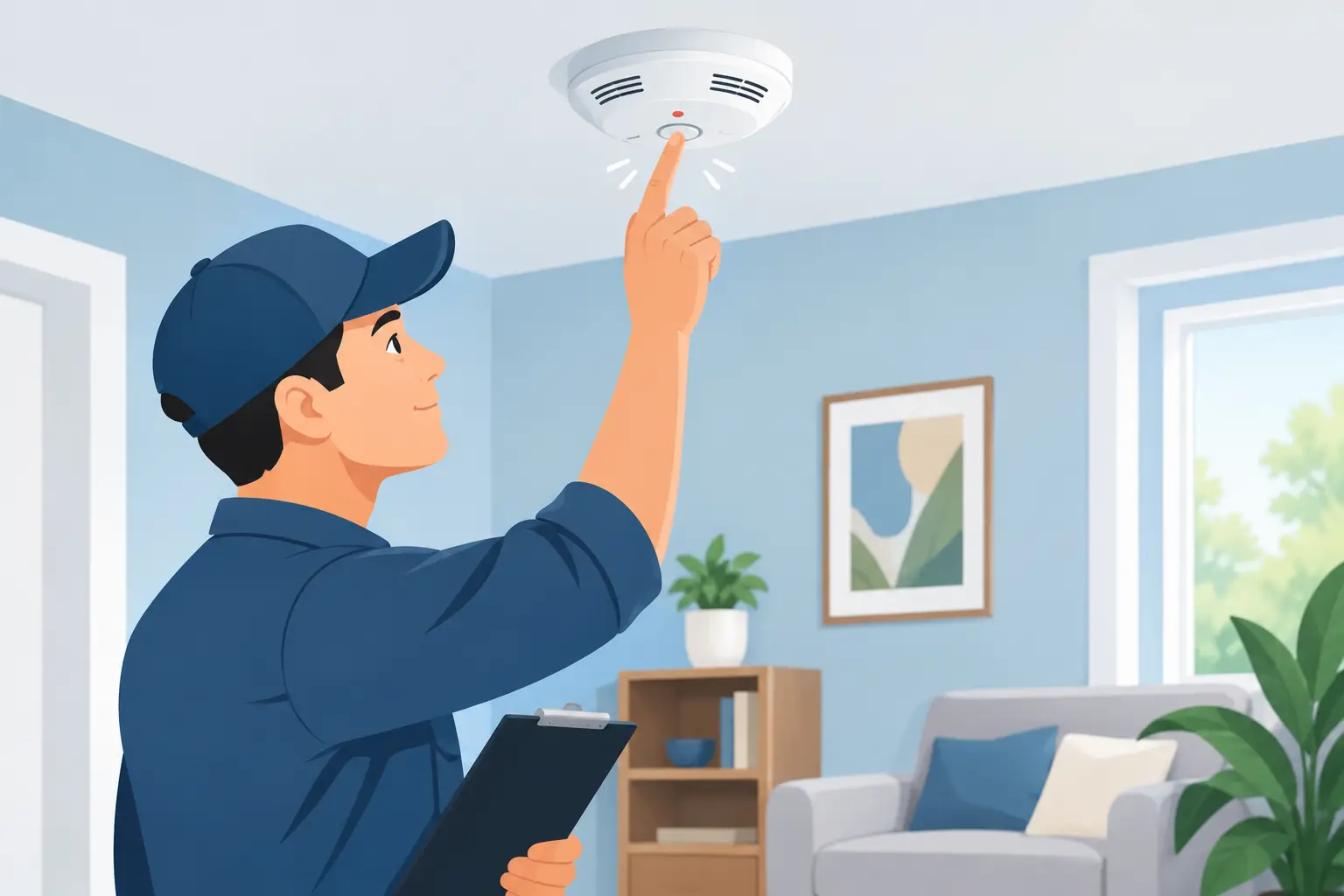
A smoke alarm only helps when it can warn your family at the right moment. That is why smoke detector testing should be a regular part of caring for your home, not something saved for a battery chirp or a home inspection. A few minutes of attention can reveal a weak battery, disconnected hardwired unit, blocked sensor, or aging alarm before it becomes a serious safety concern.
For homeowners in Palmdale, Lancaster, and across the Antelope Valley, this matters even more during periods when homes are closed up against heat, wind, or cold. A working alarm gives everyone in the house more time to respond, get outside, and call for help.
How Often Should You Test Smoke Detectors?
Test every smoke alarm in your home once a month. Pick a date that is easy to remember, such as the first weekend of the month, and test every device rather than only the one near the kitchen or hallway. Many homeowners discover that an alarm in a guest room, garage-adjacent hallway, or upper floor has been overlooked for months.
You should also test alarms after returning from a long trip, after a power outage, following electrical work, and whenever an alarm has chirped, sounded unexpectedly, or been exposed to heavy dust. If you recently painted, remodeled, or completed drywall work, check each unit once the area is clean. Fine dust can affect sensors and may cause nuisance alarms.
Monthly testing is simple, but it is not the same as a full inspection. The test button confirms that the alarm can receive power and sound its horn. It does not always confirm that the smoke-sensing chamber is clean and responsive. That distinction is one reason alarms still need routine cleaning and eventual replacement.
Smoke Detector Testing: The Right Way to Do It
Start by letting everyone in the home know you are testing the alarms. The sound is loud by design, and advance notice can prevent unnecessary concern for family members, pets, or nearby neighbors.
Press and hold the test button on each smoke alarm until the alarm sounds. On interconnected systems, triggering one unit should usually activate the other connected alarms as well. Walk through the home while testing to make sure alarms in bedrooms, hallways, and other connected areas sound as expected.
If an alarm does not sound, begin with the basics. Replace the battery if the model uses a replaceable battery, confirm the battery drawer is fully closed, and test again. For hardwired alarms, check whether a tripped breaker or loose electrical connection may be involved. A hardwired alarm often has battery backup, so a silent unit can point to more than one issue.
Do not use an open flame, candle, lighter, or improvised smoke source to test an alarm. These methods can damage the device, leave residue inside the sensor, or create an unnecessary fire risk. If you want to verify the smoke sensor itself, use only a smoke alarm test product approved for that purpose and follow the alarm manufacturer’s instructions.
After testing, make sure the unit stops sounding and returns to normal operation. If an interconnected system continues alarming after the test button is released, follow the manufacturer’s reset instructions. Repeated false alarms or alarms that will not reset deserve professional attention, especially when the devices are hardwired together.
What a Chirping Smoke Alarm Usually Means
A chirp is not something to ignore or silence indefinitely. It is the alarm’s way of telling you that it needs attention. The most common cause is a low battery, but that is not the only possibility.
A chirp may also indicate a battery that was installed incorrectly, a battery drawer that is not fully closed, accumulated dust, power loss to a hardwired unit, or an alarm that has reached the end of its service life. In homes with several interconnected alarms, the sound can be misleading. The chirp may seem to come from one hallway while the actual problem is an alarm in another room.
Replace batteries with the type specified by the manufacturer. Avoid mixing old and new batteries or using a battery type that does not match the device requirements. Some newer alarms have sealed, long-life batteries that are not intended to be replaced. When those units reach the end of their rated life, the entire alarm should be replaced.
Removing the battery to stop a chirp is never a safe long-term solution. If the alarm continues to chirp after a new battery and basic cleaning, it may be time to replace the device or have the wiring checked.
When Should Smoke Alarms Be Replaced?
Most smoke alarms should be replaced every 10 years, even if they still appear to work during a button test. The sensor inside the alarm can become less reliable with age, and a working test button does not guarantee that an older sensing chamber will respond properly in an emergency.
Look for a manufacturing date printed on the back or side of the alarm. If the date is 10 years old or older, replacement is the safer choice. If you cannot find a date, cannot identify the model, or inherited older alarms after purchasing your home, replacing them can provide needed peace of mind.
It may also be time to replace an alarm sooner if it has been painted over, damaged, repeatedly exposed to moisture, affected by insects or dust, or prone to frequent false alarms after cleaning. An alarm that fails a test, has a broken mounting base, or will not stay connected to power should not be left in service.
For many homes, replacement is a good opportunity to review the entire alarm layout. Older properties may have fewer alarms than current safety recommendations call for, while additions and converted rooms can change where protection is needed. Smoke alarms are generally recommended inside each sleeping room, outside separate sleeping areas, and on every level of the home, including the basement. Local requirements and the age of the home can affect the right setup.
Hardwired and Interconnected Alarms Need Extra Attention
Hardwired smoke alarms are powered by your home’s electrical system and commonly include battery backup. Interconnected alarms are designed so that when one detects smoke, the others sound too. This can be especially valuable in larger homes, homes with bedrooms on a separate floor, and properties where a fire could begin far from where people are sleeping.
These systems are dependable when installed and maintained correctly, but they can be more complicated to diagnose than a standalone battery alarm. A failed connection, incompatible replacement unit, incorrect wiring, or aging backup battery can affect how the system responds. Simply replacing one alarm with a random model may not preserve the intended interconnection or compatibility.
If a hardwired alarm has no power, trips the breaker, fails to communicate with other alarms, or continues to sound without an obvious reason, contact a licensed electrician. A qualified professional can check the alarm circuit, wiring connections, device compatibility, and placement without treating a life-safety issue as a quick battery swap.
Keep Your Alarms Clean and Easy to Reach
Dust is common in the Antelope Valley, and smoke alarms can collect it over time. Once or twice a year, gently vacuum around the outside vents of each alarm using a soft brush attachment. Do not spray cleaners, paint, air freshener, or insecticide directly onto the unit. These products can contaminate the sensor or cause unwanted alarms.
Keep alarms accessible enough to test and maintain. If a detector is difficult to reach because of a high ceiling, stairwell, or vaulted room, a professional can help evaluate safe options. Avoid disabling an alarm because it is inconvenient or because cooking occasionally triggers it. A better approach may be to review whether the alarm type and location are appropriate for that area.
Smoke alarms and carbon monoxide alarms serve different purposes. Many homes use combination units, but not every smoke alarm detects carbon monoxide. Check each device label so you know what protection is present in your home, particularly near sleeping areas and fuel-burning appliances.
A reliable smoke alarm system is one of the simplest protections a home can have, but it only works when every device is powered, clean, correctly placed, and within its service life. Set a monthly reminder, replace aging units before they fail, and arrange professional help when hardwired alarms show signs of an electrical problem. That small routine supports the safety and comfort of everyone under your roof.