

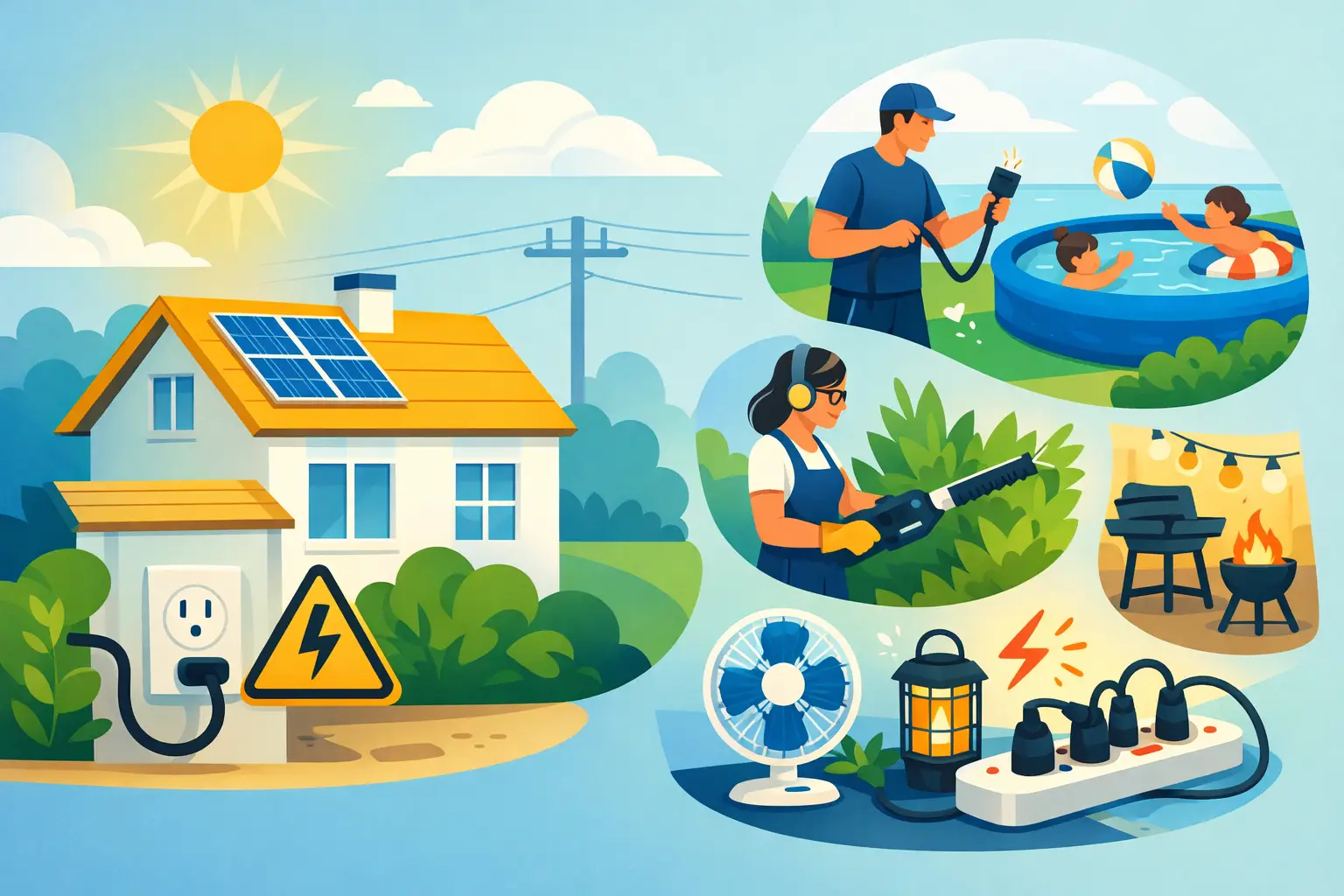
The first real heat wave usually reveals what your electrical system has been dealing with quietly for years. The AC runs longer, ceiling fans stay on all day, the garage fridge works harder, and outdoor power gets used more often. That is why summer electrical safety tips for home matter more than many homeowners realize. A system that seems fine in mild weather can start showing warning signs once temperatures rise and electrical demand climbs.
For homeowners, summer safety is less about doing something dramatic and more about noticing the small issues before they turn into bigger ones. A warm outlet, a tripping breaker, a buzzing panel, or an extension cord stretched across the patio may seem manageable for now. In hot weather, those details deserve a closer look.
Why summer puts more stress on your home’s electrical system
Summer changes how electricity gets used throughout the house. Air conditioning becomes the biggest factor, but it is rarely the only one. Families are home more often, kids plug in devices, backyard lighting gets used later into the evening, and outdoor equipment like pool pumps or electric grills can add to the load.
Heat also affects equipment itself. Electrical components do not perform better when they are hot. Panels, breakers, outlets, and wiring can all be more vulnerable when high temperatures combine with heavy demand. That does not mean every home is in danger, but it does mean small weaknesses tend to show up faster in summer.
Older homes deserve extra attention here. If your house has an aging panel, limited circuits, or outlets that were never designed for modern appliance use, summer can expose those limits quickly. The safest approach is to treat recurring electrical symptoms as a real signal, not just a seasonal annoyance.
Summer electrical safety tips home owners should follow
One of the most practical summer electrical safety tips home owners can follow is to pay attention to how often breakers trip. A breaker that trips once after an unusual power surge may not be a major concern. A breaker that keeps tripping whenever the AC and microwave run at the same time is telling you the circuit may be overloaded or that another issue needs inspection.
It also helps to look at the outlets and switches you use most. If an outlet feels warm, looks discolored, or makes crackling sounds, stop using it until it can be checked. These are not cosmetic problems. They can point to loose wiring, overloaded circuits, or worn components.
Extension cords deserve a careful look in summer too. People tend to use them more for fans, outdoor gatherings, garage work, and yard equipment. The trade-off is convenience versus safety. A short-term, properly rated extension cord for temporary use is one thing. Relying on extension cords as a substitute for permanent outlets is another. Cords can overheat, get damaged by foot traffic, or create shock risks outdoors.
If you use portable fans or window AC units, plug them directly into a properly rated outlet whenever possible. High-draw appliances should not share power strips with other devices, and they should never be connected to lightweight extension cords. That setup may work for a while, but it adds unnecessary risk during the hottest months.
Outdoor electrical safety matters more in summer
Summer naturally brings more outdoor electrical use. Patio lighting, speakers, bug zappers, power tools, and landscape equipment all become more common. Water, irrigation, dust, and heat can make outdoor power less forgiving than indoor use.
Start by checking that outdoor outlets have intact covers and are designed for exterior conditions. If a receptacle looks cracked, loose, or exposed, it should be repaired. Outdoor outlets should also have proper GFCI protection, especially near pools, spas, hose bibs, or any area where moisture is present. That protection helps shut off power quickly if a ground fault occurs.
Be cautious with extension cords outside. Not every cord is rated for outdoor use, and even outdoor-rated cords have limits. If a cord is pinched under a door, run through standing water, or left in direct sun for long periods, it can degrade faster than expected. If you need recurring power in a specific outdoor area, a permanent installation is usually the better long-term solution.
Storm season can create issues as well, even in areas where summer rain is less frequent. Wind can damage service equipment, and power fluctuations can affect electronics. Whole-home surge protection is worth considering for homeowners who want broader protection for HVAC equipment, appliances, and sensitive devices. It is not a replacement for good wiring and grounding, but it adds another layer of defense.
Air conditioning and summer electrical load
Your cooling system is often the single biggest electrical demand in summer. When the AC runs longer cycles, it puts strain not only on the unit itself but on the circuits and panel supporting it. If lights dim when the system starts, or if certain rooms seem to lose power stability during peak cooling hours, that is worth paying attention to.
Sometimes the issue is straightforward. An older system may draw more power than it should, or a circuit may already be carrying too much. In other cases, the electrical panel may no longer match the home’s current needs. Many homes now support larger TVs, extra refrigerators, home office equipment, EV charging, and upgraded kitchen appliances on top of cooling demands that were already significant.
This is where it depends on the age and condition of the home. Some houses only need a targeted repair or dedicated circuit. Others may benefit from a panel upgrade to improve safety and reliability. The right answer is not always the largest upgrade. It is the one that fits how your home actually uses power.
Don’t ignore these warning signs
Homeowners often wait too long on electrical problems because the issue seems intermittent. That is understandable, but electrical warning signs rarely improve on their own.
Call for inspection if you notice frequent breaker trips, flickering lights that are not tied to utility outages, outlets that stop working, a burning smell near outlets or the panel, buzzing sounds, or scorch marks. The same is true if you have an older panel and have not had it evaluated in years, especially before adding a major appliance or EV charger.
If you are planning summer projects, think about electrical demand before the work starts. A new patio cover with lighting, a shed with power, a hot tub, or exterior entertainment equipment may require more than plugging into the nearest outlet. Safe installation protects both the new feature and the rest of the house.
A few simple checks can prevent bigger problems
A visual walk-through of your home can go a long way. Look at cords, plugs, outlets, and your electrical panel area. The panel should be easy to access and free from clutter. If breaker labels are missing or unclear, that is worth fixing. In an emergency, clear labeling saves time.
Test GFCI outlets periodically, especially in kitchens, bathrooms, garages, laundry areas, and outdoor spaces. If one does not reset properly, have it checked. These devices are designed to protect people from shock, but only if they are working correctly.
It is also smart to think seasonally. Summer is a good time to ask whether your home has outgrown its electrical system. If your family is relying on power strips in multiple rooms, running window units because certain areas do not cool well, or planning to add an EV charger, those are signs that expert electrical repairs or upgrades may be worth discussing.
For homeowners in places like Palmdale and Lancaster, where long stretches of heat can keep electrical systems under pressure, preventive attention matters. A trusted electrical repair visit before a failure is usually easier than dealing with a shutdown during the hottest week of the year.
When to bring in a licensed electrician
There is a difference between homeowner awareness and do-it-yourself electrical work. Replacing a damaged cord on a lamp is one thing. Opening a panel, replacing outlets without testing the circuit properly, or trying to solve repeated tripping by swapping breakers is another.
A licensed residential electrician can identify whether the real issue is overload, aging wiring, a failing outlet, poor connections, or a panel problem. That matters because the symptom you notice is not always the source of the problem. Safe repairs should solve the cause, not just quiet the warning sign.
At A1 Home Electric, the focus is the same one homeowners care about most – quality and safety that hold up over time. Summer puts your home electrical system to work every day, and a little attention now can prevent the kind of problem that interrupts comfort when you need it most.
If your home has been showing small electrical warnings, treat them as a chance to get ahead of the issue while the fix is still simple.