

A smoke alarm that looks normal can still fail when it is needed most. That is why homeowners should test smoke detectors regularly, rather than waiting for a low-battery chirp or a problem during an inspection. A quick monthly test takes only a few minutes and can help protect the people, pets, and property that matter most.
For homes in Palmdale, Lancaster, and across the Antelope Valley, testing is especially worthwhile. Dust, temperature swings, aging batteries, and long periods with closed-up windows can all affect alarm performance. The goal is simple: make sure every alarm can detect danger, sound clearly, and alert the entire household.
How to Test Smoke Detectors Correctly
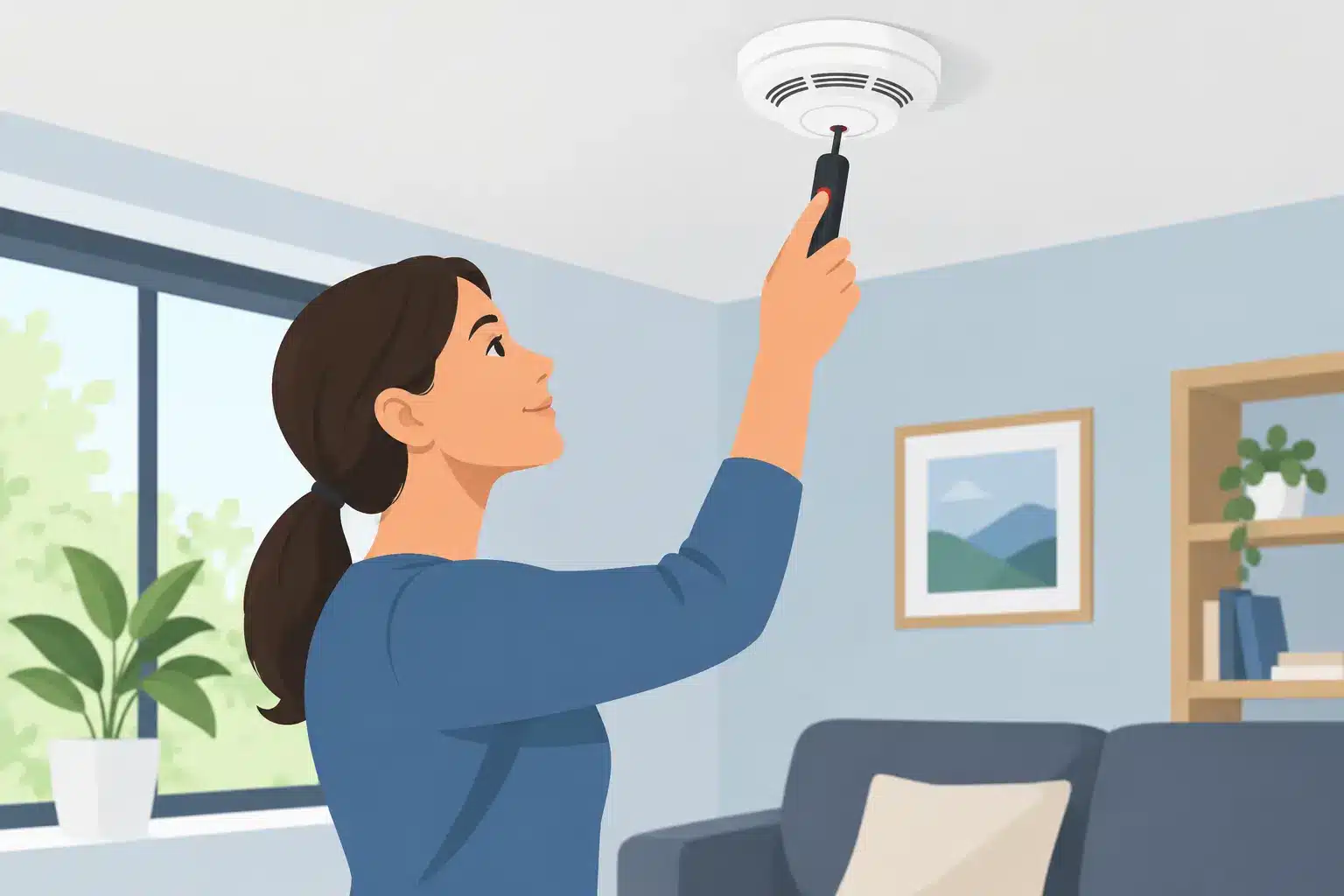
Most residential smoke alarms have a test button on the face or side of the unit. Press and hold that button until the alarm sounds. Depending on the model, it may take a few seconds before the audible signal begins. A functioning alarm should produce a loud, clear sound that continues while the button is held.
Walk through the home while testing. If you have interconnected alarms, activating one unit should cause the other connected alarms to sound as well. This feature gives family members more time to respond, particularly when bedrooms are far from the kitchen, garage, or living areas.
Do not assume that a brief chirp means the unit has passed. The alarm should be strong enough to hear from nearby rooms. If the sound is weak, distorted, delayed, or absent, replace the battery if applicable and test it again. If it still does not perform properly, the alarm may be at the end of its service life or may have an electrical issue.
A test button checks the alarm’s electronics, horn, and power source. It does not fully recreate the way a sensor responds to smoke. For most homeowners, the button test is the proper routine check. Specialty aerosol products are available for more detailed sensor testing, but they should be used carefully and according to the manufacturer’s instructions. Avoid using candles, matches, cooking smoke, or other improvised methods. They can create unnecessary risk, leave residue inside the alarm, or fail to test the unit reliably.
How Often Should You Test Smoke Detectors?
A practical schedule is to test every smoke alarm once a month. Pick a date that is easy to remember, such as the first weekend of the month. Regular testing makes it much more likely that a dead battery, loose connection, or failed unit will be found before an emergency.
It is also wise to test alarms after a power outage, a major electrical repair, a renovation, or a long absence from home. Hardwired alarms often include a backup battery, but both the wired connection and battery backup need to be working. If your home has recently had panel work, circuit repairs, or a remodeling project, a quick alarm check is a sensible part of getting the home back to normal.
Battery replacement depends on the alarm type. Many older units use replaceable batteries, while newer models may have sealed 10-year batteries. Follow the label and manufacturer’s directions for your specific model. A chirping alarm should not be ignored, even if it seems to stop on its own. The sound can indicate a low battery, a dirty sensor, an end-of-life warning, or a problem with a hardwired connection.
Check the Age, Not Just the Battery
Replacing a battery will not restore an alarm that has reached the end of its useful life. Most smoke alarms should be replaced about every 10 years, though homeowners should always check the date printed on the back of the unit and follow the manufacturer’s guidance.
To find the date, twist the alarm off its mounting plate or look for a label around the edge. If there is no clear manufacturing date, or the alarm has yellowed, cracked, or been painted over, replacement is usually the safer choice. An alarm may still beep during a button test even when its sensing ability has declined with age.
This is one reason a whole-home review can be useful in older properties. Homes do not always have alarms installed in the right places, and it is common to find a mix of different ages and types. Replacing one failed alarm can solve the immediate problem, but updating an outdated system may offer better long-term protection.
Where Smoke Alarms Should Be Installed
Smoke alarm placement matters as much as testing. Current residential safety practices generally call for alarms inside every sleeping room, outside each separate sleeping area, and on every level of the home, including the basement when there is one. Exact requirements can vary based on the home’s age, layout, local codes, and the scope of any renovation.
Alarms should be installed where they can wake sleeping occupants, not hidden in a distant hallway or only near the electrical panel. In larger homes, interconnected alarms are especially valuable because a fire at one end of the house can trigger an alert throughout the home.
Placement also requires some judgment. Smoke alarms installed too close to cooking areas may produce frequent nuisance alarms. That can lead people to remove batteries or disable the unit, which creates a serious safety problem. A photoelectric smoke alarm is often a good choice near kitchens because it is generally less prone to cooking-related false alarms, but it still needs proper placement. Heat alarms may also be appropriate for certain garage or kitchen-adjacent applications, though they are not a substitute for required smoke alarms.
Carbon monoxide alarms serve a different purpose. They detect carbon monoxide, not smoke, and homes with fuel-burning appliances, fireplaces, attached garages, or other possible CO sources should have appropriate protection. Combination smoke and carbon monoxide units can be convenient, but each function should be tested according to the manufacturer’s instructions.
When a Smoke Alarm Problem Calls for an Electrician
Some smoke alarm issues are simple, such as a loose battery door or an expired unit. Others point to a larger electrical concern. If a hardwired alarm will not power on, repeatedly chirps after a fresh battery is installed, or does not trigger the other connected alarms, it is time for a closer look.
A licensed electrician can inspect the alarm circuit, interconnection wiring, mounting locations, and compatibility of replacement units. This matters when several alarms are failing, when a remodel has changed room layouts, or when older alarms need to be brought up to current safety expectations. Hardwired systems can be more dependable than stand-alone battery units, but only when the wiring and backup power are in good condition.
Avoid disconnecting a hardwired alarm and leaving exposed wiring behind. Likewise, do not silence a nuisance alarm by removing the battery and forgetting to replace it. If cooking steam or dust is causing repeated alarms, the better answer is to clean the unit, review its location, and determine whether the alarm type is appropriate for that area.
A Simple Monthly Routine That Builds Confidence
Testing does not need to become a complicated home maintenance project. Choose one day each month, notify everyone in the home that the alarms will sound, press the test button on each unit, and confirm that interconnected alarms respond. Check for chirps, weak sound, damaged housings, and units that are nearing 10 years old.
A light vacuuming around the outside vents can help remove dust, but never spray cleaners or paint into the alarm. Keep a written note on your phone or home maintenance calendar with the test date and any batteries or alarms replaced. That small record is useful when selling a home, planning upgrades, or troubleshooting a recurring issue.
If your alarms are outdated, unreliable, or not properly connected, A1 Home Electric can help homeowners evaluate the system and make practical safety-focused updates. A working smoke alarm is a small device with a major job. Giving it a few minutes of attention each month is one of the clearest ways to protect your home when every second counts.