
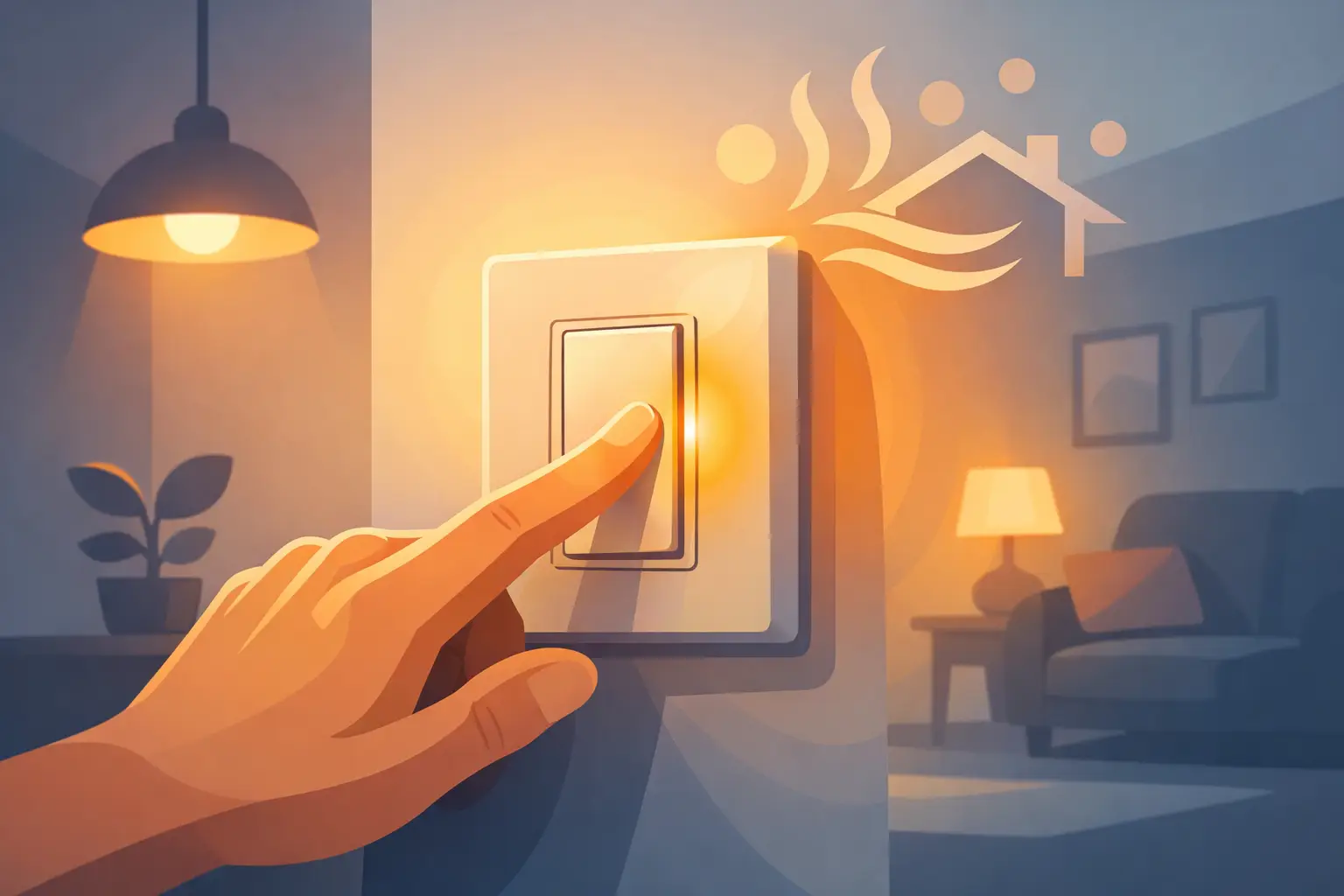
A light switch that feels slightly warm can be easy to dismiss, especially when the lights still work normally. But homeowners asking what causes warm light switches are right to pay attention. A switch carries electrical current, and excess heat can point to a loose connection, an overloaded circuit, an incompatible device, or a failing component behind the wall.
The right response depends on how warm the switch feels, what type of switch it is, and whether other warning signs are present. A dimmer may produce a small amount of warmth during normal operation. A standard on-off switch that feels hot, smells burnt, buzzes, or has discoloration should be treated as a safety concern.
When Is a Warm Light Switch Normal?
Not every warm switch is an emergency. Dimmer switches, smart switches, and switches that control higher-wattage lighting can generate some heat while operating. Many dimmers use electronic components to regulate power, and that process naturally creates a mild amount of warmth.
The key difference is whether the warmth is mild and expected or uncomfortable and concerning. A switch that is only slightly warm to the touch may be operating within its normal range. A switch that feels hot enough that you do not want to keep your hand on it is not something to ignore.
Older switches are also more likely to develop issues over time. Homes in the Antelope Valley often have electrical systems that have been added to or updated in stages, especially when remodeled rooms, outdoor lighting, ceiling fans, and newer appliances have been installed. A switch may be serving a circuit that has changed significantly since the original wiring was put in place.
What Causes Warm Light Switches?
Several conditions can cause heat to build up at a switch. The source may be the switch itself, the wiring connections inside the electrical box, or the amount of power moving through the circuit.
Loose wiring connections
Loose connections are one of the most common causes of overheating. Electricity should move through secure connections with minimal resistance. When a wire is loose at the switch terminal, wire connector, or splice, resistance increases and heat can build up.
This problem can develop gradually from age, vibration, repeated use, or poor previous installation. A loose connection may also cause lights to flicker, a switch to crackle, or the fixture to work intermittently. Because the connection is concealed behind the wall plate, homeowners cannot safely diagnose it by looking from the outside.
An overloaded switch or circuit
Every switch has an electrical rating. If it is asked to control more power than it was designed to handle, it may overheat. This can happen when a light fixture was upgraded, additional fixtures were added, or a switch is being used for a load that requires a different type of control.
For example, a switch that once controlled a few low-wattage bulbs may now control a larger bank of lights, a bathroom exhaust fan, or exterior lighting. Even LED upgrades can create trouble when a dimmer is not rated for LED use or the total connected load exceeds the dimmer’s capacity.
The circuit itself may also be overloaded. If lights dim when another appliance starts, breakers trip frequently, or multiple rooms share a circuit that is carrying too much demand, a licensed electrician should inspect the system rather than simply replace the switch.
A failing or worn-out switch
Light switches are mechanical devices. Each time a standard switch is turned on or off, internal contacts open and close. Over years of use, those contacts can wear, pit, or loosen. That wear creates resistance, and resistance creates heat.
A worn switch may feel warm before it fails completely. You may notice a delay when the light turns on, a soft buzzing sound, a loose toggle, or a switch that works only when pressed a certain way. Replacing the device is often straightforward, but the wiring and box condition should be checked at the same time.
An incompatible dimmer or smart switch
Dimmer switches must match the lighting they control. A dimmer made for incandescent bulbs may not operate properly with LED bulbs. Some LED bulbs are labeled dimmable but still require a compatible dimmer model to perform correctly.
Compatibility issues can cause flickering, humming, limited dimming range, and extra heat. Smart switches also have specific wiring requirements. Many need a neutral wire, and installing one incorrectly can create performance problems or unsafe connections.
A properly selected dimmer or smart switch may feel mildly warm in use. It should not become excessively hot, emit an odor, or show signs of damage.
Crowded electrical boxes and poor ventilation
Heat has less room to dissipate in a crowded electrical box. This is more common where multiple switches, dimmers, smart controls, or wire splices share one box. Decorative wall plates and insulated wall cavities can also trap heat around electronic controls.
Box-fill requirements and device ratings exist for a reason. An electrician can determine whether the box is properly sized, whether wires are damaged or overcrowded, and whether a different device or installation method is needed.
Damaged wiring or improper past work
Heat may come from wiring that has been nicked, improperly spliced, undersized, or connected with the wrong materials. These problems are particularly concerning because they can occur behind finished walls without obvious signs until a switch becomes hot, a breaker trips, or a burning smell develops.
DIY repairs and aging electrical work do not always fail immediately. A connection may appear to work for months or years before repeated heating and cooling loosens it. Professional electrical inspection helps identify the cause instead of covering up the symptom with a new wall plate or replacement switch.
Warning Signs That Need Prompt Electrical Repair
Turn the switch off if you notice heat accompanied by a burning odor, smoke, discoloration, melted plastic, sparking, buzzing, or crackling. Do not continue using the switch to see if the problem goes away. If it is safe to do so, turn off the breaker that serves the switch and arrange for expert electrical repairs.
A breaker that trips after the switch is used is another warning sign. Breakers are designed to interrupt power when they detect an overload or fault. Repeatedly resetting one without finding the cause can allow the underlying issue to worsen.
Flickering lights deserve attention as well, particularly if they occur at the same switch or in several areas of the home. A single loose bulb is different from repeated flickering connected to a warm switch. In that case, the issue may involve the device, wiring, or circuit connection.
What Homeowners Should and Should Not Do
You can take a few sensible steps without opening the electrical box. Check whether the bulbs and dimmer are compatible, reduce the lighting load if possible, and avoid operating the switch until it has been evaluated if it feels hot. Make a note of when the problem occurs, such as only when lights are dimmed, after several minutes of use, or when another appliance is running.
Do not remove the cover plate or tighten wires unless you are qualified to work safely on residential electrical systems. Turning off a wall switch does not necessarily de-energize every wire in the box. Electrical troubleshooting requires confirming power is off at the breaker and testing properly before any work begins.
Avoid replacing a warm switch with a higher-rated device as a shortcut. A higher rating does not correct loose wiring, damaged conductors, an overloaded circuit, or an incorrectly installed connection. The safest repair starts with identifying why the heat is present.
When to Call a Licensed Electrician
Call a licensed electrician promptly when a switch is hot, smells burnt, makes noise, appears discolored, or is linked to flickering lights or tripped breakers. You should also schedule an inspection when a dimmer or smart switch was recently installed and has begun acting unpredictably.
A qualified electrician can inspect the switch rating, wiring connections, circuit load, electrical box capacity, grounding, and compatibility of the fixture and controls. If the issue is part of a larger concern, such as aging wiring or an overloaded panel, the inspection can help prevent repeat problems elsewhere in the home.
For homeowners in Palmdale, Lancaster, and nearby Antelope Valley communities, A1 Home Electric provides trusted electrical repair focused on quality and safety. A warm light switch may be a small symptom, but addressing it early helps protect the comfort, reliability, and long-term performance of your home.
If a switch feels hotter than normal, trust that signal. Turning off the power and having the cause checked is a practical step that can prevent a minor repair from becoming a more serious electrical hazard.