

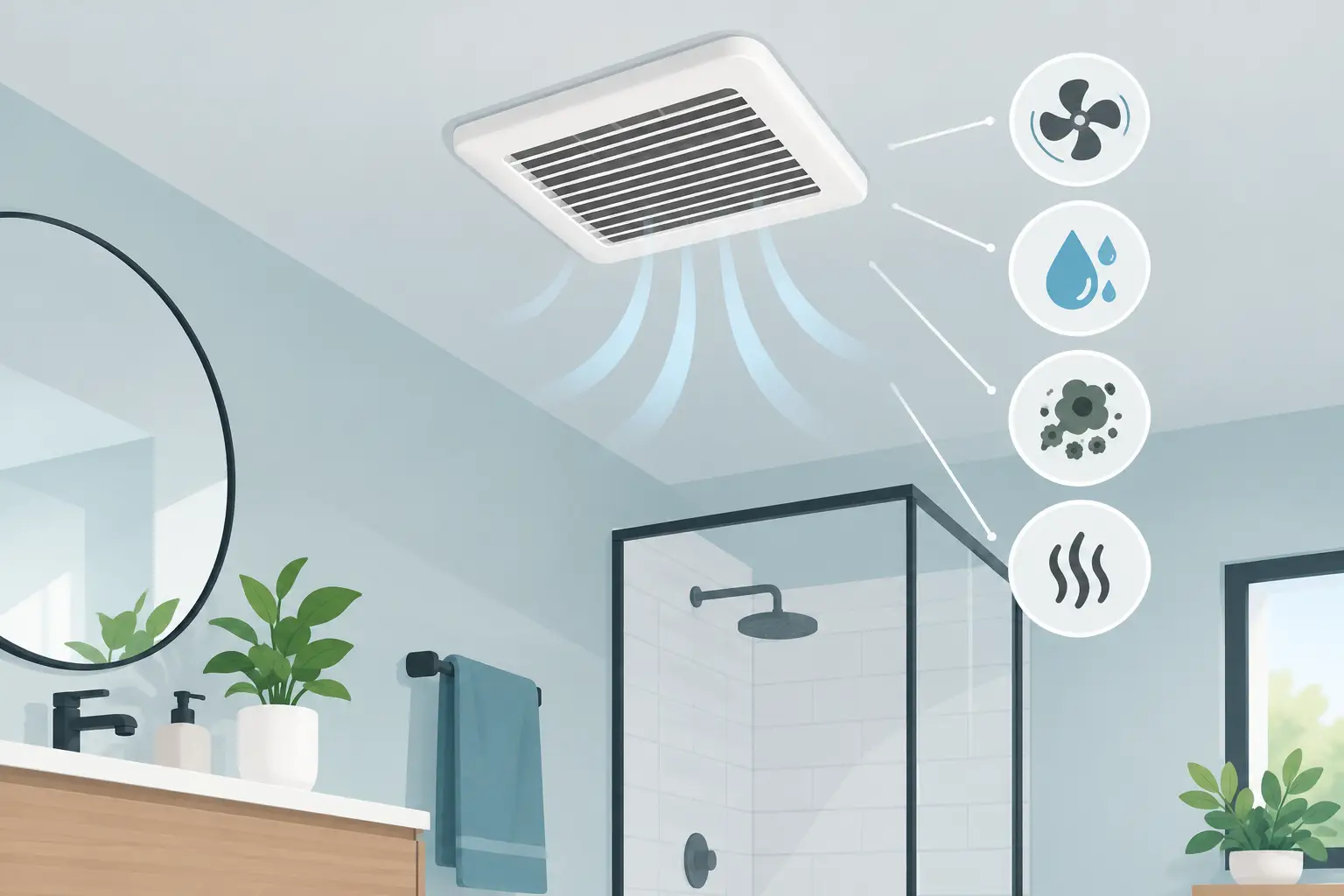
A bathroom that stays damp long after a shower is not just uncomfortable. Moisture can collect on walls, ceilings, mirrors, and around light fixtures, creating conditions that may lead to peeling paint, mildew, and hidden damage. Bathroom exhaust fans move humid air outside so the room can dry properly, helping protect both your home and the people using it.
For homeowners in the Antelope Valley, a working fan matters year-round. Cool mornings can leave bathrooms slow to dry, while summer heat can make an already humid room feel stuffy. The right fan, installed and vented correctly, is a practical part of maintaining a safe, comfortable home.
What Bathroom Exhaust Fans Actually Do
A bathroom exhaust fan removes moisture, odors, and airborne particles from the room. It draws air through the fan grille and sends it through ductwork to the exterior of the home. That last part matters. A fan that releases damp air into an attic, crawlspace, or wall cavity can simply move the moisture problem to a place where it is harder to see.
The fan is not intended to replace a window, regular cleaning, or repairs to a leaking shower or toilet. It works alongside those measures. If you see recurring water stains, soft drywall, or visible mold, the issue may be larger than ventilation alone and should be addressed promptly.
A properly operating fan should make a steady, reasonable sound, pull humid air from the room, and continue running long enough to clear the moisture. Many homeowners turn the switch off as soon as they leave the bathroom, which often does not give the fan enough time to do its job. Letting it run for about 20 minutes after bathing is a good general practice, especially after hot showers.
Signs Your Exhaust Fan May Need Service
Some fan problems are obvious. Others develop slowly enough that they are easy to overlook. A fan that suddenly stops, trips a breaker, gives off a burning smell, or has a damaged cover needs professional attention. Electrical problems near moisture are not a do-it-yourself risk.
Other warning signs are more gradual. You may notice that the mirror stays fogged long after a shower, the ceiling paint starts bubbling, or musty odors return soon after cleaning. The room may feel humid even when the fan is running. These symptoms can point to a weak motor, clogged grille, disconnected duct, undersized fan, or a vent termination that is blocked outside.
Noise can also tell you something. A light airflow sound is normal. Loud rattling, grinding, humming without airflow, or a fan that starts and stops on its own is not. In some cases, a loose grille or dust buildup is the problem. In others, the motor or electrical connection is wearing out.
If the bathroom fan shares a circuit with lights or other equipment and the breaker trips repeatedly, do not keep resetting it. Repeated tripping is a safety signal. A licensed electrician can inspect the circuit, switch, wiring, and fan connection to identify the source of the problem.
Repair or Replace: How to Decide
The right answer depends on the age of the fan, its condition, and the reason it is not performing well. Cleaning the grille and removing surface dust can improve airflow when the motor is still in good condition. A failed wall switch, loose connection, or faulty timer may also be repairable without replacing the entire unit.
Replacement is often the better value when the fan is older, unusually loud, weak, or no longer moves enough air for the room. Newer units are generally quieter and more efficient. Some include humidity sensors, motion sensors, or adjustable timers that keep the fan running after the bathroom is empty. Those features can be useful for busy households because they reduce the chance that moisture is left behind after every shower.
A humidity-sensing fan is convenient, but it is not always the best fit for every bathroom. It must be set correctly and installed where it can accurately sense room conditions. A timer switch is often a simple, dependable option for homeowners who want predictable operation without relying on a sensor.
When selecting a replacement, the fan needs enough capacity for the size and layout of the bathroom. Capacity is measured in CFM, or cubic feet per minute. A small powder room does not need the same airflow as a large primary bathroom with a shower, tub, toilet, and enclosed water closet. Bigger is not automatically better, either. The goal is appropriate airflow, quiet operation, and ductwork that allows the fan to perform as designed.
Why Ducting and Vent Location Matter
A powerful fan cannot overcome poor ducting. Long duct runs, crushed flexible duct, sharp turns, disconnected sections, and blocked exterior caps all restrict airflow. Even a brand-new fan may seem ineffective if the path to the outdoors is poorly installed.
The exterior vent should discharge air outside, not into an attic or garage. It also needs a working damper to limit outside air and pests from entering when the fan is off. In dusty or windy areas, exterior vent covers can accumulate debris over time, so periodic inspection is helpful.
Condensation inside ductwork can also become an issue when warm, moist bathroom air meets a cold surface. Proper routing and insulation help reduce that risk. This is one reason a fan installation should be evaluated as a complete ventilation system rather than only a ceiling fixture swap.
Electrical Safety Comes First
Bathrooms combine water, steam, metal surfaces, and electrical equipment. That makes correct wiring, grounding, box support, and switch selection essential. If a new fan requires a dedicated control, timer, humidity sensor, or light and fan combination unit, the wiring may need to be updated.
Older homes can present additional challenges. The existing fan may be connected with aging wiring, mounted in an undersized electrical box, or controlled by a switch that no longer operates reliably. An inspection can determine whether the existing circuit is suitable for the new equipment and whether any corrections are needed for quality and safety.
A fan replacement may look simple from below the ceiling, but access above the ceiling, duct routing, roof or wall termination, and electrical connections can all affect the job. A licensed electrician can help ensure the fan is safely connected and that the controls work the way your household needs them to.
Simple Maintenance That Helps Fans Last
A fan does not need constant attention, but it should not be forgotten. Turn off power at the breaker before cleaning. Then remove the grille, vacuum away dust, and wipe it with a dry or lightly damp cloth. Dust buildup can reduce airflow and make the fan work harder.
Listen to the fan occasionally and look for moisture patterns in the room. If the fan is running but steam lingers, do not assume the unit is working properly just because you hear it. Airflow and exterior venting need to be checked as well.
For rental properties and homes being prepared for sale, bathroom ventilation deserves special attention. A quiet, functional exhaust fan supports a cleaner-looking bathroom and can prevent small moisture issues from becoming last-minute repair concerns.
When a bathroom feels damp, the fan is loud, or a breaker keeps tripping, timely service protects more than comfort. A1 Home Electric provides trusted electrical repair for homeowners who want clear answers and code-conscious work. A properly working fan is a small home feature with a meaningful job: keeping moisture moving out before it has a chance to settle in.