
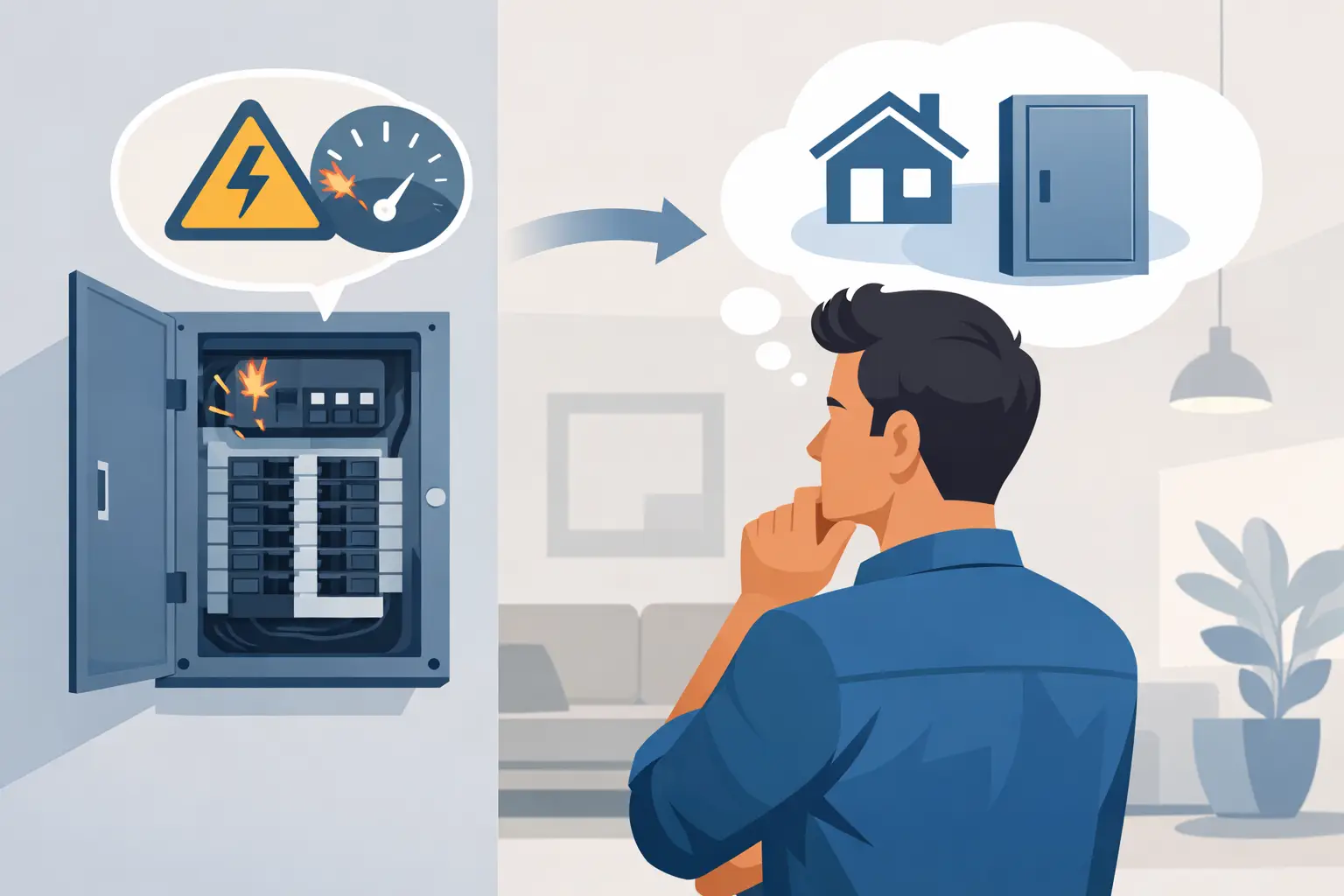
A breaker trips while the microwave runs, lights dim when the air conditioner starts, or a new EV charger is on your wish list. These are practical moments when homeowners ask when to replace an electrical panel. The answer is not based on age alone. Your panel may need attention because it shows damage, cannot safely support your household’s electrical demand, or contains equipment with a known history of problems.
Your electrical panel is the control center for your home. It directs power to every circuit and is designed to stop dangerous overloads before wiring can overheat. A qualified inspection can determine whether a repair, a targeted circuit upgrade, or full panel replacement is the right step for your home.
When to Replace an Electrical Panel: Clear Warning Signs
Some concerns call for an electrician promptly, especially if you notice heat, burning odors, sparks, or visible damage. A panel should never feel hot to the touch. A faint electrical smell, discoloration around breakers, corrosion, or melted insulation can point to loose connections or overheating inside the equipment.
Frequent breaker trips deserve a closer look, but they do not automatically mean the panel has failed. A breaker may trip because one circuit is carrying too many appliances, a particular appliance has a fault, or there is a wiring issue elsewhere in the home. Resetting a breaker repeatedly without finding the cause can allow a safety problem to continue. A licensed electrician can test the circuit and determine whether the breaker is doing its job or whether the panel needs work.
Flickering lights and inconsistent power are also worth evaluating, particularly when they occur in several rooms or worsen when larger appliances turn on. Loose wiring, an overloaded service, a failing breaker, or a utility-side issue can all create similar symptoms. The right diagnosis matters because replacing a panel will not solve every electrical problem.
If a panel has water damage, heavy rust, rodent damage, or signs of a previous improper repair, replacement is often the safer choice. Antelope Valley homes can face dust, heat, and aging outdoor equipment over time. Any compromised enclosure or damaged internal component should be inspected rather than ignored.
Older Panels That Need Professional Evaluation
An older panel is not automatically unsafe simply because of its age. Many well-installed panels continue to serve homes reliably for decades. Still, certain brands and types of equipment deserve particular attention due to their documented safety concerns or lack of replacement parts.
Federal Pacific Electric panels and some Zinsco or Sylvania-Zinsco panels are commonly flagged during inspections. Their breakers may not reliably trip under overload conditions, which can increase fire risk. If your home has one of these panels, a qualified electrician should assess replacement options even if the system seems to be working normally.
A fuse box is another reason to plan an upgrade. Fuses can protect a home when correctly sized and maintained, but they are less convenient for modern households and may not provide the capacity needed for current appliances. Using the wrong fuse size is particularly dangerous because it can permit wiring to overheat before protection activates.
It is also wise to inspect a panel that has been modified repeatedly over the years. Double-tapped breakers, crowded wiring, missing cover components, unused openings, or mismatched breakers can indicate past work that did not meet manufacturer requirements. These issues may be repairable, but they should be reviewed as part of the larger condition of the electrical system.
A Panel Upgrade May Be Needed for More Power
Electrical needs have changed dramatically in many homes. A panel that was adequate for basic lighting, a refrigerator, and a few outlets may struggle with central air conditioning, electric ranges, home office equipment, solar equipment, hot tubs, or an EV charger.
A panel upgrade may be appropriate when you are adding a major electrical load or running out of breaker space. The issue is not just the number of open slots. Your electrical service must have enough capacity to safely supply the additional demand. An electrician performs a load calculation that considers your home’s size, installed equipment, heating and cooling, and how electrical loads are expected to operate.
For example, installing an EV charger may require a dedicated 240-volt circuit. Some homes can accommodate that circuit with available capacity, while others need a panel upgrade or service upgrade first. The same is true for an electric water heater, induction range, heat pump, workshop equipment, or accessory dwelling unit.
Many older homes have 100-amp service. That may still be enough for some households, depending on the home’s actual loads. Other homes benefit from upgrading to 200 amps to support planned improvements and reduce capacity concerns. Bigger is not automatically better. The right panel size should be based on a proper evaluation, local code requirements, and your plans for the home.
Repair, Upgrade, or Replacement: What Is the Difference?
A panel repair addresses a specific issue, such as a damaged breaker, loose connection, failed main breaker, or worn component that can be safely replaced. This is often the most practical solution when the panel itself is in good condition and has sufficient capacity.
A panel replacement involves installing a new panelboard and breakers, typically while keeping the existing electrical service size. This can make sense when the panel is obsolete, damaged, unsafe, or too full to organize properly, but the home’s service capacity remains adequate.
A service upgrade is more extensive. It may include a new panel along with upgraded service equipment, meter components, grounding, and conductors to increase available amperage. Because service upgrades involve utility coordination, permits, and inspections, they require careful planning. They can also provide lasting value when your home is moving toward more electric appliances and transportation.
The best choice depends on the source of the problem. Homeowners deserve a clear explanation of what is failing, what work is recommended, and why a smaller repair may or may not be a safe long-term answer.
What to Expect From a Panel Inspection
A professional panel inspection starts with more than counting breakers. The electrician will look for the panel’s make, condition, breaker compatibility, signs of overheating, grounding and bonding concerns, service rating, open spaces, and the quality of past electrical work.
They may also ask about your household’s patterns. Do breakers trip when the dryer and microwave run together? Are you planning an EV charger? Has a room addition changed the home’s demand? These details help connect visible panel conditions with how your family actually uses electricity.
For homes in Palmdale, Lancaster, and nearby Antelope Valley communities, a local licensed electrician can also help ensure panel work accounts for applicable permitting and inspection requirements. Electrical panel replacement is not a do-it-yourself project. Even with the main breaker off, service conductors may remain energized, and errors in panel work can create serious shock and fire hazards.
Do Not Wait for a Complete Failure
Electrical panels rarely provide a convenient warning before a serious problem. A burning odor, smoke, sparking, or a panel that feels hot calls for immediate action. Move away from the area, avoid touching the panel, and contact a qualified electrician. If there is an active fire or immediate danger, call emergency services.
For less urgent concerns, scheduling an inspection before a remodel, appliance upgrade, home purchase, or EV charger installation gives you time to make a sound decision. A1 Home Electric helps homeowners identify practical, code-conscious solutions that protect safety, comfort, and long-term reliability.
A dependable electrical panel should give your household quiet confidence, not a reason to limit the appliances you use or worry whenever a breaker trips. Having it evaluated early can turn a small concern into a clear plan for a safer home.