

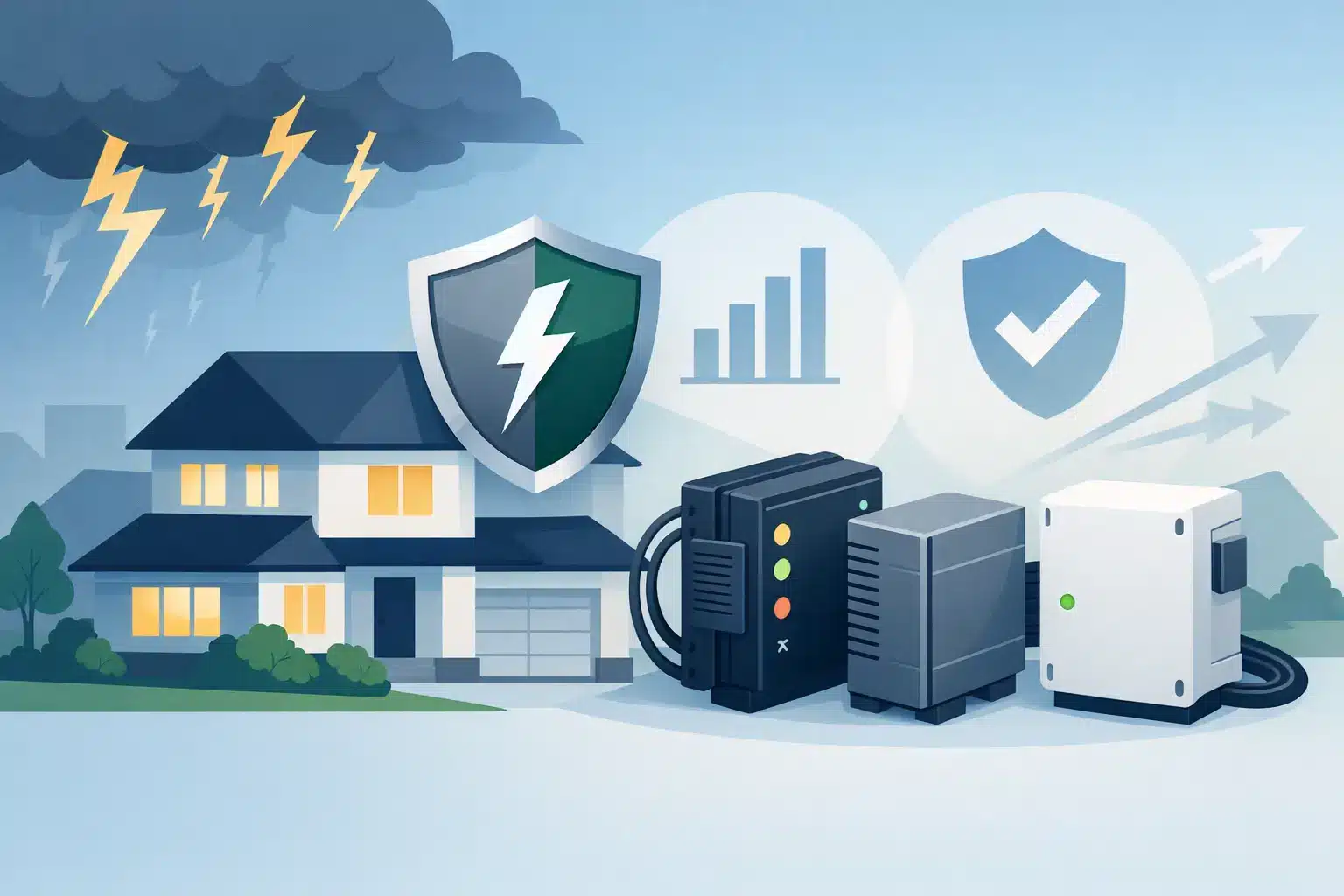
A refrigerator control board, smart thermostat, garage door opener, and TV can all be affected by a surge that lasts only a fraction of a second. A whole house surge protector comparison helps homeowners look past packaging claims and choose protection that fits the home’s electrical panel, equipment, and long-term needs. The right unit is not necessarily the one with the biggest number on the box. It is the one that is properly rated, correctly installed, and matched to your electrical system.
Surges do not come only from lightning. Utility switching, outages returning to service, large appliances cycling on and off, air conditioning equipment, and nearby electrical activity can all create voltage spikes. In the Antelope Valley, where high temperatures can keep cooling equipment working hard, protecting sensitive electronics and modern appliances is a practical part of maintaining a reliable home.
How to Make a Whole House Surge Protector Comparison
Most homeowners will be comparing Type 1 and Type 2 surge protective devices. Both are intended to protect the home at the electrical service or main panel. Type 1 devices are installed on the utility side of the main service disconnect or, when listed for it, on the line side of certain equipment. Type 2 devices are installed on the load side of the service disconnect, usually inside or beside the main electrical panel.
For a typical existing home, a licensed electrician often installs a Type 2 protector at the main panel. It provides broad protection for circuits throughout the home, including appliances, lighting controls, computers, entertainment systems, and many connected devices. Type 1 protection can be a good fit in specific service configurations or during certain panel and service upgrades. The correct choice depends on the panel, available breaker space, wiring layout, and local code requirements.
Plug-in power strips can still be useful for delicate electronics, but they are not a replacement for whole-home protection. They work best as a second layer for equipment such as computers, televisions, and home office devices. A panel-mounted protector handles surges closer to where electricity enters the home.
Ratings That Matter More Than Marketing
Surge protectors can appear similar while offering very different levels of protection. A qualified electrician can interpret the label and recommend a device appropriate for the property, but homeowners benefit from knowing what the major ratings mean.
| What to compare | What it tells you | What homeowners should look for | |—|—|—| | Nominal discharge current, or In | How much surge current the device is tested to handle repeatedly | A higher rating can be valuable for homes with frequent electrical stress or significant equipment investments | | Surge current capacity | The maximum single surge current the device can divert | This is useful, but should not be the only deciding factor | | Voltage protection rating, or VPR | The voltage that may pass through during standardized testing | Lower values generally indicate tighter voltage limiting, provided the unit is properly listed and installed | | Short-circuit current rating, or SCCR | The fault current the device can safely withstand in the electrical system | It must be suitable for the available fault current at the panel | | Warranty and connected-equipment coverage | Manufacturer support if the product fails or a covered event occurs | Read the exclusions closely and treat coverage as a benefit, not the main reason to buy |
A common mistake is choosing solely by maximum surge current capacity. A large kA number can be reassuring, but it does not tell the entire story. Voltage protection rating, listing, correct wiring, and the distance between the protector and the panel connections all affect real-world performance.
Installation details matter because a surge protector works by diverting excess voltage away from the home’s circuits. Long leads can reduce its effectiveness. The device should be installed according to the manufacturer’s instructions, with short, direct conductors where the panel design allows. This is not a do-it-yourself upgrade. Work inside a service panel carries shock and arc hazards, even when a main breaker is turned off.
Budget, Midrange, and Premium Protection
A basic listed whole-house protector may be a reasonable choice for a smaller home with a newer, uncomplicated panel and modest electronics. It can provide a meaningful first layer of protection against ordinary utility and appliance-related surges. The trade-off is usually a lower discharge rating, fewer status features, or a shorter warranty.
Midrange units often offer stronger ratings, better diagnostic indicators, and broader compatibility. For many homeowners, this is the practical balance between cost and protection. It makes particular sense when the home has newer appliances, a modern HVAC system, smart-home controls, or a home office.
Premium models may provide higher surge capacity, enhanced monitoring, replaceable modules, and stronger warranty terms. They can be worthwhile for larger homes or homes with substantial electrical investments, such as solar equipment, EV charging, high-end appliances, workshop equipment, or extensive networking and entertainment systems. Premium protection is not automatically necessary, though. A properly installed midrange device can be the smarter choice if the home’s electrical setup and risk profile do not justify added cost.
Panel Compatibility Is Part of the Decision
The best surge protector cannot help if it is not compatible with the electrical panel. Some devices mount using a dedicated two-pole breaker, while others connect directly to panel bus components or mount externally beside the panel. Each approach has requirements for breaker type, panel space, wire routing, and manufacturer listings.
Older panels deserve special attention. If breakers are overcrowded, the panel has corrosion, the grounding system is questionable, or the equipment is outdated, surge protection may be only one part of the work needed. An electrical inspection can identify whether the panel is ready for the installation or whether repairs, a subpanel, or a panel upgrade should come first.
This is also a good time to consider changes planned for the next few years. An EV charger, heat pump, hot tub, workshop circuit, or solar installation can change panel capacity and electrical priorities. Coordinating protection with an upgrade can avoid duplicate labor and help keep the system organized.
What Whole-House Protection Can and Cannot Do
A whole-house surge protector reduces the risk of damage from many transient voltage events. It does not guarantee that every electronic device will survive every event. A direct lightning strike, severe utility fault, damaged service equipment, or improperly grounded electrical system can exceed the limits of any protective device.
It also does not correct voltage problems caused by loose connections, overloaded circuits, flickering lights, failing breakers, or utility service issues. If lights dim when an appliance starts, breakers trip without an obvious reason, outlets feel warm, or electronics reset regularly, schedule an electrical evaluation. Those symptoms deserve diagnosis rather than a quick add-on device.
Grounding and bonding are especially relevant. A surge protector needs a sound path to direct excess energy safely. If the home’s grounding electrode system, panel bonding, or service equipment has a defect, a licensed electrician should address that condition as part of the project.
Signs It Is Time to Add Surge Protection
Whole-home protection is sensible for many homes, but the need becomes more urgent after a panel upgrade, appliance replacement, or expensive electronic installation. It is also worth considering after repeated outages, known utility fluctuations, or a nearby lightning event.
Check the indicator lights on an existing surge protector periodically. Many units show a green status light when protection is active, but the exact display varies by manufacturer. If the indicator is off, red, or showing a fault condition, the device may have reached the end of its service life and should be evaluated. Surge protectors can sacrifice themselves during a major event, which is part of how they protect the home.
For homeowners in Palmdale, Lancaster, Quartz Hill, Littlerock, and Lake Los Angeles, a panel evaluation can clarify whether whole-home surge protection can be added easily or should be planned with other electrical work. A1 Home Electric can assess panel compatibility, grounding conditions, and the protection level that makes sense for your home.
The most useful choice is one that supports the equipment you rely on every day without overlooking the condition of the panel behind it. When you are investing in electrical protection, have it installed as part of a safe, code-conscious home electrical system.