
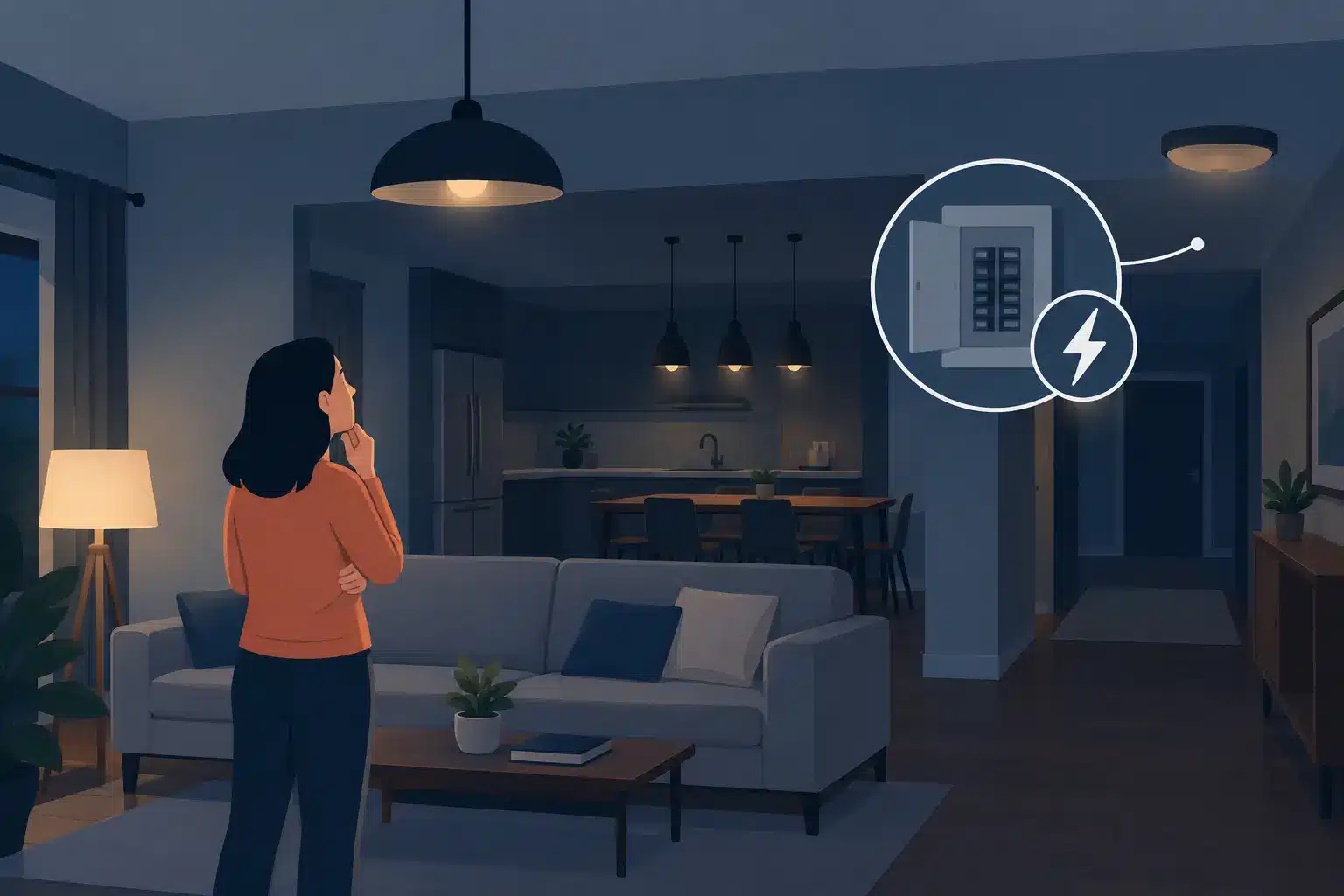
A brief flicker when the air conditioner starts may seem like a small inconvenience. But when lights dim suddenly across your home, repeat often, or occur with no clear cause, the change can point to an electrical problem that deserves attention. Your lighting is often one of the first visible signs that something in the electrical system is under strain.
For homeowners, the goal is not to guess at the problem or reset breakers repeatedly. It is to recognize the pattern, protect the household, and have a qualified electrician identify the cause before a minor issue affects your comfort, appliances, or safety.
Why Lights Dim Suddenly
Lights can dim for a harmless, temporary reason, but they can also reveal a loose connection, overloaded circuit, aging panel, or issue with the incoming electrical service. The key is noticing when it happens and what else is running at the time.
A momentary dip when a high-demand appliance turns on is common in many homes. Central air conditioning systems, refrigerators, pool pumps, microwaves, garbage disposals, and older washing machines can draw a large amount of power as their motors start. If the dimming is subtle and limited to a nearby light, the circuit may simply be responding to that startup demand.
The concern rises when the dimming is pronounced, lasts more than a moment, affects multiple rooms, or happens while no major appliance is starting. Lights that brighten and dim unpredictably can indicate an unstable connection. A loose wire at a fixture, outlet, switch, panel, meter connection, or utility connection can create inconsistent voltage. That condition should be evaluated promptly because loose electrical connections can generate heat.
Older homes may also have electrical systems that were not designed for current household demand. Modern families often run computers, large televisions, kitchen appliances, HVAC equipment, chargers, and smart devices at the same time. A panel or circuit that was adequate years ago may now be working harder than it should.
When Dimming Is Limited to One Area
The location of the problem offers useful clues. If one light fixture dims, flickers, or turns off occasionally, the issue may be as simple as a loose bulb, an incompatible LED bulb and dimmer, or a failing fixture. Turn the light switch off before checking that the bulb is properly seated. If a new bulb does not resolve the issue, the fixture, switch, or wiring may need professional repair.
If lights in one room dim when another device on the same circuit operates, the circuit may be overloaded or have a connection issue. For example, lights in a garage or laundry area may dip when a motor-driven appliance starts. A dedicated circuit, circuit repair, or updated wiring may be the right solution, depending on the electrician’s findings.
A single-circuit issue is generally more contained than whole-home dimming, but it should not be ignored if it is frequent. Breakers that trip, outlets that feel warm, buzzing switches, or a burning odor turn a routine repair into a more urgent safety concern.
Whole-Home Dimming Needs Faster Attention
When lights dim throughout the house, especially in several unrelated rooms, the source may be beyond one branch circuit. Potential causes include a problem in the electrical panel, a failing main connection, service equipment issues, or an issue on the utility side of the electrical system.
One especially concerning pattern is lights becoming unusually bright in one part of the home while dimming in another. This may point to a neutral connection problem. Voltage can become uneven, which puts sensitive electronics and appliances at risk. Turn off and unplug sensitive devices if it is safe to do so, and arrange for qualified electrical service right away.
In Palmdale, Lancaster, and across the Antelope Valley, air conditioning can place substantial demand on a home’s electrical system during hot weather. That does not mean every flicker is caused by the AC. It does mean recurring dimming when cooling equipment starts is worth having checked, particularly in an older home or one with a history of panel or breaker concerns.
Warning Signs That Call for Prompt Electrical Repair
Do not wait for a convenient time to schedule service if sudden dimming appears alongside other electrical warning signs. Contact a licensed electrician promptly if you notice:
- Lights brightening and dimming significantly or changing intensity without a clear reason.
- A burning smell, smoke, scorch marks, warm outlets, warm switches, or a buzzing sound.
- Repeated breaker trips, a panel that makes unusual noises, or power loss in part of the home.
- Dimming that affects several rooms, major appliances, or the entire house.
If you see sparking, smoke, or signs of active overheating, move away from the area and contact emergency services if there is an immediate fire risk. Do not remove a panel cover, touch damaged wiring, or attempt to tighten electrical connections yourself.
What You Can Safely Check Before Calling
Homeowners can gather a few helpful details without opening equipment or taking risks. Notice whether the dimming occurs when the HVAC system, microwave, refrigerator, pool equipment, or another appliance starts. Pay attention to whether it affects one room, one side of the home, or every light.
You can also check for a loose bulb after turning off the switch, and you can see whether neighbors are experiencing a power fluctuation at the same time. If nearby homes have similar symptoms, a utility issue may be involved. Your electrician can still help determine whether the concern is inside your home or should be reported to the utility provider.
Avoid the temptation to solve repeated dimming by using extension cords, replacing a breaker with a larger one, or continually resetting a tripped breaker. Those steps can mask the actual problem and increase the risk of overheating. Electrical repairs should match the wiring, circuit capacity, and safety requirements of the home.
How an Electrician Finds the Cause
A proper diagnosis looks beyond the light bulb. An electrician may inspect the affected fixtures and switches, test circuit performance, look for overloaded circuits, evaluate breaker and panel conditions, and check for signs of damaged or loose connections. The work may also include assessing whether large appliances have appropriate dedicated circuits.
The repair depends on the cause. A loose connection may require a focused repair. An overloaded circuit may call for redistributing electrical loads or adding a dedicated circuit. Aging or damaged panel components may need repair or replacement. In some homes, a panel upgrade is the practical long-term answer, especially when the household is adding central air, a workshop circuit, an electric range, or an EV charger.
There is no one-size-fits-all fix, and that is why diagnosis matters. Replacing a switch might correct a local fixture issue, while whole-home dimming may require coordination with the utility company. A qualified electrician can explain the findings clearly and recommend repairs that support reliable performance rather than a temporary workaround.
Protecting Your Home From Future Electrical Strain
Electrical maintenance is easier when warning signs are handled early. If your home has an older panel, frequent breaker trips, limited outlets, or plans for new high-demand equipment, an electrical inspection can help identify priorities before they become urgent repairs.
A1 Home Electric helps homeowners make practical decisions about electrical repairs, panel-related work, inspections, and upgrades. The focus should always be quality and safety: stable power for the equipment your family relies on, and an electrical system that is ready for the way you live.
A light that dims once may not be an emergency. A pattern of dimming is your home asking for attention. Listening early can protect your appliances, preserve your comfort, and help keep a small electrical concern from becoming a larger one.