

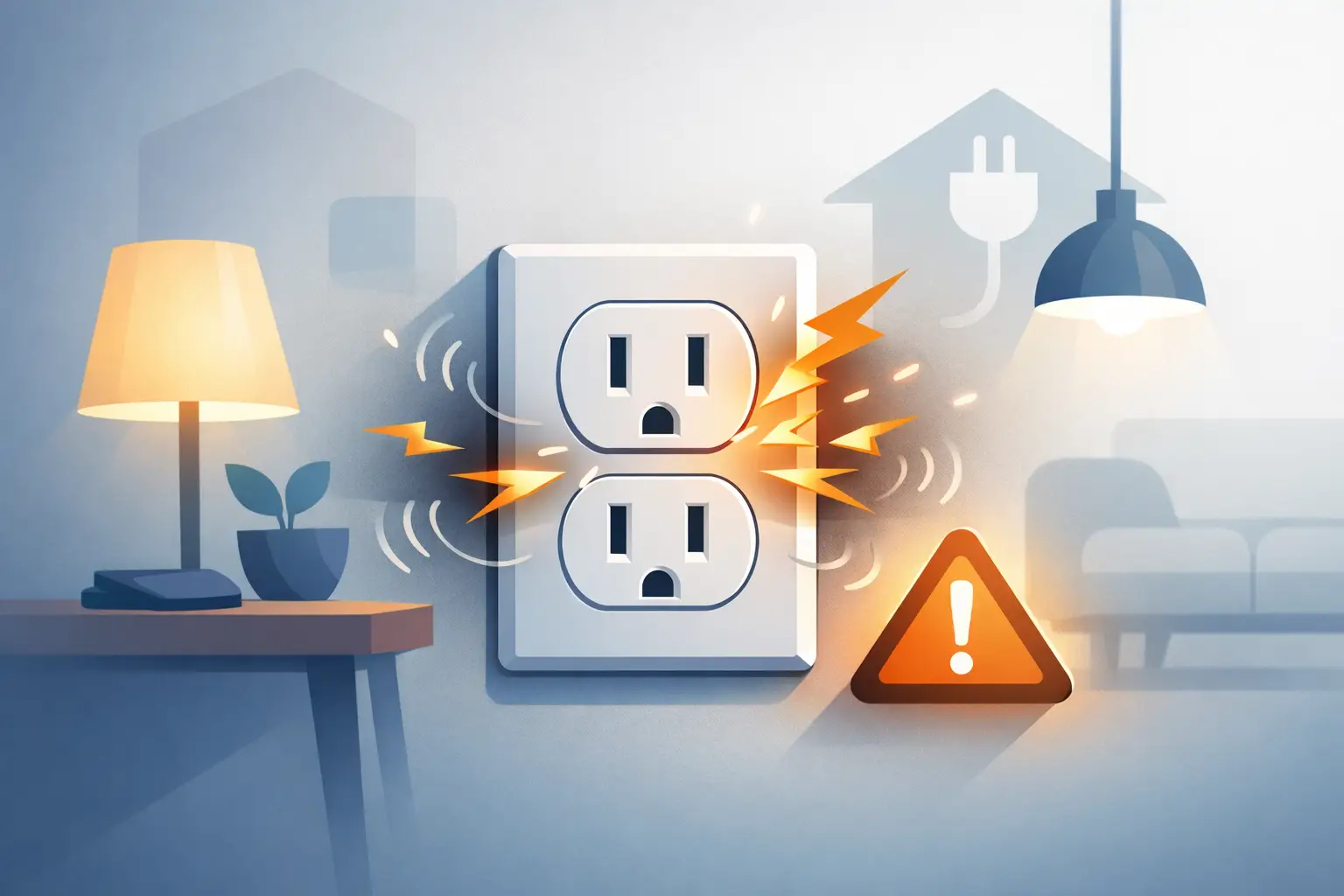
You should not hear your wall outlet. If you do, and you are asking, is buzzing outlet dangerous, the safest answer is yes – it can be. A buzzing sound often points to loose wiring, internal damage, overloading, or electrical arcing, and those problems can lead to shocks, damaged devices, or even a house fire.
Some outlet issues are minor in appearance but serious behind the wall. That is what makes this symptom easy to underestimate. A plug may still power a lamp or phone charger while the connection inside the outlet is unstable and generating heat.
Is buzzing outlet dangerous if it still works?
Yes. An outlet can keep working and still be unsafe. Electricity does not need a complete failure to create danger. A loose wire, worn contact, or failing receptacle can allow intermittent current flow, and that unstable connection may produce the buzzing sound you hear.
When electricity jumps across a gap instead of traveling cleanly through a secure connection, it can create arcing. Arcing is one of the biggest concerns with a buzzing outlet because it produces heat and can damage insulation, the receptacle itself, and nearby materials inside the wall.
That is why a working outlet is not the same thing as a safe outlet. If the sound is new, persistent, or paired with other warning signs, it deserves prompt attention.
What a buzzing outlet usually means
In most homes, outlets are silent. Buzzing tells you something is disrupting the normal flow of electricity. The cause could be the outlet itself, the wiring connected to it, or even the circuit serving that part of the home.
One common cause is a loose connection. Over time, wires can shift, terminal screws can loosen, and receptacle contacts can wear out. This is more likely in older homes or in outlets that get frequent use, such as kitchen, bathroom, garage, and living room receptacles.
Another possibility is overloading. If too many high-demand devices are plugged into one outlet or one branch circuit, the outlet may begin to heat up or strain under the electrical load. That does not always create buzzing, but it can contribute to failure.
The sound may also come from a damaged plug, a poor-quality power strip, or an appliance drawing power irregularly. In those cases, the outlet may not be the only issue. The right diagnosis matters because replacing the receptacle alone will not solve a hidden circuit problem.
Signs the outlet needs immediate attention
A buzzing sound by itself is enough reason to stop and take it seriously. If you notice any of the following at the same time, the risk is higher.
A warm or hot faceplate suggests heat buildup where there should not be any. A burning smell is even more urgent and can mean insulation or internal components are overheating. Flickering power, sparking when plugging something in, black marks, melted plastic, or a loose plug fit are also red flags.
If the breaker has been tripping in the same area, that pattern matters too. Breakers trip for a reason. Repeated tripping along with a noisy outlet may point to a failing outlet, overloaded circuit, or wiring fault that should be checked by a licensed electrician.
In homes with children, pets, or older electrical systems, it makes even more sense to act quickly. What starts as a small outlet problem can turn into a larger repair if it is ignored.
What to do right away
First, unplug anything connected to the outlet. If it is safe to reach and there is no smoke or visible damage, stop using it immediately. Do not test it again to see if the sound comes back. Continued use can worsen the problem.
Next, check your electrical panel. If the breaker for that circuit has tripped, leave it off until the outlet is inspected. If it has not tripped but the outlet smells hot, looks discolored, or feels warm, turning off the breaker for that area is the safer move.
Do not open the outlet yourself unless you are qualified to work on residential electrical systems. The faceplate may look simple, but the problem can involve live wiring, backstab connections, damaged insulation, or issues upstream on the same circuit.
If there is crackling, smoke, or signs of burning, treat it as urgent. Move people away from the area and call for professional electrical repair right away.
When it might not be the outlet alone
Sometimes the buzzing starts when a specific device is plugged in. That can mean the appliance, charger, or power strip is defective. It can also mean the outlet is too worn to hold the plug blades tightly, which creates a poor connection under load.
This is where electrical problems can be tricky. The symptom appears at the outlet, but the root cause may involve the plug, the branch circuit, the breaker, or overall panel condition. In homes with aging wiring or past DIY work, one outlet problem can reveal a bigger reliability issue.
For example, if several outlets on the same wall seem loose or inconsistent, the issue may be part of a larger circuit repair. If lights dim when an appliance starts nearby, that can point to load-related problems worth evaluating at the same time.
Why homeowners should not ignore the sound
Electrical issues rarely improve on their own. A buzzing outlet may stay the same for a while, or it may fail suddenly. The trade-off in waiting is simple: what might be a straightforward outlet replacement today can become damaged wiring or emergency repair later.
There is also the safety side. Outlets are used every day, often without a second thought. That makes them easy to trust even when they are showing warning signs. But an outlet that buzzes is telling you something has changed, and electrical changes inside a wall are not the kind to monitor casually.
For homeowners in places like Palmdale and Lancaster, where cooling equipment, garage loads, and everyday household demand can put real strain on residential electrical systems, outlet problems deserve a practical response. Safe, reliable power is part of keeping the home comfortable year-round.
How an electrician typically checks a buzzing outlet
A licensed electrician will usually start by identifying whether the problem is isolated or circuit-wide. That includes testing the outlet, inspecting the receptacle condition, checking for secure wiring connections, and looking for signs of heat damage or arcing.
If needed, the electrician may inspect the breaker, nearby outlets, switches, and devices on the same circuit. This step matters because the visible outlet is not always the original source of the problem.
In some cases, the fix is as simple as replacing a worn receptacle and correcting loose terminations. In others, the repair may involve damaged wiring, overloaded circuits, or panel-related concerns that need a broader solution. A careful inspection helps make sure the problem is truly resolved and not just covered up.
Can you prevent outlet buzzing in the future?
Often, yes. Prevention starts with not overloading outlets and using the right circuits for higher-demand equipment. Space heaters, window AC units, microwaves, and other heavy loads should not share outlets or extension setups that were never meant for that kind of use.
It also helps to pay attention to early signs. If plugs feel loose, faceplates are warm, or breakers trip more than once, those are good reasons to schedule trusted electrical repair before the problem escalates.
Older homes benefit from periodic electrical inspections, especially if you are adding new appliances, planning a remodel, or relying on outlets that have been in place for decades. Quality and safety usually come from catching small issues before they become disruptive ones.
A buzzing outlet is not something to live with or work around. It is a warning sign, and the safest move is to stop using it and have it checked. A quiet outlet should stay quiet, and your home should feel dependable every time you plug something in.