
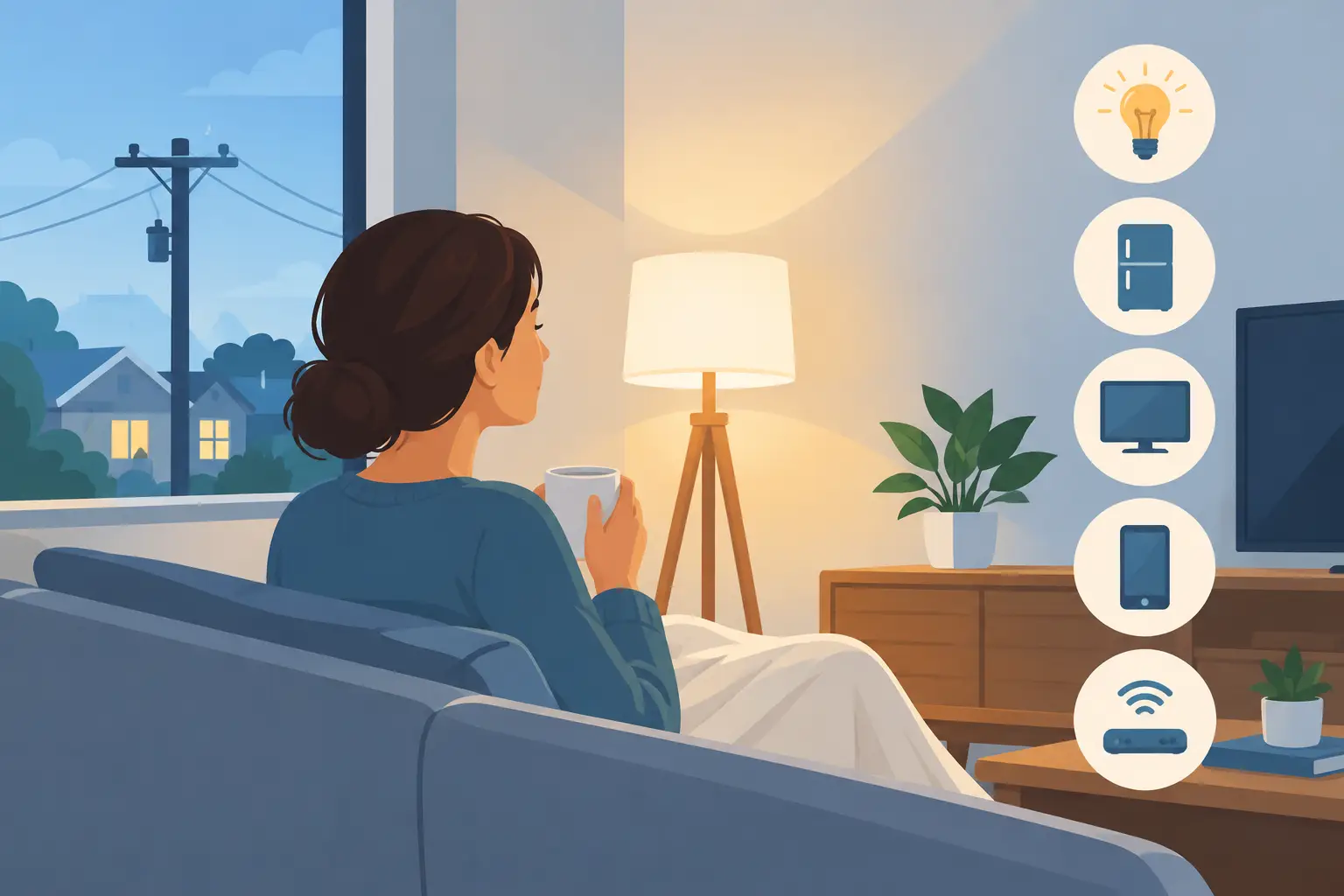
When the lights come back on after a wind event, equipment failure, or neighborhood outage, power restoration can feel like the problem is over. But the first few minutes after electricity returns are when hidden electrical issues can become apparent. A careful check helps protect your appliances, your electrical system, and the people in your home.
For homeowners and property managers in the Antelope Valley, the right response depends on what has happened. A widespread outage usually requires patience and updates from Southern California Edison. Power loss limited to one room, one building, or your own service equipment may require a licensed electrician. Knowing the difference can prevent unnecessary risk and get your property operating safely again.
Start With Safety Before Resetting Anything
If you see a downed power line, a damaged utility pole, sparks near the meter, or a tree branch touching electrical equipment, stay well away from the area. Keep children and pets inside or at a safe distance. Do not attempt to move a line, remove branches, or inspect damaged utility equipment yourself. Contact emergency services if there is an immediate hazard and report the issue to the utility provider.
Inside the home, look and listen before touching the electrical panel. A burning odor, buzzing sound, visible smoke, heat around the panel, or scorch marks at outlets are signs to stop and call for expert electrical repairs. Resetting a breaker under those conditions can make a dangerous problem worse.
If there are no warning signs, unplug sensitive electronics and turn off major appliances that were running when the outage occurred. Air conditioners, electric ranges, computers, televisions, and chargers can be affected by voltage fluctuations when service returns. Leaving a few lights switched on can help you tell when power has been restored without placing an unnecessary load on the system.
Is It a Utility Outage or a Home Electrical Problem?
The quickest clue is what your neighbors are experiencing. If nearby homes and streetlights are out, the problem is likely on the utility side. Check official outage communications rather than assuming a repair is complete because one light flickers back on. Utility crews manage the lines, transformers, and meters that deliver power to the property.
If your neighbors have electricity but your home does not, check whether your main breaker has tripped. A breaker can trip because of an overloaded circuit, a failing appliance, a short circuit, moisture intrusion, or an issue within the panel itself. Turn the breaker fully to the off position before resetting it once. If it trips again, leave it off. Repeated resetting does not solve the underlying cause and can create heat or damage at the connection.
Partial power is another important warning sign. Perhaps the kitchen has power but bedrooms do not, or lights are unusually dim while other circuits work normally. This may point to a tripped circuit, but it can also indicate a loose connection, failed breaker, damaged service conductor, or panel issue. Treat partial power as a reason for a professional inspection, especially if it appears after a storm or after power returns from an outage.
When the Meter or Main Panel Is Involved
The electrical meter and service equipment require special caution. Homeowners should never remove a meter, open utility-sealed equipment, or attempt to repair wiring feeding the main panel. Those components can remain energized even when the main breaker is off.
A licensed electrician can determine whether the concern is on the customer-owned side of the system or must be addressed by Southern California Edison. When a panel upgrade or service repair is needed, the work may involve permits, inspections, and coordination for a planned meter shutoff. This process takes more preparation than resetting a breaker, but it protects the property and helps ensure the finished work meets current requirements.
Safe Power Restoration Steps for Your Home
Once the utility confirms the outage has ended and there are no signs of damage, bring your home back online gradually. Start with the main service only if it is in normal condition and has not tripped repeatedly. Then restore individual breakers one at a time, beginning with essential circuits such as refrigeration, lighting, and necessary medical equipment.
Wait a few minutes before turning on high-demand equipment. Central air conditioning, electric water heaters, dryers, ovens, pool equipment, and EV charging equipment can place a significant demand on the electrical system. Staggering these loads gives you a chance to notice a breaker that trips, an appliance that fails to start, or lights that dim unexpectedly.
Check refrigerated food carefully after a longer outage. A refrigerator generally keeps food cold for about four hours if unopened, while a full freezer can hold its temperature longer. If there is any concern about food temperature, follow food-safety guidance rather than relying on smell or appearance.
If you use a generator, operate it outdoors and well away from doors, windows, and vents. Carbon monoxide can build up quickly and cannot be seen or smelled. Never connect a portable generator directly to a wall outlet. This unsafe practice can backfeed electricity into utility lines, placing utility workers and your own equipment at risk. A properly installed transfer switch or generator connection is the appropriate solution for planned backup power.
Warning Signs That Need an Electrician
Some problems are easy to identify, but electrical warning signs should never be ignored just because the power is back. Arrange an inspection if you notice any of the following:
- A main breaker or branch breaker will not stay on.
- Lights flicker, dim, or brighten without explanation.
- Outlets, switches, or the panel feel warm to the touch.
- You smell burning insulation or hear crackling or buzzing.
- Only part of the home has power after the neighborhood service returns.
- A surge has damaged multiple appliances, chargers, or electronic devices.
These symptoms can result from a damaged breaker, loose neutral connection, overloaded panel, water intrusion, or aging wiring. The exact cause matters. A temporary fix may restore a circuit briefly, while leaving the actual safety concern hidden behind the wall or inside the panel.
Older Panels Can Complicate Restoration
A power interruption sometimes exposes a limitation that was already present. Older homes may have undersized panels, crowded breaker spaces, outdated service equipment, or circuits that are carrying more demand than they were designed to handle. Adding air conditioning, workshop equipment, an electric range, or an EV charger can increase that strain.
A panel upgrade is not necessary after every outage. If the panel is in good condition, correctly sized, and operating normally, a repair may be all that is needed. However, an upgrade can make sense when breakers trip regularly, there is no space for needed circuits, or the home is being prepared for major electrical additions.
For qualifying customers, Southern California Edison programs may offer rebates of up to $4,200 for eligible electrical panel upgrades and EV charger installation. Eligibility and program terms can change, so it is wise to have the property evaluated before making plans around a rebate. The right contractor can handle the electrical scope, permits, inspections, and required coordination with the utility.
Protect Your Home Before the Next Outage
No electrical system can prevent every utility outage, especially during high winds or regional equipment problems. Still, a few practical improvements can reduce disruption. Whole-home surge protection can help protect electronics from voltage events. A properly designed backup-power setup can keep selected essentials running. Additional dedicated circuits can prevent overloads when new equipment is added.
Regular attention also matters. Do not ignore a breaker that trips occasionally, an outlet that only works sometimes, or a panel that has become difficult to use because of repeated additions. These small issues are often easier and less costly to address before an outage reveals a larger weakness.
For Palmdale, Lancaster, Quartz Hill, Littlerock, and Lake Los Angeles property owners, A1 Home Electric provides trusted electrical repair, panel upgrades, and EV charger installation backed by more than 20 years of experience and California license #885624. When power does not return normally, a prompt professional diagnosis can replace uncertainty with a clear, safe path forward.
After the lights come back, take a moment to watch how your home responds. Stable power, quiet equipment, and breakers that remain set are reassuring signs. Anything less deserves careful attention before it becomes the next emergency.