

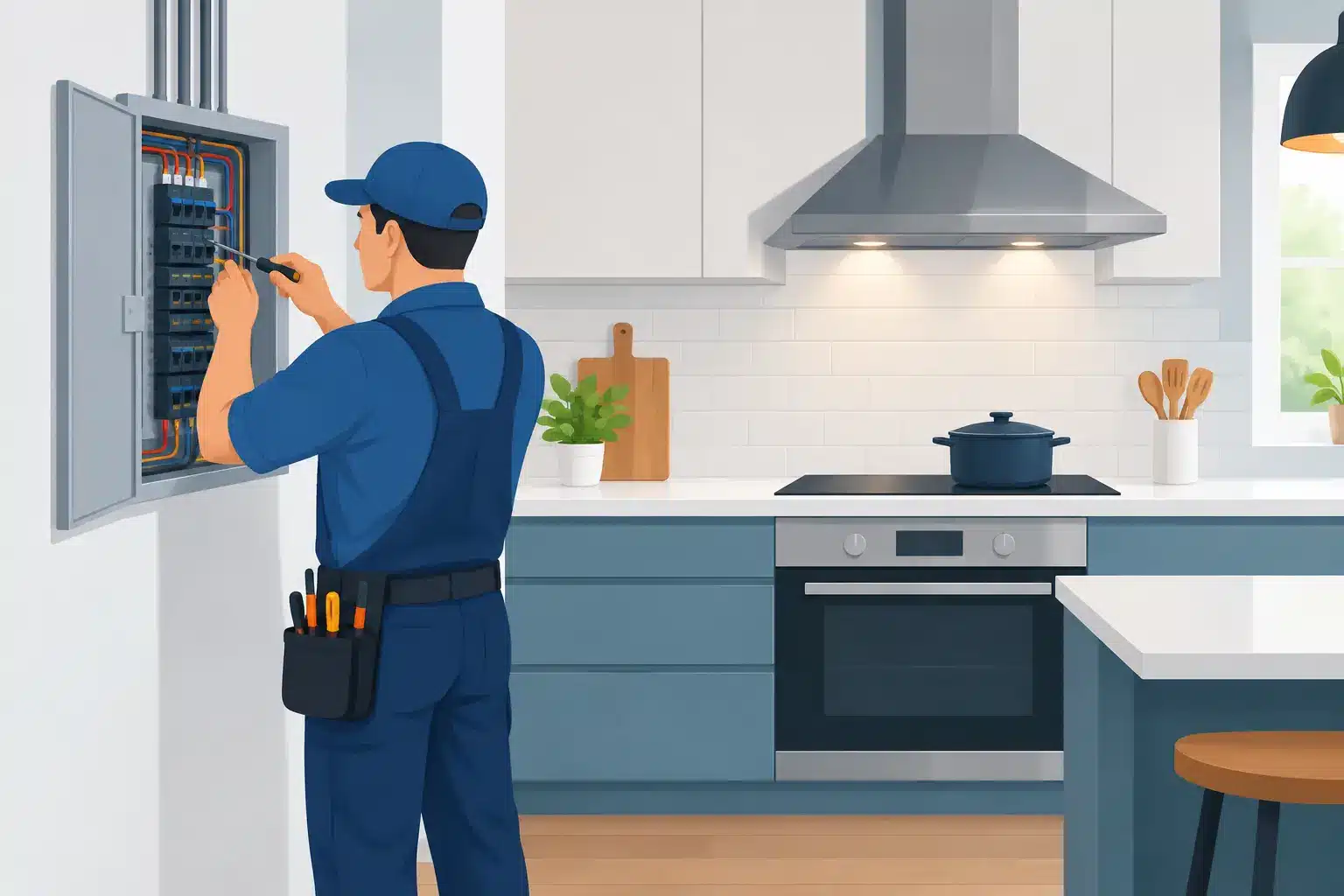
A kitchen circuit installation is more than adding an outlet where it would be convenient. It is the electrical work that gives high-use appliances, countertop devices, lighting, and charging stations the safe, dependable power they need. When a kitchen is underpowered, the warning signs often show up at the worst time: a breaker trips while dinner is cooking, an outlet feels warm, or an older circuit cannot keep up with a new microwave or dishwasher.
For homeowners in Palmdale and throughout the Antelope Valley, a properly planned kitchen electrical upgrade can improve daily comfort while protecting the home from overloads and unsafe wiring conditions. The goal is not to add more circuits without a reason. It is to match the electrical system to how the kitchen is actually used.
Why kitchens need careful electrical planning
Kitchens place more demand on a home’s electrical system than almost any other room. Coffee makers, air fryers, blenders, toasters, microwaves, slow cookers, and countertop mixers can each draw significant power. Run a few of them on the same older circuit, and a tripped breaker may be the best-case result.
A breaker that trips is doing its job by shutting off power before wiring overheats. Resetting it repeatedly, however, does not solve the underlying issue. If the circuit is overloaded, if connections are worn, or if the breaker is not appropriate for the wiring, the kitchen needs a professional inspection.
Older homes can be especially challenging. A kitchen may have been designed when families used fewer countertop appliances and before modern dishwashers, built-in microwaves, disposals, and induction ranges became common. A remodeling project often exposes that gap between the existing electrical system and the way the home is used now.
What a kitchen circuit installation may include
The right scope depends on the appliances, the existing panel capacity, and the condition of the wiring. In many kitchens, the work begins with dedicated circuits for equipment that needs reliable power on its own. Larger appliances such as an electric range, wall oven, cooktop, dishwasher, garbage disposal, refrigerator, or built-in microwave may require their own correctly sized circuit.
Countertop receptacles also need thoughtful planning. Current electrical standards generally require multiple small-appliance circuits to serve kitchen countertop areas. This arrangement helps prevent one outlet or one circuit from carrying too much of the everyday load. The exact number and placement depend on the kitchen layout and the code requirements that apply to the property.
Safety devices are part of the plan as well. Ground-fault circuit interrupter protection is commonly required where outlets are near water, including kitchen countertop receptacles. Arc-fault protection may also be required for certain circuits. These devices are designed to reduce different electrical hazards, but they must be installed and tested correctly to provide meaningful protection.
A quality installation can also include properly placed lighting circuits, under-cabinet lighting, island outlets, and hardwired connections for specialty appliances. Good electrical design makes a remodeled kitchen easier to use without filling every wall with unnecessary outlets or creating confusing circuit layouts.
Signs your kitchen may need new circuits
Some electrical problems are obvious, while others are easy to overlook. A breaker that trips when the microwave and toaster run together is a clear sign of a circuit carrying more than it should. Dimming lights when an appliance starts, outlets that no longer hold plugs firmly, scorch marks, buzzing, or a burning smell call for prompt professional attention.
Extension cords and power strips can also reveal an electrical layout problem. They may seem like a simple answer when there are not enough accessible outlets, but they are not a permanent solution for high-demand kitchen appliances. Countertop equipment should have properly installed, code-conscious receptacles where it is needed.
A kitchen renovation is another good time to assess the wiring. Moving an island, replacing a gas cooktop with an electric or induction unit, installing a double oven, or upgrading to a larger microwave can all change the electrical load. Planning the circuits before cabinets and finishes are complete helps avoid expensive changes later.
The electrical panel matters too
New kitchen circuits must begin at an electrical panel that has enough safe capacity to support them. Sometimes there is open breaker space and sufficient service capacity, making the addition straightforward. In other homes, the panel is full, outdated, damaged, or unable to support new loads without an upgrade.
This is where a professional load calculation and panel inspection matter. Adding breakers to a crowded or undersized panel is not a responsible fix. The electrician should evaluate the home as a whole, including existing heating and cooling equipment, laundry circuits, electric vehicle charging, pool equipment, and planned appliance upgrades.
A panel upgrade can be a practical investment when it resolves multiple needs at once. It can create room for a kitchen remodel, future EV charging, and safer modern circuit protection. A1 Home Electric can coordinate the permit and inspection process when a panel upgrade is required, and can also work with Southern California Edison when utility coordination is needed for the project.
Why permits and inspections protect homeowners
Kitchen electrical work is often hidden behind cabinets, walls, and finished surfaces. That makes shortcuts difficult to see after the project is done. Permits and inspections provide an extra level of accountability by verifying that the work follows applicable local requirements.
Permit requirements vary by project and jurisdiction, but new circuits, service changes, and panel work commonly require approval. A licensed electrician can identify what is needed before work starts, prepare the installation correctly, and address inspection requirements without leaving the homeowner to sort out technical details.
This protection matters beyond the immediate job. Proper documentation can be valuable during a sale, an insurance review, or future remodeling work. For property owners and real estate agents, knowing that electrical improvements were completed professionally helps avoid uncertainty after closing.
What to expect from a professional installation
A dependable kitchen circuit installation starts with questions, not assumptions. An electrician should ask which appliances are staying, which ones are being added, whether the kitchen will be remodeled, and what problems the homeowner has noticed. They should inspect the panel, accessible wiring, outlet locations, and the home’s available electrical capacity.
From there, the work should be planned around the real load and the finished kitchen layout. That may mean routing new wiring through accessible areas, installing new breakers, replacing outdated receptacles, or coordinating with a contractor before drywall and cabinets are installed. The cleanest path is not always the safest or most practical one, so the best approach balances appearance, code requirements, access, and long-term reliability.
Once the work is complete, circuits should be labeled clearly. A homeowner should know which breaker serves the refrigerator, dishwasher, microwave, countertop outlets, and lighting. Clear labeling saves time during a future service call and makes it easier to respond safely if a breaker trips.
Avoid the lowest-price electrical shortcut
Kitchen wiring is not a place to choose solely by the lowest estimate. Pricing can vary because homes vary. An older home with limited panel space, inaccessible wiring, aluminum branch wiring, or an unpermitted past remodel may require more investigation and more careful work than a newer property.
Ask what circuits are being added, whether permits are included, how the electrician will protect finished surfaces, and whether the panel has been evaluated. A clear answer is more valuable than a vague promise to “make it work.” Licensed electrical service should give you confidence that the system is being designed for safety, not just for getting power to an appliance today.
If your kitchen is asking more from the electrical system than it was built to provide, addressing it before the next remodel or appliance purchase can prevent interruptions, protect your home, and make every meal a little less complicated.